Why CFA is a Great Choice After Engineering: Career Guide
 By IIC Lakshya
 25 Nov 2025
 Others
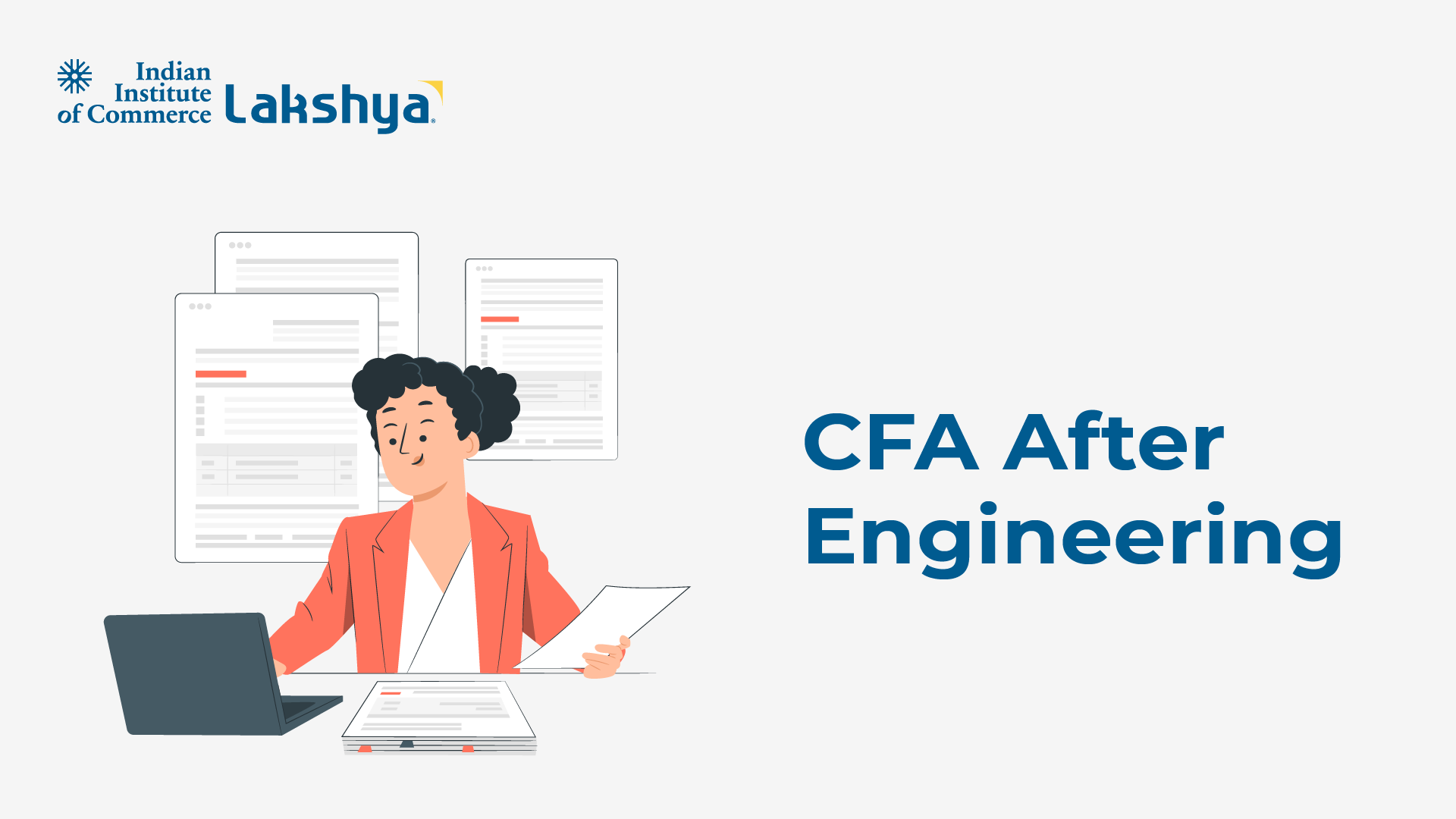
Are you planning to gain a broader educational background to aim for a better career with a good salary? Being an engineer will create several job opportunities for you. However, if you pursue the Chartered Financial Analyst (CFA) career, there is a higher probability that you might get diverse career opportunities.
CFA Being a Step-Up for Engineers
Did you know that you can pursue a career in Chartered Financial Analyst (CFA), after completing your engineering degree? Below are some of the skills that engineering students possess that they can implement while applying for the CFA program to have a successful financial career with a high-paying salary.
Analytical Thinking & Problem Solving
As an engineer, students have developed skills in analytical thinking and problem-solving. They approach any problem systematically in various courses in engineering. These skills help students to study the CFA exam books, as they consist of financial valuation, analysis, and portfolio management.
Strong Quantitative Skills
During engineering days, students develop statistics, data analysis, and mathematics skills. These skills are directly applicable to the derivative sections and quantitative methods within the CFA study materials and curriculum. Students benefit immensely from doing the CFA course, hence it is completely worth it.
Logical Reasoning
Students also develop a basic sense of logic when they pursue their engineering degrees. They apply their logical reasoning to economic principles and complicated formulas when working in the finance industry.
Career Scope of CFA After Engineering
If you are wondering about your career scope after you have completed the CFA certification, especially when you are an engineer, here are some of the high-potential career paths. These job opportunities in Finance help you get involved in business financial problems, resolve them, manage capital, and more.
Portfolio Management
This job role is about managing investment portfolios for various companies. CFA-certified professionals will apply knowledge in asset valuation and portfolio management that they developed through the CFA program. Learn how to prepare for the CFA Level 1 exam, which will guide you through your curriculum.
Investment Banking
The career path of investment banking is quite significant for an engineer turned CFA-certified professional. In this job profile, the professionals have to analyse financial data and statements for raising capital, financial mergers, and asset acquisitions.
Risk Management
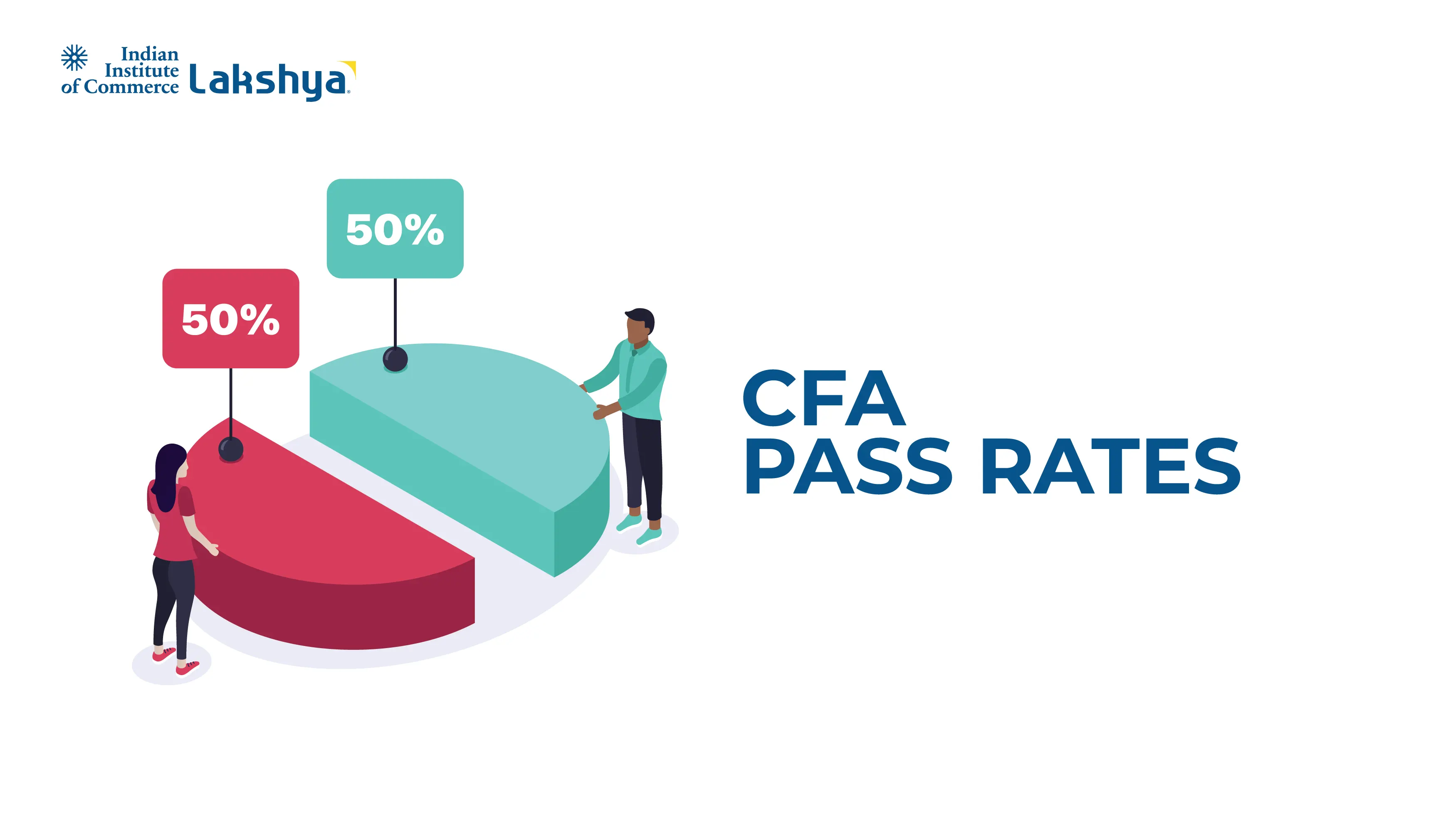
Engineering students who have pursued the CFA career can apply for job roles in risk management. In this job role, the professionals develop and implement strategies using the data models to mitigate financial risks and losses. Yes, the CFA pass rates are quite difficult to achieve; however, it is worth it once you develop all your skills.
Equity Research
Professionals with opportunities in equity research analyze the company stocks. They evaluate various market trends, thus identifying the changes and how they can serve organizations with their data interpretation skills.
Fintech and Analytics
There are several CFA scopes and job opportunities in India. Engineers turned into CFA professionals can work in the career path of finance and technology. The intersection of finance and technology offers high-income finance jobs. They will implement their programming skills, which the professionals will use to build financial algorithms and models.
CFA Registration Process for Engineers
As an engineer, you need to learn about the registration process of CFA, step by step, towards becoming a skilled professional. Aspirants first have to create an account on the official website of the CFA Institute using their basic personal information and email address.
You have to select your exam level, whether level 1 or level 2. Then you select your exam window for the level, as the exams are conducted in February, May, August, and November. You have to choose one of these months when you will be prepared to take the exam.
Students also have to pay a one-time enrollment fee. For the first time candidates, the amount is INR 29,000 - INR 30,000, the registration fee for the CFA exams is INR 98,471 - INR 1,28,835. There is also a late fine fee that the students have to pay if they miss the deadline.
Once the payment is completed, students have to schedule their exam date. The CFA Institute allows students to choose the specific exam date for the specific month they have chosen and finalize the exam center where they can take the exam.
Students need at least 5 to 6 months for every target exam. It will help them prepare for the exam as the CFA Institute offers various deadlines. Read the complete guide on how to become a CFA!
CFA After Engineering: Is It the Right Choice?
In conclusion, engineers can create quite a significant career growth with high income. With their interest in stock markets, consultation, finance, and investment banking, engineers develop a financial evaluation and analysis-focused role. Furthermore, this transition can create a challenging but satisfying career ahead.
Read More
- ACCA vs CFA vs CA
- Can you pass the CFA Levels by self-study?
- CMT vs CFA: Eligibility, Career, Opportunities & Salary
- Top 6 Finance Jobs and Salary After CFA Level 1!
- FRM vs CFA: Which is Better for Quants in Finance?
- CFA Level 1 vs 2 Salary: Earning Potential and Job Scopes!
Frequently Asked Questions on CFA After Engineering
Can a BTech graduate do CFA?
Yes, a BTeach graduate can pursue CFA certification courses, as engineers can easily transition to the roles related to asset management, financial analysis, and investment banking.
Is CFA Level 3 harder than CA?
We cannot compare CFA Level 3 and CA because both are difficult in their own way. While CFA Level 3 is focused on portfolio management. Individuals must learn strong application skills, while CA is wider in its content coverage, such as auditing, finance, taxes, and laws.
Will CFA be replaced by AI?
No, Artificial Intelligence (AI) cannot replace the CFA certification; however, it does contribute to the overall transformation of automating repetitive tasks. Additionally, it also contributes to helping human skills by saving time and effort by identifying patterns and helping them.
Can I do a CPA in 3 months?
It is tedious for an individual to pursue and prepare for the CPA in 3 months. However, if they set a preparation schedule, they can pass all 4 sections of the CPA course in 3 months.
Can an engineer become an auditor?
A mechanical engineer or someone having work experience from any relevant financial and accounting industry can become an auditor. The professionals can effectively work in quality management, quality control, and quality assurance.
Related Course


































_11zon.webp)













.webp)
.webp)

.webp)
.webp)
.webp)
.webp)
.webp)
.webp)
.webp)













































































































.webp)








 salary.jpg)


.webp)

.webp)
.webp)