What is the Impact of Economic Principles on Startup Strategies?
 By IIC Lakshya
 04 Nov 2025

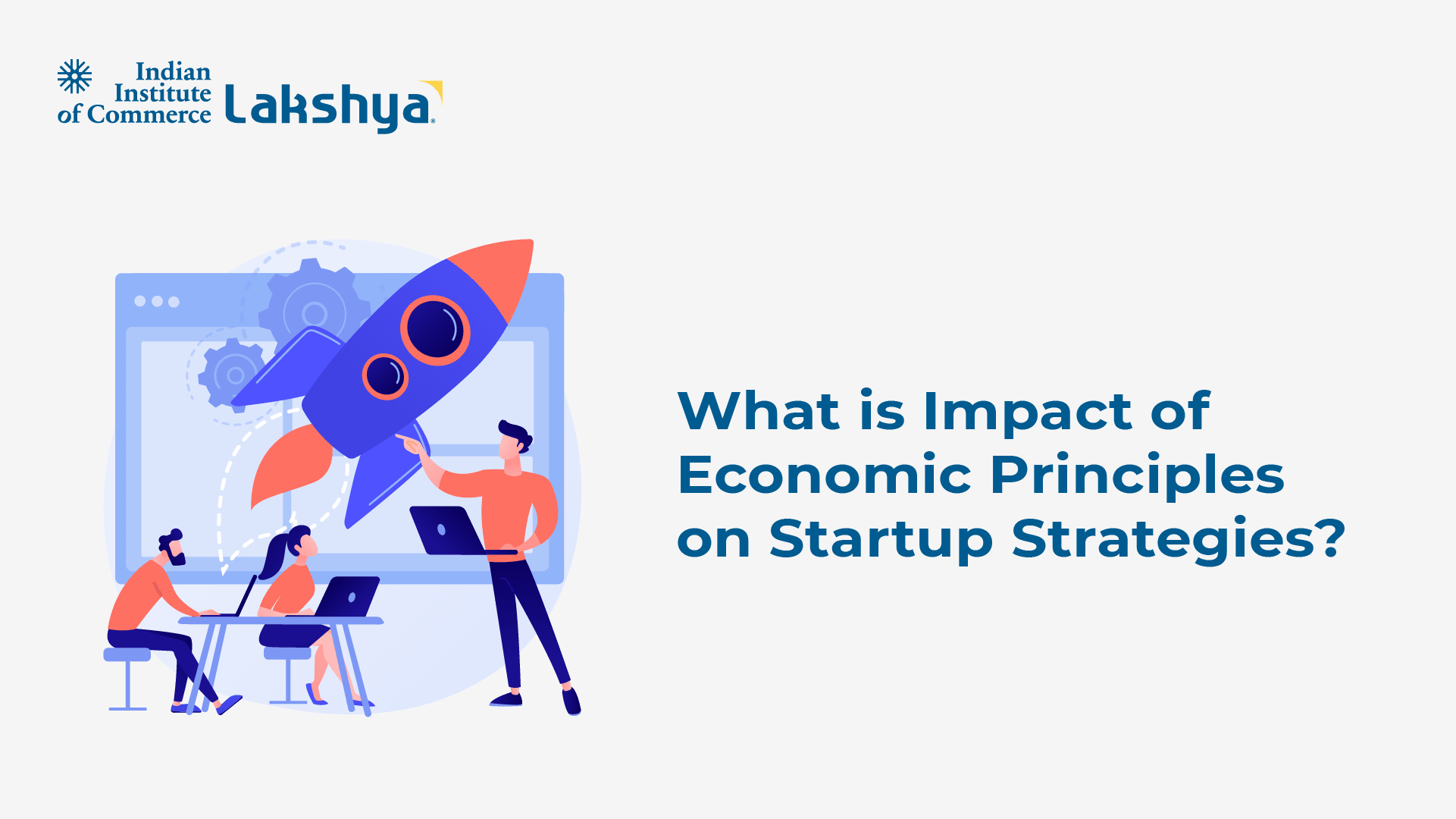
In every successful start-up, there is a combination of innovation, risk-taking, and most importantly, an in-depth knowledge of economic concepts. Although most entrepreneurs are concerned with the design and marketing of their product, not many of them know how economic theories like demand, supply, cost structures, and market equilibrium affect their daily business decisions. Learning economics provides startups with a strategic advantage; they will be able to price intelligently, resource allocation will become more efficient, and growth projections will become realistic. We are going to discuss the principles and the ways in which they influence the choice of strategies used by startups and the possibility of whether the idea of a new business will really succeed in a competitive market.
Key Impacts of Economic Principles on Startup Strategies
Economic principles are not merely the academic theories; they are the invisible elements that play behind all business decisions. Startups can predict market trends, deal with risks and opportunities with great efficiency, given that they comprehend economics, whether it is during pricing and production, marketing and expansion. To any would be entrepreneur, economics is not a luxury to learn, but a distinction between survival and success under the dynamic startup world.
1. A Demand and Supply Primer: Startup Planning Building Block
Demand and supply are the determinants of any market. In the case of startups, product strategy design starts by establishing what consumers desire (demand) and what they are capable of providing (supply). Entrepreneurs have to research what exists in the market as gaps, where there is demand but supply is scarce. An example is food delivery startups that have been successful since they identified the increased need to be convenient and addressed that need with effective delivery solutions.
New companies that overlook the nature of these dynamics tend to have wrong pricing or excess production. Economic concepts such as elasticity of demand can assist founders to realize the sensitivity of customers to changes in price, which is important when determining prices or providing discounts.
2. Taking Wiser Business Decisions: Opportunity Cost.
Each startup is confronted with options; it may develop, recruit new talent, or invest in technology. In this case, the economic theory of opportunity cost is important. Opportunity cost: This is related to weighing the costs of choosing one over the other. As an example, when a startup spends ₹5 lakhs on advertising, then it will be denied an opportunity to use the same amount of money to create a new product feature.
Freudians are businesspersons that know the opportunity cost and can take long-term choices to maximize profitability rather than making short-term profits. It assists founders to put their scarce resources in areas where they create the greatest impact.
3. Competition and Structures of the Market
Economic theory classifies markets into four broad types: perfect competition, monopoly, monopolistic competition, and oligopoly. All of them have implications for startup strategies.
Indicatively, when the startup is in a very competitive market (such as food tech or clothing), differentiation is a key element. You will need to develop different value propositions and make investments in branding. Alternatively, startups in less competitive or niche markets may concentrate on price control and scale up operations before other new entrants are attracted.
Knowing what type of market structure your business belongs to will assist you in setting pricing, marketing, and innovation tactics in the right direction.
4. Cost and Revenue Analysis: The Way to Profitability
Good understanding of the principle of cost and revenue assists a startup in being sustainable. Configurable expenses, such as rent and salaries, are fixed costs, whereas raw materials and marketing are variable costs, which must be tracked at all times. Economics educates entrepreneurs on how to determine their break-even point, the point at which the total cost is equal to the total revenue.
Startups will be able to understand when to scale production or use new services because of an analysis of marginal cost and marginal revenue. Effective cost management directly reflects in the improved pricing flexibility and the increased investor confidence.
5. The Macroeconomic Factor Role
Startups do not exist in a vacuum, but they are affected by macroeconomic factors that are bigger, including inflation, interest rates, and government regulations. As an example, an increase in interest rates may increase the cost of loans, and this impacts the expansion plans of the startups. On the same note, small business tax incentives can be used to motivate new businesses.
Following such economic trends, entrepreneurs can change their strategies in advance, e.g., adjusting the pricing models in cases of inflation or pursuing export opportunities in case the domestic demand declines.
|
Did you know? A Harvard Business Review study revealed that companies that use economic modeling in their strategy have a 40 percent higher chance of continued growth beyond five years as compared to those that entirely rely on intuition. |
Read More
- Important Questions for Class 11: Economics Part-b Unit-1
- Impact of Trade Deficit on the Economy
- Economic Globalization
- Environmental Economics
FAQs on Impact of Economic Principles on Startup Strategies
What role do economic principles play in making better decisions that can be made by startups?
The economic principles aid in startups knowing market behaviour, anticipate demand, cost management, and make rational decisions to reduce risk and maximise profitability.
What is the significance of studying demand and supply in brand new businesses?
It assists entrepreneurs to determine what gaps exist in the market, how to price it, and how to make sure that the production fits the consumer needs without making losses because they overproduced/underpriced it.
Will learning courses in commerce such as CMA or ACCA be beneficial in learning the economics of startups?
Yes, it is true that in commerce courses, essential principles such as cost analysis, budgeting, and market evaluation are taught, which are important in creating start up strategies that run financially to achieve sustainability.
Related Course





















































_11zon.webp)






















.webp)
.webp)

.webp)
.webp)
.webp)
.webp)
.webp)
.webp)
.webp)




















































































































































































































































































































.webp)







































 salary.jpg)






.webp)

.webp)
.webp)