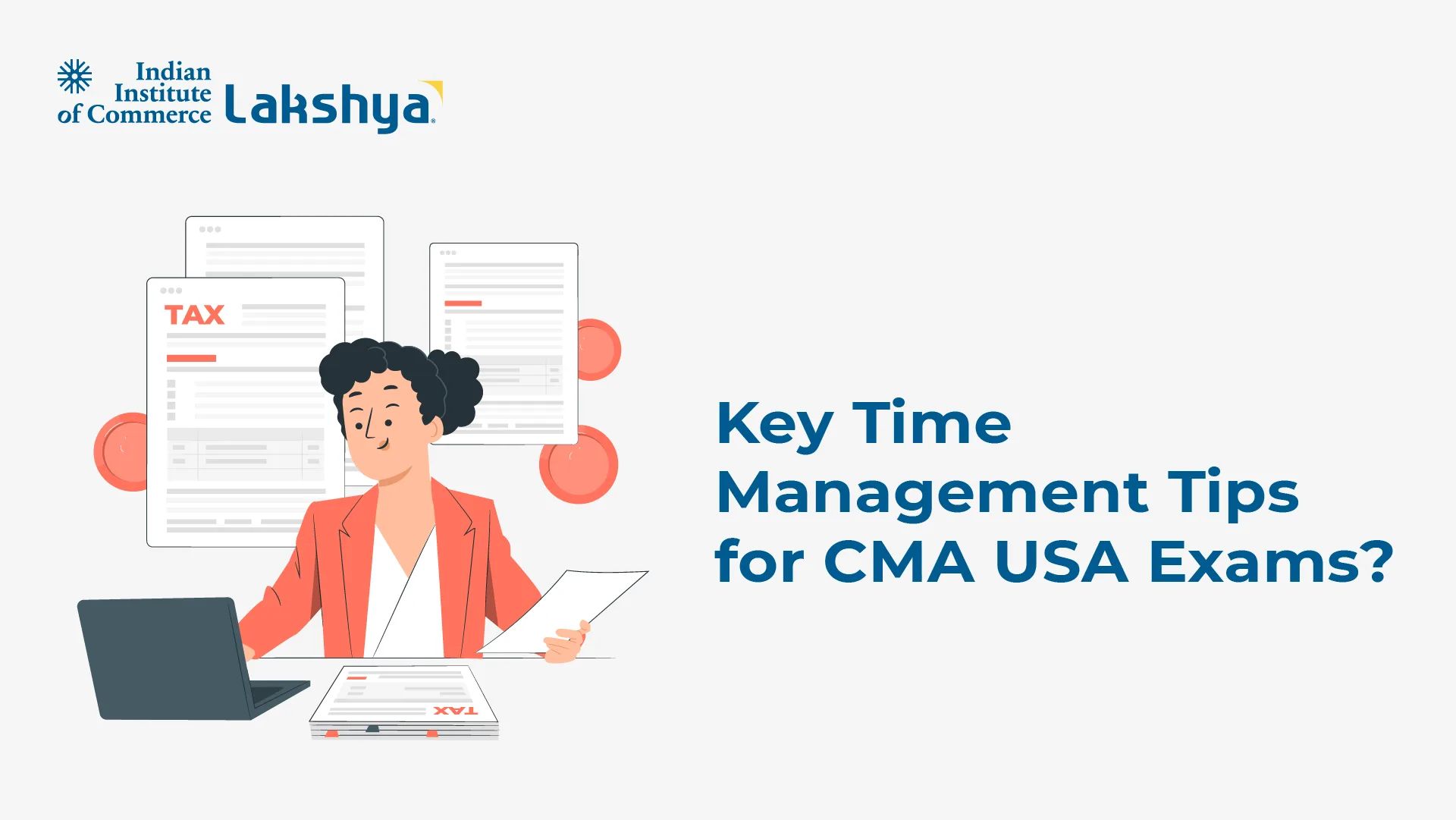
Key Time Management Tips for CMA USA Exams
 By IIC Lakshya
 03 Feb 2026

The CMA USA exam is designed to test not only your knowledge of management accounting and strategic finance, but also your ability to think, analyze, and respond within a limited time frame. With a mix of multiple-choice questions (MCQs) and essay-based scenarios, time management becomes one of the most critical factors determining success in both Part 1 and Part 2.
Many CMA aspirants find the syllabus manageable but struggle during the exam because they fail to allocate time wisely. Developing strong time management skills early in your preparation can significantly improve accuracy, confidence, and overall performance.
Why is Time Management Crucial in the CMA USA Exam?
Each CMA USA exam part has a fixed duration and includes 100 MCQs followed by two essay questions. Poor time allocation in the MCQ section can leave candidates rushed and mentally exhausted before reaching the essays, which require deeper thinking and structured answers.
Effective time management helps you:
- Maintain consistent focus throughout the exam
- Avoid rushing through high-weight essay questions
- Reduce exam-day stress and anxiety
-
Maximize scoring opportunities even in challenging areas
Candidates who manage time well often perform better, even when the difficulty level is high.
CMA Exam Pattern
Before walking into the exam hall, it is essential to have a clear understanding of the CMA exam structure. Knowing how much time is available for MCQs and essays helps you plan your pace in advance rather than making decisions under pressure.
Familiarity with the pattern allows you to:
- Set realistic time limits per question
- Transition smoothly from MCQs to essays
-
Avoid spending too long on early questions
Preparation with clarity leads to confidence on exam day.
Set Clear Time Targets for MCQs
MCQs form the foundation of the CMA exam and also determine whether you qualify to move on to the essay section. A disciplined approach to time is essential here.
Instead of spending too much time solving complex MCQs, focus on:
- Answering easier questions first
- Making informed choices for difficult ones
-
Avoiding over-analysis of a single question
Sticking to a planned pace ensures that you complete all MCQs without mental fatigue.
Save Energy and Time for Essay Questions
The essay section of the CMA exam tests application, logic, and clarity of explanation. Candidates often underperform here simply because they run out of time or feel mentally drained after MCQs.
Smart time management ensures that you:
- Reserve sufficient time for planning essay answers
- Read requirements carefully before writing
-
Structure responses clearly with headings and calculations
A well-managed essay section can significantly boost overall scores.
Practice Writing Concise and Structured Answers
In the CMA exam, essays are evaluated not just on correctness but also on clarity and relevance. Writing long, unfocused answers wastes time and may not add value.
Practicing concise writing helps you:
- Communicate key points quickly
- Avoid unnecessary explanations
-
Cover all parts of the question within the time limit
Clear structure saves time for both writing and review.
Use Mock Exams to Build Speed and Stamina
Time management improves only with practice. Attempting full-length mock exams under timed conditions helps simulate real exam pressure and builds mental endurance.
Mock exams train you to:
- Maintain focus for extended periods
- Improve reading and interpretation speed
-
Identify areas where time is being wasted
Consistent practice reduces surprises on exam day.
Avoid Perfectionism During the Exam
One common mistake among CMA aspirants is striving for perfect answers. While accuracy is important, spending too long refining one response can cost marks elsewhere.
It is more effective to:
- Answer all questions adequately rather than a few perfectly
- Move forward once the key requirement is addressed
-
Trust your preparation and instincts
Balanced performance across sections leads to better results.
Stay Calm and Monitor Time Regularly
Stress and anxiety often disrupt time management. Keeping an eye on the exam timer without obsessing over it helps maintain steady progress.
Simple habits such as:
- Checking time after completing each section
- Taking brief mental pauses
-
Staying composed even when a question seems difficult
can make a significant difference in overall performance.
Develop a Personal Time Strategy for CMA
Every CMA candidate has unique strengths, some are quicker with calculations, others with theory. Understanding your strengths during practice allows you to create a personalized exam strategy.
Using the same strategy consistently in practice and the actual exam builds confidence and improves execution.
Learn More
FAQs on Time Management for CMA USA Exams
How much time should be spent on MCQs in the CMA exam?
You should pace yourself to complete MCQs comfortably while saving adequate energy and time for essay questions.
Are essays more important than MCQs in CMA USA?
Both are important, but essays test application and often influence final scores significantly.
Can I skip difficult MCQs and come back later?
Yes. It is better to mark and move on rather than lose valuable time early.
Does time management really affect CMA results?
Yes. Poor time management is one of the most common reasons candidates fail despite strong preparation.
Related Course



















































_11zon.webp)




















.webp)
.webp)

.webp)
.webp)
.webp)
.webp)
.webp)
.webp)
.webp)











































































































































































































































.webp)

























 salary.jpg)




.webp)

.webp)
.webp)