7 Objectives of IFRS: Significance, Features, and Objectives
 By IIC Lakshya
 21 Jan 2026
 ACCA
ACCA

As a professional working in the financial reporting industry, you need to learn about the objectives of International Financial Reporting Standards (IFRS). The primary goal is to achieve complete transparency and accuracy of financial data. Let us explore the objectives of the IFRS and their significance.
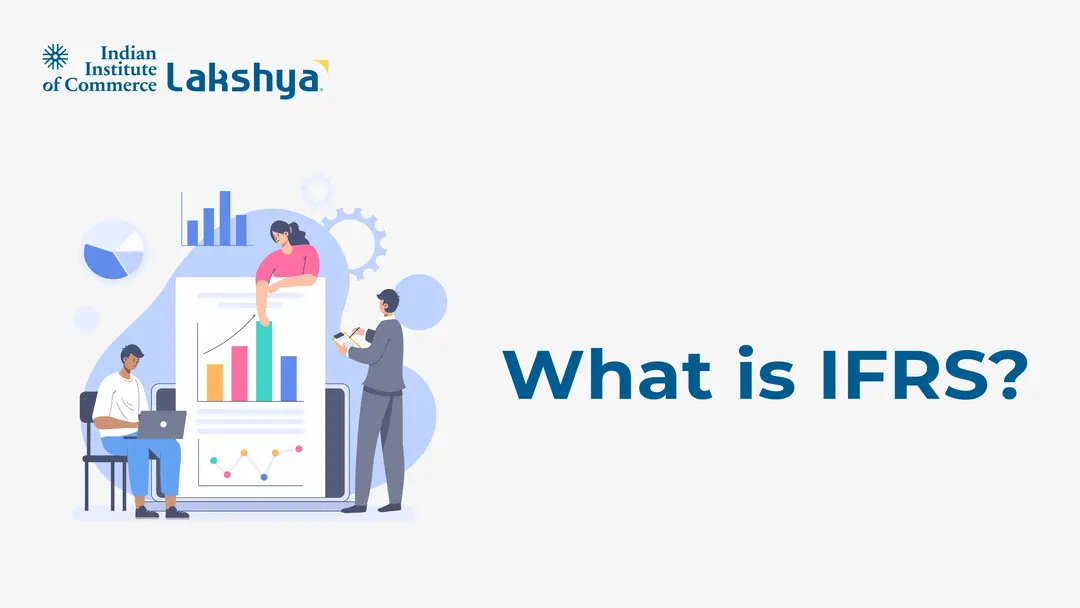
What is IFRS?
The full form of IFRS is International Financial Reporting Standards (IFRS). The accounting standards help in establishing consistency and transparency in the financial reporting and accounting industry. A robust framework has been established to foster growth, comparability, and quality performance. You can read about the uses of IFRS, the purpose, and significance.
Significance of IFRS
The financial information made available by companies after IFRS has been introduced is quite relevant to decision-making. The role of IFRS in performance management and financial control reflects its significance. Below are some of the significance of the implementation of the IFRS among companies and investors.
- IFRS is significant in integrating confidence among investors when they want to take a risk with a company.
- With accurate and transparent financial reporting and information being made available by companies, shareholders and investors find it effective.
- It also boosts growth on a global scale as it encourages cross-border investment and development.
Key Features of IFRS
IFRS brings clarity and transparency to companies by setting rules and regulations. Once you go through IFRS course & syllabus, which will give you a clear idea. Below are the key features of IFRS that help professionals understand how accounting practices are actually developed.
Transparency
The IFRS enhances the quality of the financial statements by making them more accurate. With all transactions shared on statements and reports, investors gain confidence in connecting with companies and investing in them. With the increasing demand for IFRS growth, there are several career options and salary after Diploma in IFRS.
Uniformity
As IFRS is a well-known certification across different nations. With their implementation, the uniform presentation of the financial data and statements across all companies and platforms. This ensures uniformity across all processes and effective management of financial information and accounting.
Adaptability
Companies implement IFRS Standards as it allows integration of legal and economic systems across international borders. They can adapt to the changing requirements in the accounting and finance industry, leading to growth and profitability. If you pursue the DipIFRS course, you will develop expertise in International Financial Reporting.
Objectives of IFRS
To learn about the objectives of IFRS, you must develop a deeper understanding of the concept of IFRS. The integration and establishment of IFRS standards promotes harmonization among companies, investors, and stakeholders. IFRS ensures financial reporting practices with more accuracy and transparency.
Accountability
When operating a company, accountability plays an important role in enhancing performance management and growth. The investors, management, and employees contribute to the overall functioning of the company; hence, implementing IFRS ensures corporate governance and complete disclosure.
Efficiency
Previously, when International Accounting Standards were implemented, there were some transactions that were omitted or not considered for financial reporting and bookkeeping. This created confusion with the overall accounting evaluation in a company or firm.
With the IFRS implementation, the process has become concise and easier. Preparing consolidated financial statements for both small and big multinational companies is easy and efficient. You can also read about the advantages and disadvantages of IFRS.
Enhancing Comparability
With the IFRS financial reporting, companies have effectively started comparing their performance, growth, threats, and areas of weakness on a global scale. Stakeholders and investors can effectively evaluate financial statements and performances of organizations and businesses with complete transparency.
Facilitating Global Investment
With a similar set of rules and standards followed by companies in various nations integrated by IFRS, barriers are significantly reduced. Cross-border investments increase efficiently with consistent reporting standards and data. Individuals want to work in companies internationally, and pursuing the ACCA course might bring more investment.
Supporting Economic Growth
With IFRS integrating efficient and accurate financial reporting, the credibility of organizations significantly increases. Companies, investors, and other stakeholders use the IFRS data to develop more confidence in the market.
Improved Transparency
The transparency is better when it comes to reporting financial information and data of companies on a global level. With IFRS accurate reporting, transparency has significantly developed over the past. Individuals pursuing the CA course will also have a detailed understanding of financial resources and reporting.
Standardization
Before the International Accounting Standards (IAS) were implemented and followed by companies working in the financial and accounting industry, there was confusion. A lot of data was skipped, which could not give complete financial information. With IFRS integration, standardization in accounting practices has become stable around the world.
Wrapping Up!
In conclusion, IFRS is a significantly powerful tool that is used by companies, multinational organizations, professionals, and investors in the financial accounting market. It offers consistency along with transparency in information and data evaluation. Industries and sectors have been able to follow effective economic performance with genuine financial disclosures.
Read More
- What is Diploma in IFRS Course?
- Benefits of a Diploma in IFRS
- GAAP vs IFRS: Definitions, Differences & Purposes
- Complete IFRS Standards List for 2025!
- IAS vs IFRS Comparison: What Companies Need to Know
Frequently Asked Questions on the Objectives of IFRS
What is the main objective of IAS?
The main objective of IAS is to increase transparency among businesses globally, leading to financial bookkeeping.
What are the six capitals of IFRS?
The six capitals of IFRS that are significant, which help in creating value for an organization, are social & relationship, financial, natural, intellectual, human, and manufactured.
What is the IFRS 5 model?
The IFRS 5 model applies to a disposal group or non-current asset, which is then classified to distribute to owners. A discontinued operation is an element of a component and is classified for sale or disposal.
What are the 5 elements of IFRS?
The 5 elements of IFRS that are significant are as follows:
- IAS 1 - Presentation of Financial Statements
- IAS 7 - Statement of Cash Flows
- IFRS 9 - Financial Instruments
- IFRS 15 - Revenue from Contracts with Customers
- IFRS 16 - Leases
What are the 5 types of capital?
There are 5 types of capital, namely financial, produced, social, natural, and human.
Related Course
























































_11zon.webp)























.webp)
.webp)

.webp)
.webp)
.webp)
.webp)
.webp)
.webp)
.webp)




































































































































































































































































































































.webp)








































 salary.jpg)






.webp)

.webp)
.webp)