Certified Internal Auditor (CIA): Definition & Career
 By IIC Lakshya
 27 Nov 2025
 Others
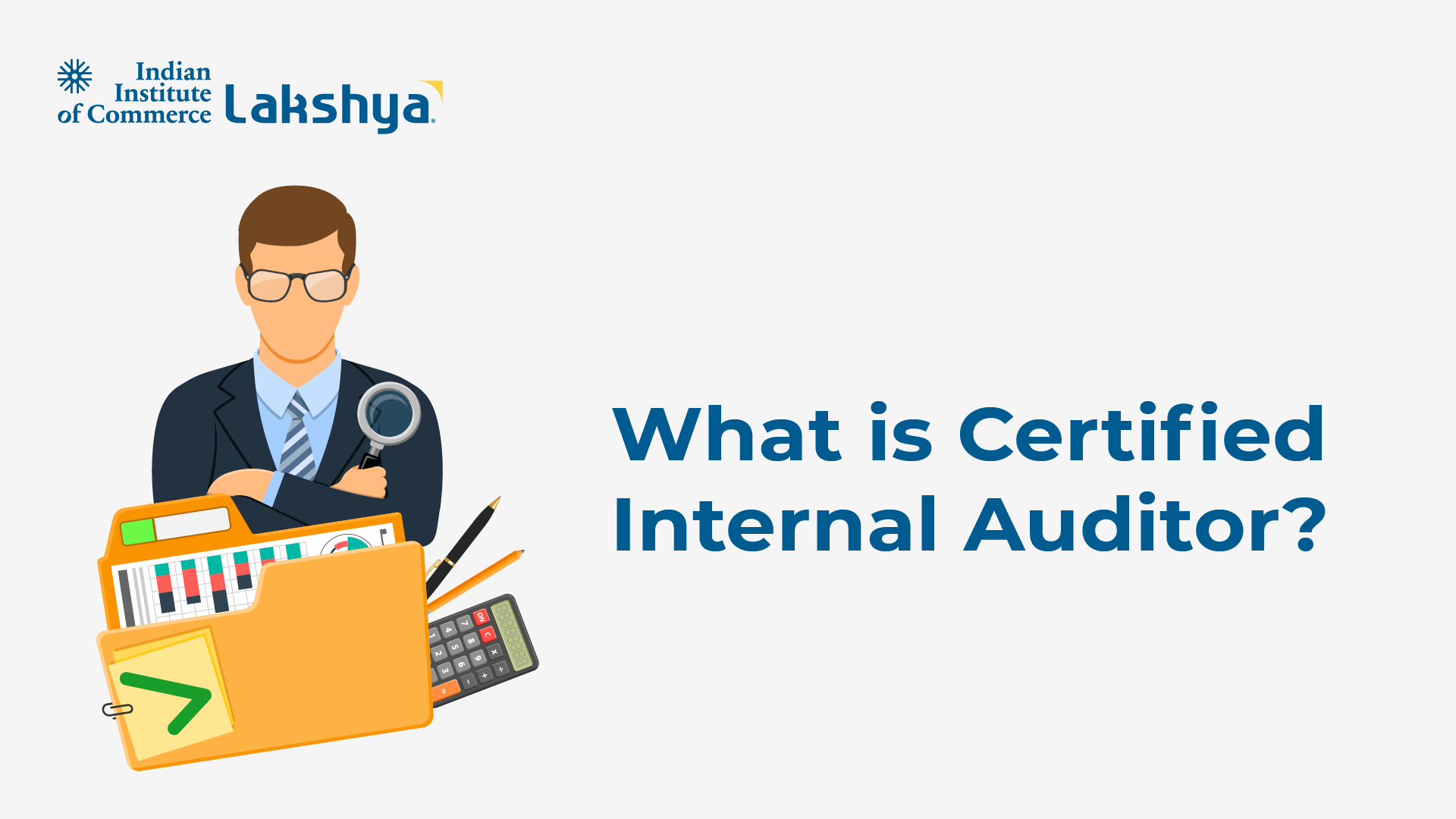
Are you planning to pursue a career in auditing in the finance industry? The Certified Internal Auditor (CIA) course offers you a globally recognised degree that is considered the gold standard for all auditors and organisations. Learn about the designation, its benefits, eligibility requirements, and exam structure and how to apply in this article.
What is a Certified Internal Auditor (CIA)?
The Certified Internal Auditor (CIA) is a designation where a professional has in-depth knowledge and expertise in internal auditing. This role will make professionals stand out in the finance and accounting industries with new career opportunities.
With a detailed understanding of the financial strategy in Commerce, the CIA professionals have a higher demand in the market. The CIA certification is globally known and recognised as a professional credential offered by the Institute of Internal Auditors (IIA).
The purpose of the CIA auditing course is to enhance the effectiveness and credibility of the internal audit functions of companies. It also validates the skills, professionalism and knowledge required in internal auditing.
Benefits of the CIA Credential
CIA is considered the global standard certification on a global scale, which is quite beneficial for professional qualifications. There are several benefits of the CIA credentials and how they influence the organisation and its operations. Their financial management matters for entrepreneurial success and the growth of established organisations.
- The first benefit of completing the CIA course is receiving global recognition across more than 170 countries.
- It advances the career as CIA professionals can apply for senior internal audit positions.
- The Certified Internal Auditor course demonstrates professionals' competence in internal audit standards, CIA ethics, and best practices.
- Organisations get professionals to add value to the process by improving risk management and managing control processes.
Eligibility Requirements of the CIA Exam
If you are planning to join the CIA certification program, you need to be aware of all the eligibility requirements. The scope of financial management helps CIA aspirants crack the financial industry. It is the first step towards becoming a Certified Internal Auditor to meet the following requirements for the CIA certification.
- Must have a bachelor’s degree
- Can be a student in the final year of higher studies after a bachelor’s degree
Possess five years of relevant work experience, which includes in-depth knowledge in the following topics:
- Risk management
- Quality assurance
- Internal and external auditing
- Compliance
- Internal control
- Assessment
- Possess an active and qualified internal audit practitioner designation
- Meeting the Standards of Ethics and Professionalism
- Maintaining exam confidentiality
- Covering all the continuing professional education (CPE) requirements
CIA Exam Structure
The CIA exam is a three-level exam which is designed to evaluate candidates on their knowledge, credibility, skills and learning of the concepts of internal auditing. Students will have to solve multiple-choice questions when appearing for the CIA exams across all levels. Below are the three levels or parts of the exam, which are based on the mentioned topics:
- Level 1 - Internal Audit Fundamentals
- Level 2 - Internal Audit Engagement
- Level 3 - Internal Audit Function
From the time of registration to the CIA certification program, students have three years to complete all coursework and qualify for all levels of the exams. It will integrate and fulfil your overall experience requirements.
How to Apply for the CIA Exam?
With the CIA certification, professionals develop a deeper understanding of the financial market. Now that students know how to check their CIA examination criteria requirements, this is how to apply for the CIA exam. To apply for the examination, the following steps explain in detail how to go about it.
- The first step is to check the CIA eligibility criteria (mentioned above)
- The second step is to apply for the examination. Students can apply online by filling up the application form available on the Certification Candidate Management System (CCMS), the online website of the IIA.
- The third step is to submit the application and the documents, which are proof of education, identification, professional experience and other relevant information.
- In the fourth step, applicants have to pay fees for the application and the examination.
Wrapping Up!
In conclusion, the Certified Internal Auditor (CIA) is a well-recognised and respected designation in the finance and accounting industry. The CIA certification enhances the career of professionals by offering them wider job opportunities and higher salaries. Certified professionals help organisations in their auditing of financial transactions.
Read More
- What role can Financial Education play in empowering women?
- What is CFA? - Chartered Financial Analyst
- Risk Management for Entrepreneurs
- ACCA Jobs in India: Scope & Salary
- What is the Impact of Economic Principles on Startup Strategies?
- How to Attract Investors & Funding through Commerce Skills?
Frequently Asked Questions on a Certified Internal Auditor
Can I be an auditor without a CPA?
An individual doesn't need to pursue CPA certification to become an auditor; it is a myth. The CPA license does help an auditor to practice in real life; however, it is not compulsory. There are other courses, like the CIA certification, to become an auditor.
How many attempts do I get for CFA?
Students receive a maximum of six attempts for each level exam in the CFA certification.
Is the CIA exam difficult?
The CIA exam is difficult due to the vast syllabus, which requires dedication, practical integration of knowledge and deep understanding into internal auditing. Students need to focus on the combination of standards, practical application and concepts of CIA.
What are the 4 pillars of internal audit?
The 4 pillars of internal audit that help in performing successful internal audit functions are Communication, Competence, Collaboration and Communication.
Is the CIA equal to CA?
No, the CIA and CA certifications are different when compared to the accountancy qualification markers like finance, audit and tax. CA is a wider certification covering all these aspects, while CIA is more focused on internal auditing and governance.
Related Course







































_11zon.webp)
















.webp)
.webp)

.webp)
.webp)
.webp)
.webp)
.webp)
.webp)
.webp)




































































































































.webp)
















 salary.jpg)


.webp)

.webp)
.webp)