Understanding Taxes and Legal Compliance for New Entrepreneurs
 By IIC Lakshya
 04 Nov 2025

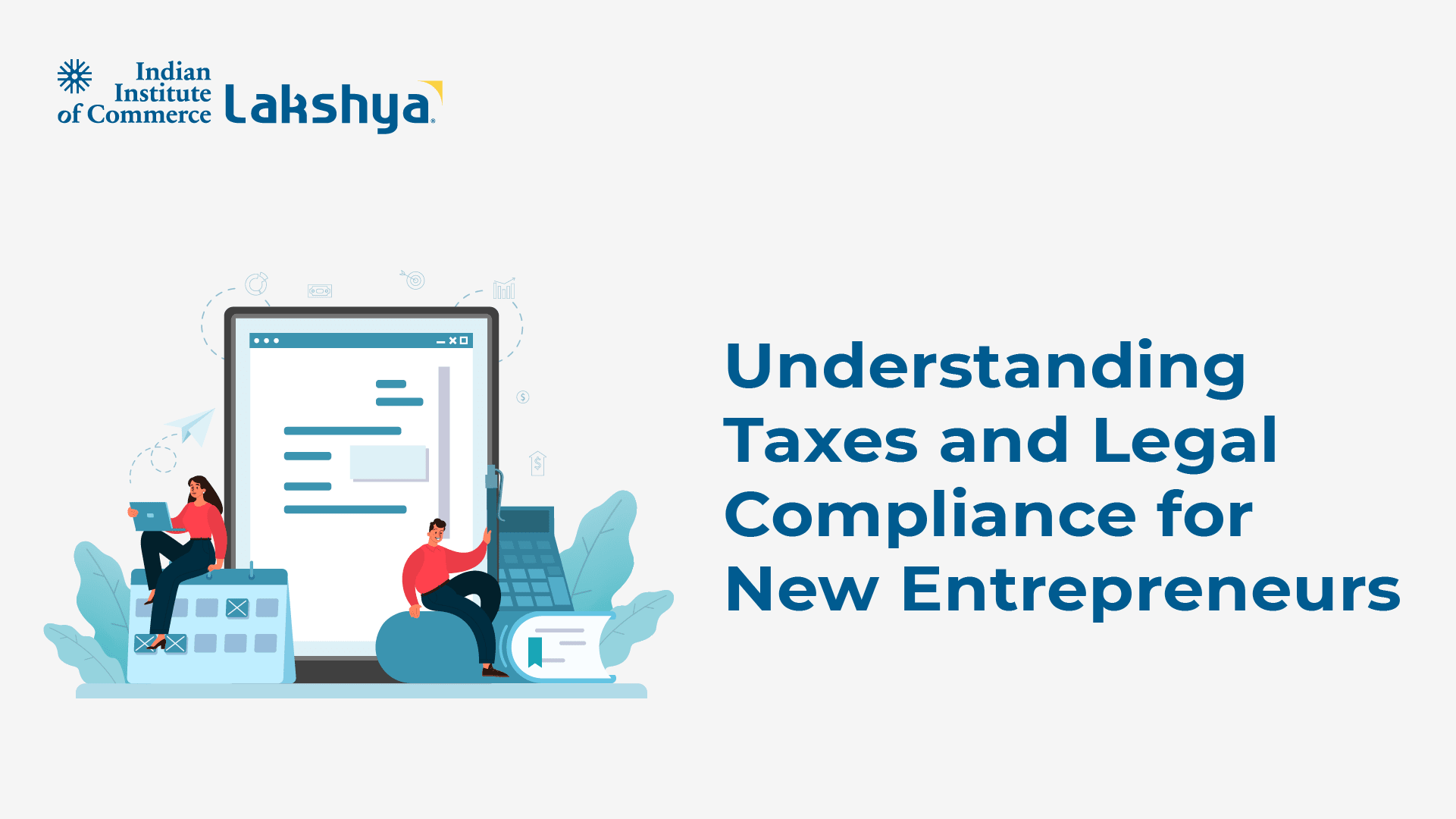
Starting a new business is very exciting; everything is full of creativity, innovation, and ambition. However, there is another side to an excellent idea, which is a very important backbone that must not be omitted: taxes and legal regulations. It is not the poor ideas that cause many startups and small businesses to fail; it is the fact that they are unwilling to accept the financial and legal liabilities associated with running a business.
This blog will make you realize why taxes, registration laws, and compliance necessities are important to every new entrepreneur before venturing into the world of business.
What Are Taxes and Legal Compliance?
Taxes refer to compulsory financial payments that the businesses have to make to the government. They invest in social services, infrastructure, and welfare.
Legal compliance, however, means that you will be obeying all the laws and regulations that apply to your business activities (registering, reporting, record keeping, etc.).
It is not a choice to learn either of these for an entrepreneur. It makes sure the business operates without any trouble, fines are not imposed, and that the business is reputed and trustworthy to the clients, investors, and regulators.
Business Taxes in India
There are various forms of taxes depending on the form of business structure as a sole proprietorship, partnership, or company. The following are the most significant ones that an entrepreneur must be aware of:
Income Tax
- Companies must pay income tax on the profit made.
- Proprietorships are taxed as individuals.
- Taxation of companies is done under the Companies Act and Income Tax Act.
- To reduce the liabilities, it is important to know your tax slab and the deductions available.
Goods and Services Tax (GST)
You are required to register GST (when your business has an annual turnover that is above 40 lakh of goods or 20 lakh of services). It substitutes previous taxes that are imposed indirectly, such as VAT, excise, and service tax. Monthly/Quarterly GST returns will also be a compliance measure and will be a source of credibility.
Tax Deducted at Source (TDS)
Businesses have to deduct TDS and make direct payments to the government, such as salaries, rent, and professional fees, and deposit it.
Professional Tax
Relevant in some states, professional tax is payable on individuals earning a salary, professionals and business owners.
Other Applicable Taxes
There can also be custom duties, excise or import/export taxes depending on the industry.
Legal Compliances for Entrepreneurs
Legal compliance refers to adherence to all the regulations that are relevant to your business model. Lack of any of the requirements may result in penalties or evenlicense suspension.
This is what should be considered by new entrepreneurs:
1, Business Registration
Any entrepreneur has to start up a business by registering their business.
- Sole Proprietorship: Sole proprietorship registered either under MSME or GST.
- Partnership: Partnership Deed in the Indian Partnership Act, 1932.
- Limited Company: Inc. Tinno ilmeni registering Companies Act, 2013.
- LLP (Limited Liability Partnership): Registered by the LLP act 2008.
2. Licenses and Permits
Depending on your industry, you might require:
- FSSAI license (food businesses)
- Shop & Establishment license
- Local municipality trade license.
- International trade Import Export Code(IEC).
3. Employment Laws
In case of hiring of employees, make sure that you comply with:
- EPF & ESI registration
- Payment of Wages Act
- Minimum Wages Act
4. Labour laws: Gratuity and Leave policies.
- Mental Property (IP) Protection.
- Secure your business ideas and brand by way of trademark registration, copyright or patents.
5. Annual Filings
LLPs, and companies are bound to submit annual returns, financial statements, and income tax returns. Nil returns must be filed even in the event that you do not make any profit.
Key Importance of Legal Compliance among the Entrepreneurs
Knowing where to pay taxes and legal issues is not a burden, it is a protection. It is what will keep your business stable, credible and scaleable. Your innovation comes as a new entrepreneur and is a result of your creativity, but your compliance helps you to hold your ground. Sum it up, innovation creates ideas, compliance empires.
Evades Fines and Criminalization:
- Failure to file on time or register operations may incur huge penalties and even a winding of the business.
- Builds Investor Trust: Investors like to engage in businesses with financial transparency and those ones which are legally acceptable.
- Enhances Company Image: Adherence fosters trust among the clients, suppliers and the government.
- Supports Long-Term Growth: A law-abiding business is easily expanded, loans can be applied, and funds can be attracted without any legal difficulties.
The role of commerce courses in enhancing business entrepreneurs' ability to grasp compliance.
Professional business courses such as CA, CMA, ACCA and CS are professional courses that provide the entrepreneur with a comprehensive knowledge of taxation, financial laws and business legislation.
- CA assists in being knowledgeable in accounting and taxes.
- CMA is concerned with the costs and regulatory standards.
- CS makes sure one has profound knowledge of corporate governance and secretarial laws.
|
Did you know? Have you heard that India is in the top 10 countries in the world in terms of amount of startups and yet almost 40% in the first three years are almost shut down? |
See Also
- Old Tax Regime vs New Tax Regime
- What is the New Tax Regime?
- What is the Old Tax Regime
- List of Laws in Commerce
FAQs on Taxes and Legal Compliance
Are there any new businesses that would require GST registration?
No, only business having turnover more than [?]40 lakh (goods) or [?]20 lakh (services) should be registered. Voluntary registration, however, leads to the development of credibility and enables you to receive input tax credits.
What happens in case of failure to file returns in time?
Late filing is subject to penalties, interest or even registration cancellation (that of GST and income tax in particular).
What can entrepreneurs do to make compliance management simple?
Automate filing, keep record and track tax easily using digital accounting software such as Tally, QuickBooks or Zoho Books. It is also good to consult a professional accountant or a company secretary.
Related Course






















































_11zon.webp)























.webp)
.webp)

.webp)
.webp)
.webp)
.webp)
.webp)
.webp)
.webp)










































































































































































































































































































.webp)








































 salary.jpg)






.webp)

.webp)
.webp)