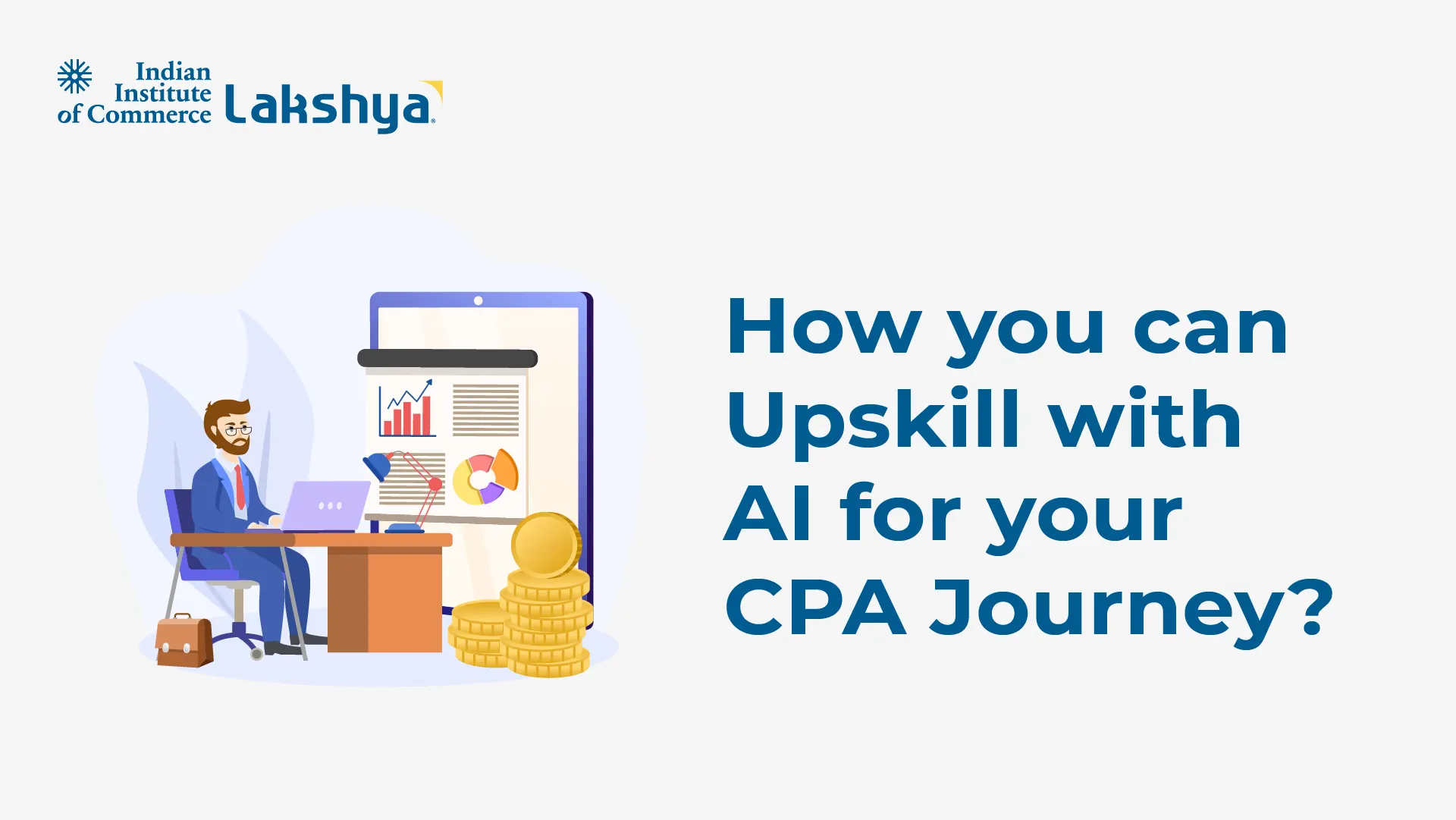
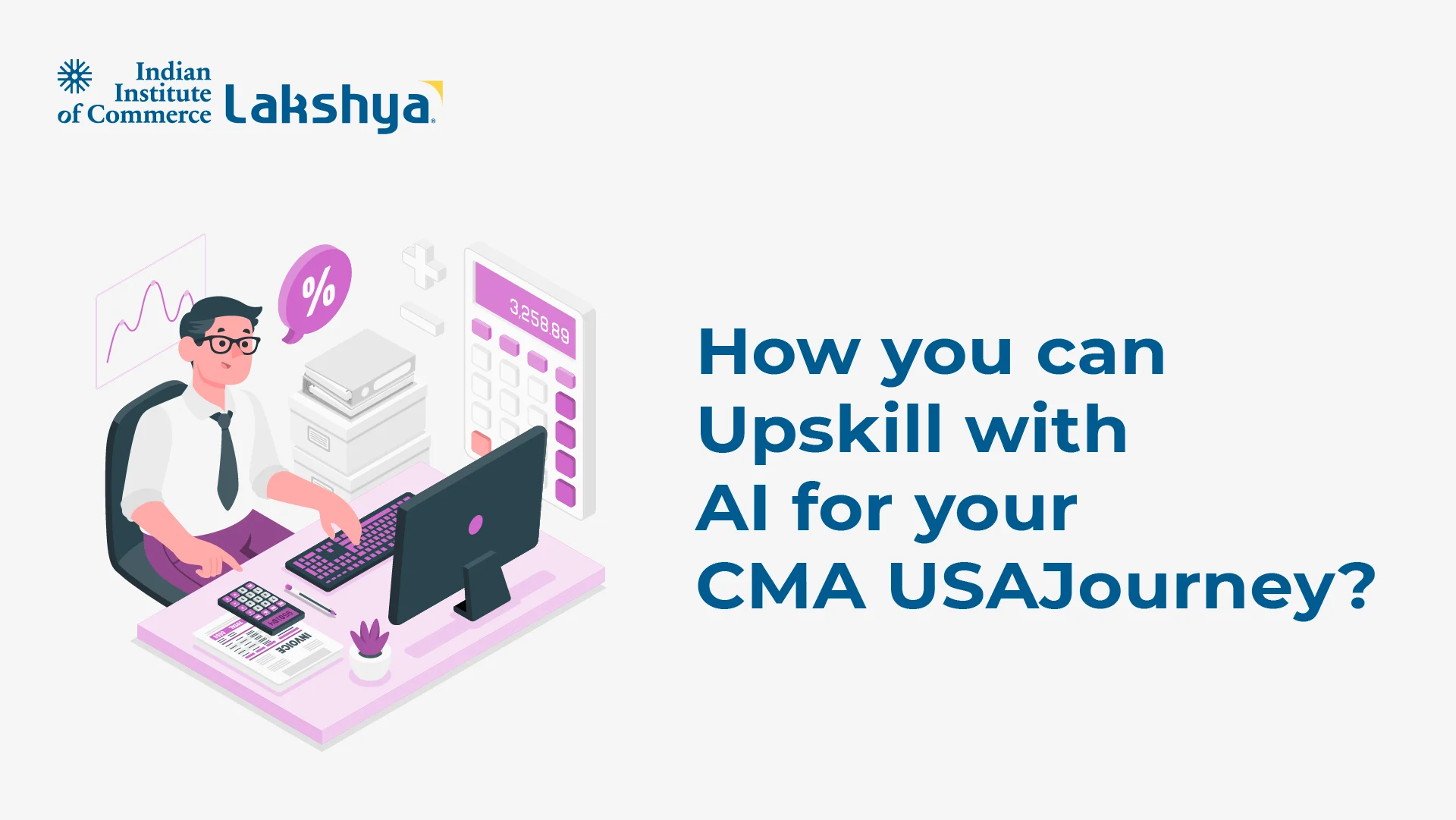
How can you Upskill with AI for your CPA Journey?
 By IIC Lakshya
 03 Feb 2026

The CPA journey is no longer just about mastering accounting standards, audit procedures, and taxation rules. With rapid changes in technology, Artificial Intelligence (AI) is becoming an integral part of how finance professionals study, work, and make decisions. For CPA aspirants, learning how to use AI as a study companion and professional tool can significantly improve preparation efficiency and long-term career readiness.
Upskilling with AI during your CPA journey is not about replacing core knowledge, it’s about enhancing understanding, saving time, and building skills that modern employers actively seek.
Why AI Skills Matter for CPA Aspirants?
The role of a CPA is evolving from traditional bookkeeping and compliance to analysis, interpretation, and advisory. Organizations increasingly rely on AI-driven tools for data analysis, forecasting, audit sampling, and risk assessment.
As a result, CPAs who understand how AI works, and how to work alongside it, stand out in the job market. Upskilling with AI during your CPA preparation helps you develop:
- Faster problem-solving abilities
- Better analytical thinking
- Stronger decision-making skills
-
Industry-relevant technical exposure
This combination of accounting expertise and AI literacy creates a powerful professional profile.
How to use AI to Improve CPA Exam Preparation?
AI can play a transformative role in how you prepare for CPA exams. Instead of studying passively, candidates can use AI tools to actively engage with the syllabus.
AI can help CPA aspirants:
- Break down complex FAR or AUD topics into simpler explanations
- Generate practice questions and case-based scenarios
- Summarize lengthy accounting standards or tax regulations
-
Identify weak areas based on mock test performance
By using AI strategically, candidates can optimize study time and focus more on conceptual clarity rather than repetitive manual effort.
AI for Financial Accounting and Reporting (FAR)
FAR is often considered the most demanding CPA paper due to its volume and technical depth. AI tools can assist by:
- Simplifying complex accounting standards
- Creating comparison tables between GAAP and IFRS
- Explaining journal entries and financial statement impacts
-
Simulating real-world reporting scenarios
This makes FAR preparation more structured and less overwhelming, especially for candidates studying alongside work.
AI in Auditing and Attestation (AUD)
Auditing is one area where AI is already widely used in practice. CPA aspirants who understand the AUD syllabus early gain a clear advantage.
AI helps in:
- Understanding audit planning and risk assessment
- Analyzing large datasets for anomalies
- Creating audit workflows and checklists
-
Practicing scenario-based audit judgment questions
Learning AI concepts alongside AUD prepares candidates for modern audit environments where technology-driven assurance is the norm.
AI for Regulation (REG) and Taxation
Taxation and business law involve frequent updates and complex rules. AI tools can assist CPA in REG candidates by:
- Summarizing tax provisions and compliance requirements
- Explaining case laws in simplified language
- Creating decision trees for tax planning scenarios
-
Helping track regulatory changes
This allows candidates to focus on application and interpretation, which are crucial for both exams and professional roles.
Developing AI Skills for CPA Careers
Beyond exams, AI upskilling prepares CPA aspirants for real-world finance roles. Key AI-related skills CPAs should develop include:
- Data interpretation and analytics
- Understanding automation in accounting processes
- Using AI-driven dashboards and reporting tools
-
Applying AI insights to business decision-making
CPAs with AI exposure are better positioned for roles in financial analysis, internal audit, advisory, and consulting.
AI Does Not Replace CPA Skills; It Enhances Them
A common misconception is that AI will replace accounting professionals. In reality, AI handles repetitive tasks, while CPAs provide judgment, ethics, and strategic insight.
By learning AI during your CPA journey, you future-proof your career and ensure that your skills remain relevant as the profession evolves.
How to Start Upskilling with AI During Your CPA Journey?
CPA aspirants can begin AI upskilling by:
- Learning basic concepts of AI and data analytics
- Using AI tools responsibly for study support
- Understanding how AI is applied in audit and finance
-
Staying updated with technological trends in accounting
The goal is not to become a programmer, but a tech-aware finance professional.
Read More
FAQs on AI Upskilling for CPA Aspirants
Do I need a technical background to use AI for CPA preparation?
No. Basic AI usage focuses on understanding outputs and applying insights, not coding.
Can AI replace studying for the CPA exam?
No. AI supports learning, but core conceptual understanding must come from structured study and practice.
Is AI knowledge useful for CPA careers in India and abroad?
Yes. Global firms increasingly expect CPAs to be comfortable with AI-driven tools and analytics.
When should I start learning AI during my CPA journey?
Ideally, alongside your CPA preparation, so both technical and professional skills grow together.
Related Course




















_11zon.webp)






.webp)
.webp)

.webp)
.webp)
.webp)
.webp)
.webp)
.webp)
.webp)























































.webp)










 salary.jpg)


.webp)

.webp)
.webp)