CFA Course Calculator Policy 2026: Approved Calculators
 By IIC Lakshya
 25 Nov 2025
 ACCA
ACCA
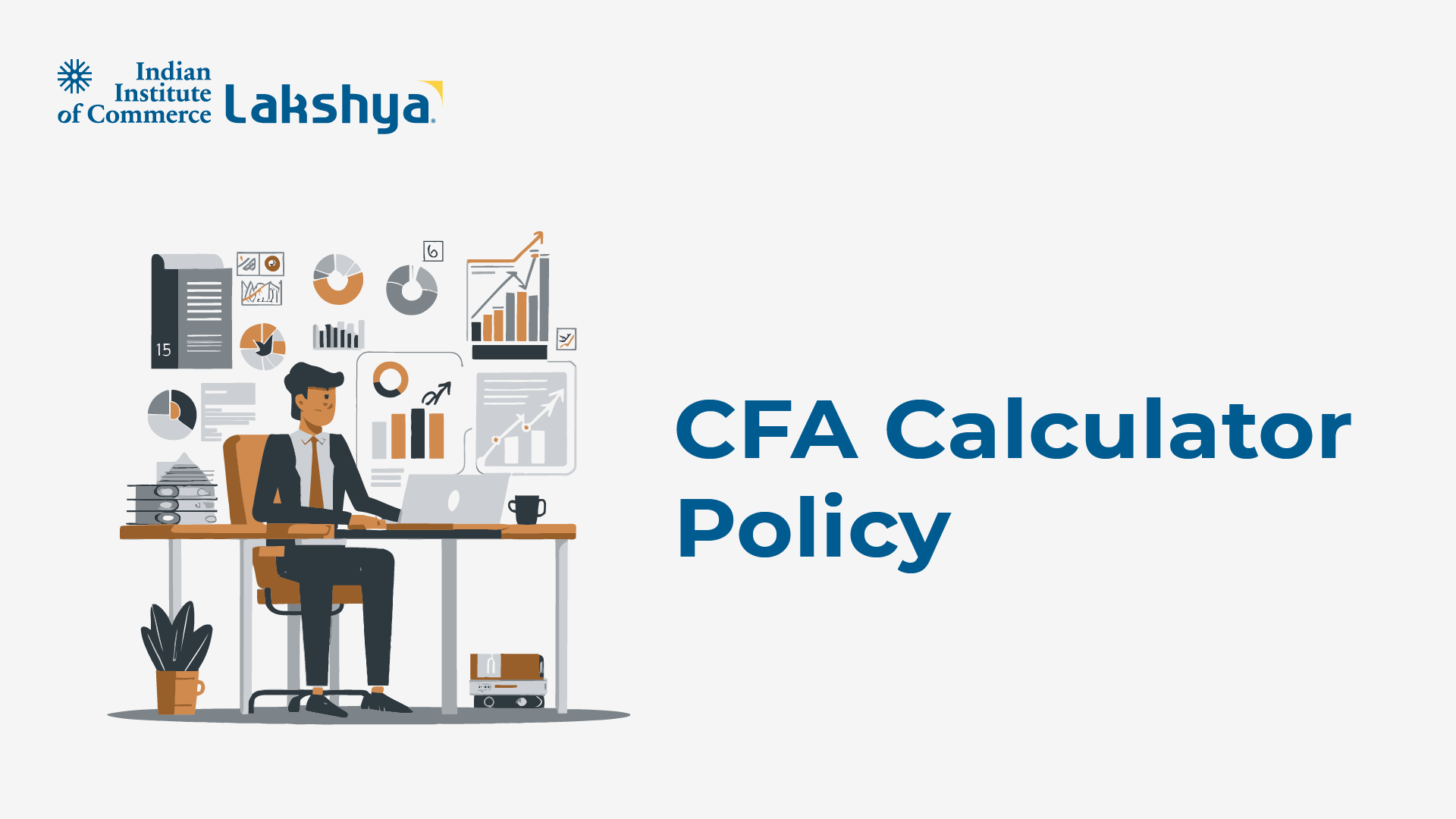
The integrity of the CFA examination is maintained using the CFA exam calculator and the integrated CFA calculator policy. However, what is a CFA calculator policy? It is a necessary step towards maintaining ethical practices in the exam while allowing students to save time and effort doing complicated calculations.
What is the CFA Calculator Policy?
When pursuing the CFA course, students need to do financial analysis. It requires calculations that include value-of-money (TVM) integration and complex time management. This is why the CFA Institute has established the CFA calculator policy that helps students to take the exam, using the calculator, saving time without using unfair means.
These policies ensure that no mathematical and cash analysis calculation is manipulated or that unfair means are not used. With the integration of this policy, all students get the same opportunity and support while cracking the exam. This opens a professional path towards finance jobs and a salary after CFA Level 1.
Objectives of the Policy
The CFA Institute integrates mathematical calculations and cash analysis. Use of specific calculators in exams saves time and effort. Students can effectively use their success in the CFA exam to lead to higher scope and job opportunities in India and abroad. Some of the significant objectives of the CFA calculator policy are as follows:
Fairness - this policy ensures that technology is not used to give the exam.
Uniformity - the policy implements uniformity, and calculators are uniform, and there is commonality. As tools, they are quite helpful and useful to attend the CFA exams.
Effective home security - use of the calculator minimizes the probability of cheating, hence, it is one of the policies. There is a limited chance of using programmable or internet-enabled tools, which are prohibited.
Approved Calculators in the CFA Examination
If you are planning to pass the CFA levels by self-study, learn about the use of CFA calculators. Here is a list of two approved calculators and their key features that are allowed in the examination hall for the CFA exam. These calculators are used on different CFA levels and are quite efficient.
Hewlett-Packard 12C
Below are the different types of Hewlett-Packard 12C calculators that students can carry in the exam halls. They help solve complex problems in finance and accounting in the CFA course and curriculum.
- Hewlett-Packard 12C
- Hewlett-Packard 12C Prestige
- Hewlett-Packard 12C Platinum
- Hewlett-Packard 25th Anniversary Limited Edition 12C Business Calculator
Key Features
Let us go through the key features of the Hewlett-Packard 12C calculators so that you will know why they are allowed. It will also highlight their significance while pursuing the CFA certification course. Some of the calculator models are Reverse Polish Notation (RPN). Students can make multi-step calculations in a limited time, and the key presses is also less.
These calculators are perfect for calculating annuities and perpetuities, bond valuation, capital budgeting, and loan amortization in the CFA Level I and II. The calculators are quite effective in calculating markups, percentage change, and percentage of total problems. They are useful in FRA and corporate finance.
Texas Instruments BA II Plus
Below are two types of calculators used for CFA calculations in the exam. These calculators are a little different, so the students might feel a little confused in the beginning. However, once they learn how to use the keys and become familiar with the calculator, they will enjoy using it.
- Texas Instruments BA II Plus (commonly used)
- Texas Instruments BA II Plus professional
Key Features
The calculator is quite effective, especially when students need to calculate bond calculations. The calculator is efficient in calculating the money functions, hence saving time during the exams. Learning about calculators is important in the CFA course because pursuing the CFA course is quite beneficial for financial students.
Students analyze cash flow, compute IRR, NVP, and depreciation schedules with the use of the calculator. Furthermore, it comes quite in handy for amortization schedules calculation and creating a depreciation worksheet, very useful in corporate finance.
Rules for Calculator Usage in Exam
The following CFA rules are significant for understanding calculator usage in the exam. If you want to learn about how to become a CFA, you need to be updated on all rules and regulations. As a CFA aspirant, you must stay updated and follow these rules. These rules are significant in helping students during the exam and saving time and effort.
- All candidates are allowed to carry two calculators in the exam hall. This rule is there in case one calculator doesn’t work; students can still use another.
- Aspiring CFA candidates should come with extra batteries, as they might not get them in the exam center. It will be useful if the calculator breaks down due to a limited charge.
- All students need to reset their calculators before their exam date. It helps in avoiding any complications that might occur due to the previous information fed into the calculator.
- Calculator cases or covers are allowed; hence, students can carry them into the exam hall.
- All electronic devices, including calculators and batteries, cannot be shared amongst students. Hence, every student should bring their own calculator.
Wrapping Up?
In conclusion, as an aspiring CFA professional, knowing the calculator policy and the rules related to it is a must. There might be harsh penalties that students might face if they break any CFA calculator rules. Students might also be disallowed from the exam if the penalty is too severe.
Read More
- What is the Salary of a CFA Level 2 in India?
- CFA Pass Rates - How Tough is CFA Exam?
- CFA Salary in Dubai
- Pursuing CFA After MBA - Is It Worth It?
- CFA Level 1 Eligibility Criteria
- FRM vs CFA: Which is Better for Quants in Finance?
Frequently Asked Questions on the CFA Calculator Policy
Is CFA harder than CPA?
Both CPA and CFA are challenging on their own level; however, the CFA exam is more difficult due to its lengthy curriculum, which is also quite comprehensive.
What if I fail in CFA Level 1?
If you fail the CFA Level 1 exam, you can retake the exam. However, you need to pay the registration fee again and prepare by creating a specific, structured study plan that is different from the previous ones.
How many hours to study for CFA?
Students need to dedicate a minimum of 300 study hours per exam for the CFA preparation. It will help them stay updated on the curriculum and prepare better.
Is CFA Level 3 harder than CA?
We cannot compare the CA and the CFA courses because both are difficult on separate levels. While CFA focuses on portfolio management, the CA course covers more diverse topics.
Can I use Excel instead of a financial calculator?
A financial calculator is good, but using Excel will educate students through the step-by-step process of calculating various financial and accounting processes. Students can customize the rules and calculations in Excel, while financial calculators just provide the solution.
Related Course





















































_11zon.webp)























.webp)
.webp)

.webp)
.webp)
.webp)
.webp)
.webp)
.webp)
.webp)






































































































































































































































































































.webp)




































 salary.jpg)






.webp)

.webp)
.webp)