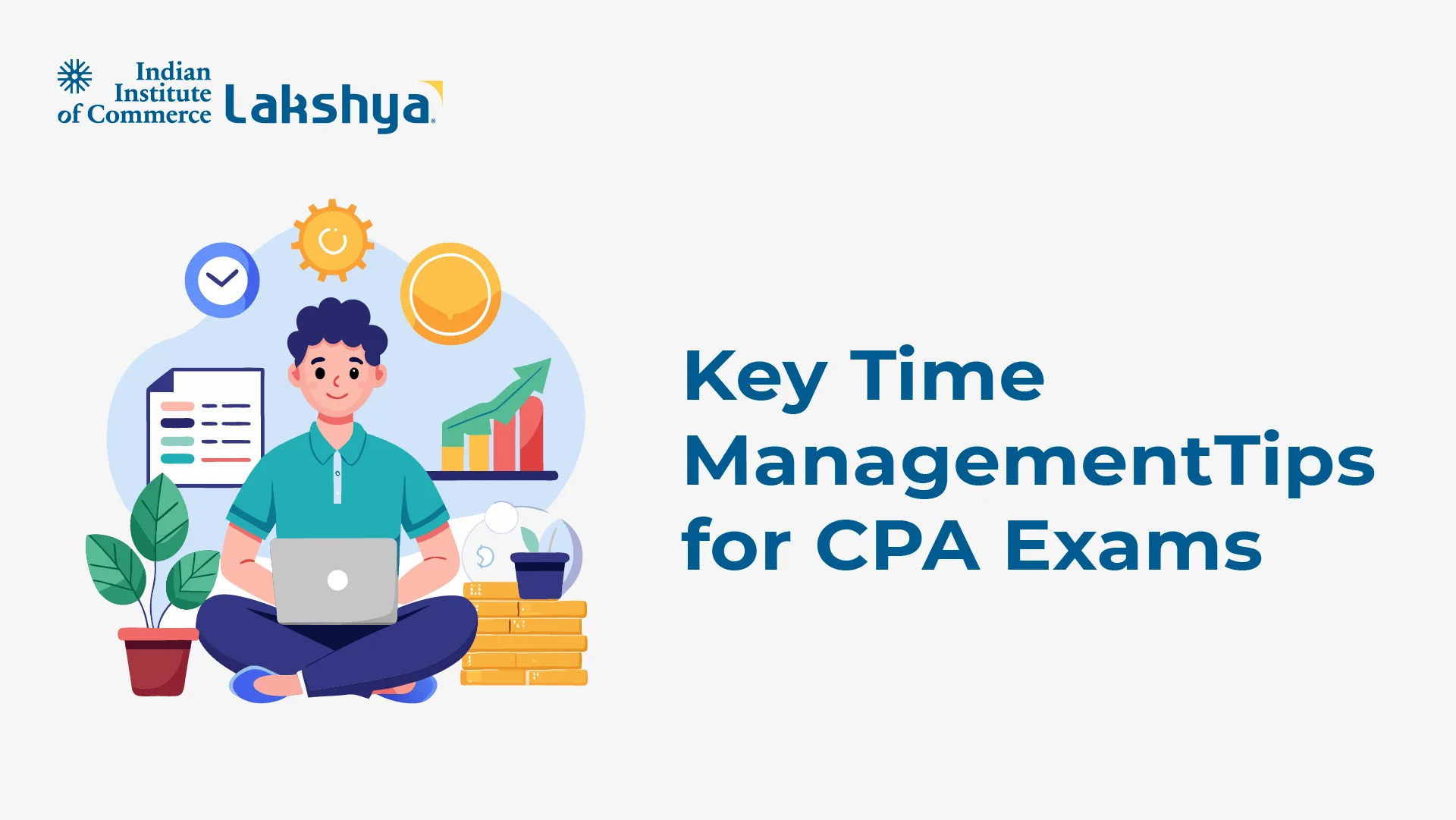
Key Time Management Tips for CPA Exams
 By IIC Lakshya
 03 Feb 2026

The CPA exam is not just a test of accounting knowledge, it is a test of time management under pressure. With multiple sections, complex simulations, and strict time limits, many well-prepared candidates struggle simply because they fail to manage time effectively. Mastering time management is therefore just as important as mastering FAR, AUD, REG, or BAR concepts.
Efficient time management helps CPA aspirants stay calm, improve accuracy, and complete all questions without rushing at the end. Developing the right strategies early can significantly increase the chances of clearing the exam on the first attempt.
Why is Time Management Critical in the CPA Exam?
Each CPA exam section has a fixed duration and is divided into multiple testlets, including multiple-choice questions (MCQs) and task-based simulations (TBSs). Spending too much time on one testlet can negatively impact performance in later sections, especially simulations, which carry substantial weight.
Good time management ensures:
- Balanced time allocation across all testlets
- Reduced exam-day stress
- Better focus and accuracy
-
Adequate time for review
Candidates who manage time well often score higher even with the same level of conceptual knowledge.
CPA Exam Syllabus
Effective time management begins with understanding the exam format thoroughly. Each CPA paper has a specific number of MCQs and simulations, along with a defined total exam duration.
Knowing how many minutes you can reasonably spend per MCQ and per simulation helps you avoid overthinking early questions. When the structure is familiar, you can plan your pace instead of reacting emotionally during the exam.
Set Time Benchmarks for Each Testlet
One of the most effective strategies is to set clear time benchmarks for each testlet. Instead of focusing on the total exam time, break it down into smaller, manageable segments.
For example:
- Allocate a fixed number of minutes per MCQ testlet
- Reserve sufficient time for simulations, which require reading, analysis, and structured responses
-
Keep a buffer for review or unexpected difficulty
This approach keeps you disciplined and prevents time from slipping away unnoticed.
Avoid Getting Stuck on Difficult Questions
A common mistake among CPA candidates is spending too much time on a single difficult question. Since MCQs generally carry equal weight, it is more effective to:
- Answer what you know first
- Make an educated guess if required
-
Flag the question and move on
Time saved here can be used more productively on simulations or review, where thoughtful responses matter more.
Practice Time Management During Mock Exams
Time management cannot be mastered on exam day alone—it must be practiced consistently during preparation. Attempting mock tests under real exam conditions helps build speed, confidence, and stamina.
Regular timed practice trains your brain to:
- Read questions faster
- Identify key requirements quickly
-
Maintain focus for long durations
Candidates who practice with a timer are far less likely to panic during the actual exam.
Manage Time Effectively in Task-Based Simulations
Task-based simulations often feel overwhelming because they involve multiple exhibits and detailed requirements. Smart time management here involves:
- Reading the requirement first before reviewing exhibits
- Identifying exactly what is being asked
-
Avoiding unnecessary calculations or explanations
Clear planning before answering saves time and improves response quality.
Use the Review Time Strategically
If you finish early or save time during MCQs, use the remaining time wisely. Instead of second-guessing everything, focus on:
- Reviewing flagged questions
- Checking calculations in simulations
-
Ensuring answers are complete and properly structured
A calm, focused review often helps catch small but costly mistakes.
Stay Calm and Control Exam Anxiety
Poor time management is often linked to exam anxiety. Panicking leads to rushed reading, misinterpretation of questions, and poor decisions.
Simple habits like:
- Taking a few deep breaths between testlets
- Keeping an eye on the on-screen timer
- Trusting your preparation can help maintain composure and steady pacing throughout the exam.
Build a Personalized Time Strategy
Every CPA candidate has a different strength profile. Some are faster in MCQs, while others perform better in simulations. Identifying your strengths during practice allows you to build a personalized time strategy that works best for you.
The key is consistency, using the same approach in practice and in the actual exam.
Read More
FAQs on Time Management for CPA Exams
How much time should I spend on MCQs in the CPA exam?
You should allocate time evenly across MCQ testlets and avoid spending more than the planned average per question.
Are task-based simulations more important than MCQs?
Both are important, but simulations carry significant weight, making proper time allocation crucial.
Should I guess if I’m running out of time?
Yes. It is better to make an informed guess than leave a question unanswered.
Can time management alone improve CPA scores?
Time management cannot replace knowledge, but it significantly improves how effectively you use your knowledge during the exam.
Related Course






























_11zon.webp)












.webp)
.webp)

.webp)
.webp)
.webp)
.webp)
.webp)
.webp)
.webp)







































































































.webp)









 salary.jpg)


.webp)

.webp)
.webp)