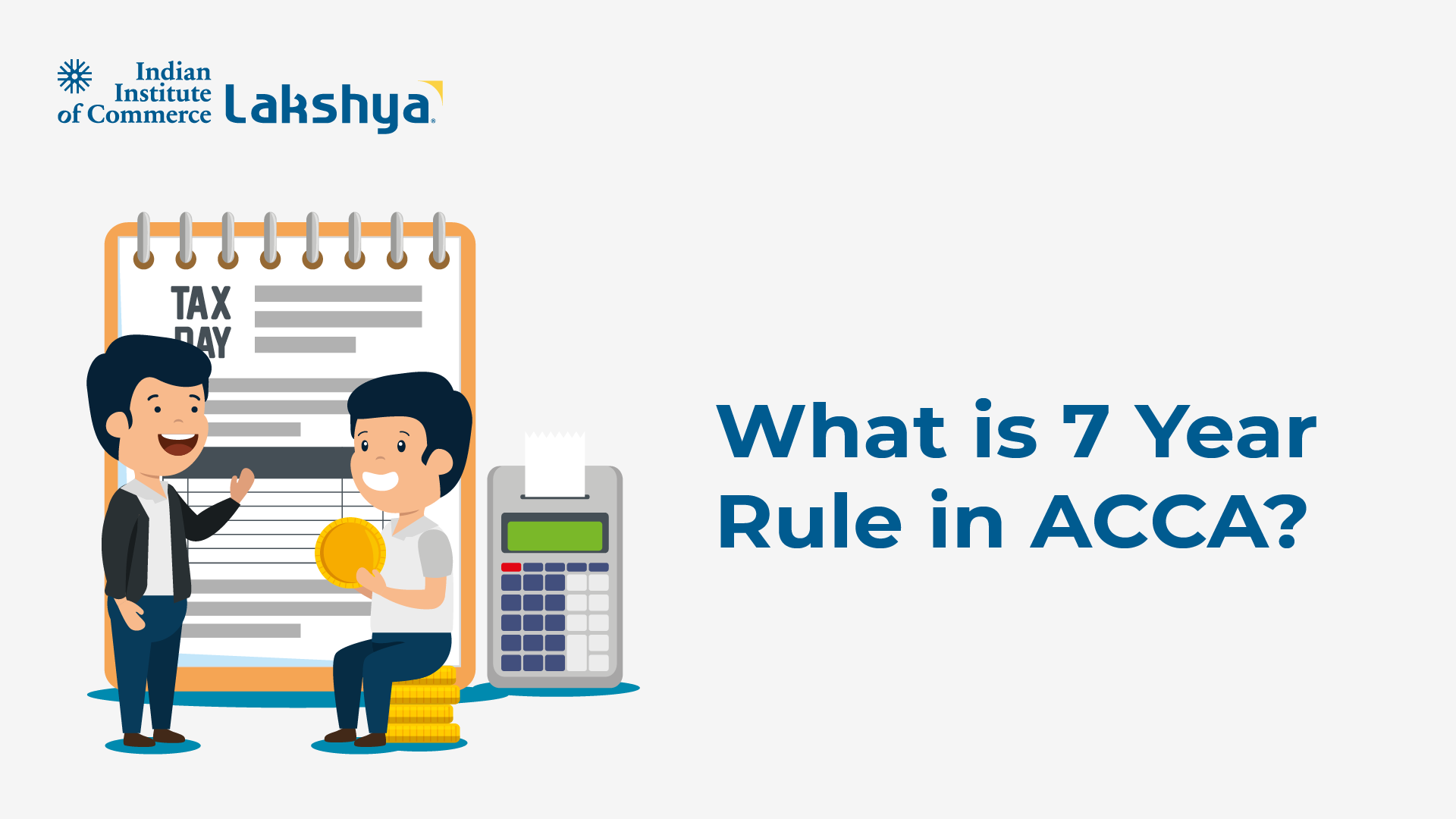
What is 7 Year Rule in ACCA?
 By IIC Lakshya
 03 Feb 2026

The ACCA (Association of Chartered Certified Accountants) qualification is known for its global recognition and flexible structure. However, many students hear about something called the “7-Year Rule” and get confused or even anxious about timelines. What does this rule actually mean? Does it apply to all ACCA papers? And how does it affect your study plan?
This blog explains the 7-year rule in ACCA in simple terms, who it applies to, and how students can plan their ACCA journey smartly without unnecessary pressure.
What Is the 7-Year Rule in ACCA?
The 7-year rule in ACCA refers to the time limit for completing the Strategic Professional level exams.
Once you pass your first Strategic Professional exam, you must clear all remaining Strategic Professional exams within 7 years. If you fail to do so, the passed Strategic Professional exams may expire, and you may need to reattempt them.
This rule is designed to ensure that ACCA members possess up-to-date professional knowledge at the time of qualification.
Which ACCA Levels Does the 7-Year Rule Apply To?
This is where most confusion arises.
The 7-year rule applies only to the Strategic Professional level, which includes:
- Strategic Business Leader (SBL)
- Strategic Business Reporting (SBR)
-
Two optional papers (AFM, APM, ATX, or AAA)
It does NOT apply to:
There is no time limit to complete the earlier ACCA levels.
When Does the 7-Year ACCA Clock Start?
The 7-year countdown starts from the date you pass your first Strategic Professional exam, not when you register for ACCA or complete earlier papers.
For example:
- If you pass SBL in June 2026, your 7-year period runs until June 2033
-
All remaining Strategic Professional exams must be passed within this window
This gives students a long and flexible timeline, especially compared to many other professional qualifications.
Why Does ACCA Have the 7-Year Rule?
ACCA operates in a fast-changing global finance environment. Accounting standards, regulations, ethics, and business practices evolve continuously. The 7-year rule ensures that:
- ACCA members have current and relevant knowledge
- Strategic-level skills remain aligned with modern business realities
-
The ACCA qualification maintains its global credibility
In short, it protects the value of the ACCA designation.
What Happens If the 7-Year ACCA Limit Is Exceeded?
If a student does not complete all Strategic Professional exams within 7 years:
- The earliest passed Strategic Professional exam(s) may expire
- The student may be required to re-sit expired papers
-
Earlier levels (Knowledge and Skills) remain unaffected
This is why planning the Strategic Professional level carefully is important.
Example: Understanding the 7-Year Rule Practically
Consider a student who:
- Passes SBR in December 2026
- Delays further attempts due to work commitments
-
Attempts remaining papers gradually
As long as all Strategic Professional exams are cleared by December 2033, the student is fully compliant with ACCA’s rules, without any penalty.
How Students Can Easily Manage the 7-Year ACCA Rule?
The rule sounds strict, but in reality, it is very student-friendly. With just four Strategic Professional exams and multiple exam windows each year, most students complete this level within 1–3 years, far below the 7-year limit.
Early planning, consistent attempts, and avoiding long gaps between papers ensure smooth progress.
See Also
FAQs on 7 year ACCA Rule
Does the 7-year rule apply if I take a break from ACCA?
Yes, but only if the break occurs after passing your first Strategic Professional exam. Breaks before that do not trigger the rule.
Will my ACCA registration expire because of the 7-year rule?
No. The rule affects only Strategic Professional exam validity, not your registration or earlier exam passes.
Can exemptions affect the 7-year rule?
Exemptions do not trigger the 7-year clock. The countdown starts only when you pass a Strategic Professional exam.
Related Course



















































_11zon.webp)




















.webp)
.webp)

.webp)
.webp)
.webp)
.webp)
.webp)
.webp)
.webp)













































































































































































































































.webp)



























 salary.jpg)





.webp)

.webp)
.webp)