Countries Using IFRS: Global Accounting Standards Explained
 By IIC Lakshya
 22 Jan 2026
 ACCA
ACCA
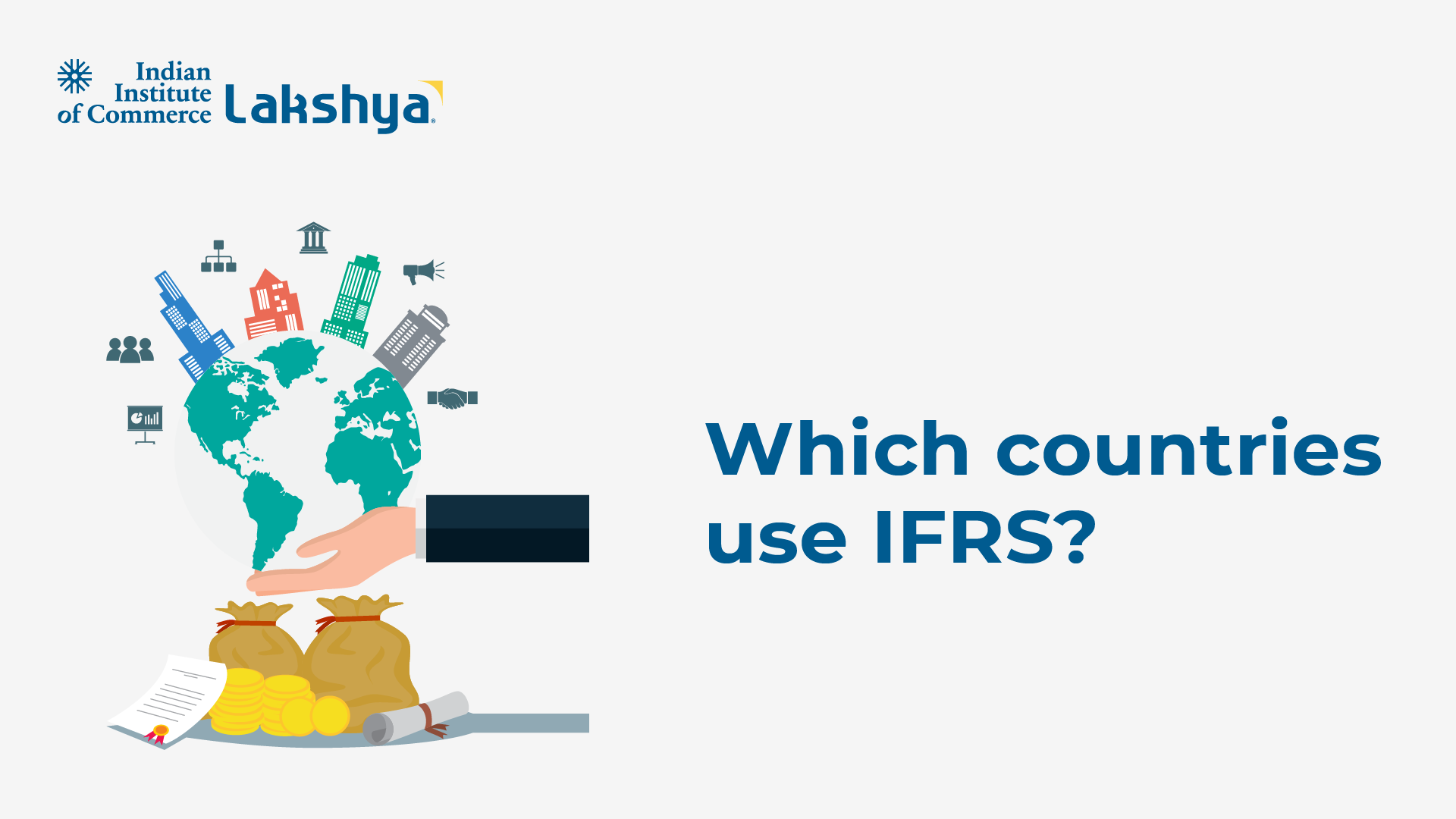
If you are a professional working in the financial and accounting industry, you must learn about countries that use the International Financial Reporting Standards (IFRS). Knowing the rules used to prepare and present financial statements will help professionals and companies understand them better.
What is IFRS?
The IFRS are a set of accounting standards that provide guidelines for companies, governments, and accounting professionals on how to prepare and present financial statements. The International Accounting Standards Board (IASB) has developed IFRS, ensuring consistency, comparability, and transparency across international and domestic markets.
You can learn about implementing IFRS in India and understand how the convergence with local standards works. Additionally, you understand why IFRS brings uniformity in financial reporting, leading to trust in the market.
Why Countries Need to Adopt IFRS?
The adoption of International Financial Reporting Standards might not be compulsory, but it has become essential in the interconnected global economy of today. Businesses and governments of different countries are operating across border hence, they need high-quality accounting standards that everyone follows. Several objectives of IFRS reflect the significance of the set of standards.
- This ensures consistency, comparability, and transparency across all financial statements
- When there is confusion regarding multiple national accounting standards and rules, the IFRS comes to the rescue
- Furthermore, the IFRS also helps boost investor confidence in investing in a company by creating and providing clear and reliable financial reporting
Benefits of Using IFRS
Now that we have discussed the purpose of why businesses and countries use IFRS, let us explore the benefits. Professionals with an ACCA qualification also develop an understanding of the IFRS practices. One of the significant benefits of implementing IFRS is the improved comparability of financial statements across industries and countries. Below are some of the significant benefits of IFRS include:
- All stakeholders, analysts, and investors can compare the performance of the company
- With the improved investor trust, the cost of capital decreases
- Multinational companies get simplified consolidation
- In financial reporting, the Standards increase accountability and transparency
- For financial institutions and businesses, the global credibility effectively
IFRS vs Local Accounting Standards
When comparing the IFRS with the Local Accounting Standards, the main difference is global acceptance. Additionally, with IFRS, there is more flexibility because it is principle-based, leading to the companies applying professional judgement.
However, the local GAAP systems might be rule-based and detailed practices, but with rigid Standards and guidelines. If a candidate pursues the DipIFR, they will develop an expertise in International Financial Reporting.
Impact on Global Financial Reporting
IFRS supports global competitiveness and sustainable business growth by promoting high-quality financial reporting standards. You can also learn about the role of IFRS in performance management and financial control. The impact is quite transformative, especially when it comes to creating a common financial language for all companies, countries, and governments functioning in the market.
- Smooth communication between companies, investors, auditors, and regulators worldwide
- The IFRS supports global capital market integration and has made the financial information more reliable
- Decreases the risks of corporate scandals and financial misstatements
- Brings global financial stability with efficient and transparent practices
Countries & Key Regions Using IFRS
Below is a list of countries in each continent that implement IFRS Standards themselves or permit companies functioning in their countries to implement. There are several uses of IFRS benefiting the countries regulating the standards. The requirements of IFRS reflect the significance of financial reporting and statements aligning with local standards.
|
Continent |
Countries |
IFRS Standards |
|
Europe |
|
They implement IFRS to create consolidated financial statements |
|
Asia |
|
IFRS is being converged with Generally Accepted Accounting Principles (GAAP) Ind AS - IFRS converged |
|
Middle East |
|
IFRS is being converged with Generally Accepted Accounting Principles (GAAP) Israel - heavily IFRS-based Turkey - IFRS for listed companies |
|
Africa |
|
IFRS integration for public reporting, small companies follow local GAAP or SYSCOHADA |
|
Americas |
|
If IFRS is implemented in all countries, Mexico must have standards for some entities |
Significant Exceptions
There are major countries worldwide who does not follow the IFRS Accounting Standards. Professionals working as CPA needs to develop an understanding of accounting on a global scale and its impact on the IFRS.
Below is a list of countries under different continents that do not follow the IFRS Accounting Standards. These countries have their local GAAP standards where the jurisdictions create financial statements and information using the consolidated Financial Standards of their country.
|
Continent |
Countries |
Different Standards |
|
North America |
|
|
|
South America |
Bolivia |
Bolivian Accounting Standards (local GAAP) |
|
Asia |
|
|
|
Africa |
|
|
Is IFRS Mandatory Worldwide?
Every country has the authority to decide whether IFRS is partially adopted, mandatory or the local financial standards are used. However, it is widely accepted across a lot of countries, including most of Africa, Europe, Asia, and parts of South America. You can also read about how AI in IFRS Accounting has been in recent years, leading to its demands and usage.
A lot of countries use IFRS for foreign countries; however, for domestic countries, they use their local Financial Standards. For example, the United States continues using the US GAAP for its domestic companies, while the IFRS is permitted for all foreign companies that are listed on the US stock exchanges.
Wrapping Up!
In conclusion, with so many countries using IFRS across the world, the financial statements and information have improved, become accurate, and transparent. The practices among businesses, companies, and individuals operating in the financial market benefit significantly from the implementation of the IFRS.
Read More
- IFRS vs Ind AS: Key Differences You Should Know
- IFRS 16 vs IAS 17: What Changed in Lease Accounting?
- Diploma in IFRS ACCA Exam: Meaning, Features & Eligibility
- How to Pass IFRS Certification Exam with 1 Month Left?
- How to Study for Diploma in IFRS in one month?
Frequently Asked Questions on Which Countries Use IFRS?
Is IFRS difficult to learn?
Yes, a professional challenge, IFRS is difficult because it integrates syllabus, professional requirements, and standards. Candidates should have specific study habits, access to the right support, and an accounting background.
Is GAAP or IFRS easier?
You cannot identify the GAAP or IFRS as easier, but which one is considered easier completely depends on the context. The adaptability and flexibility of the standards influence business, their rules-based system leading to a decrease in ambiguity in financial statements and reporting.
What are the 4 pillars of IFRS?
There are 4 pillars of IFRS: risk management, governance, metrics & targets, and strategy.
How many nations use IFRS?
There are more than 110 countries across the world who implements the International Financial Reporting Standards.
Which companies must use IFRS?
Newly privatized companies, insurance companies, banks, and government-owned enterprises must use IFRS standards. It is important for consolidated and separate financial reporting and statements of institutions.
Related Course
























































_11zon.webp)























.webp)
.webp)

.webp)
.webp)
.webp)
.webp)
.webp)
.webp)
.webp)















































































































































































































































































































































.webp)










































 salary.jpg)






.webp)

.webp)
.webp)