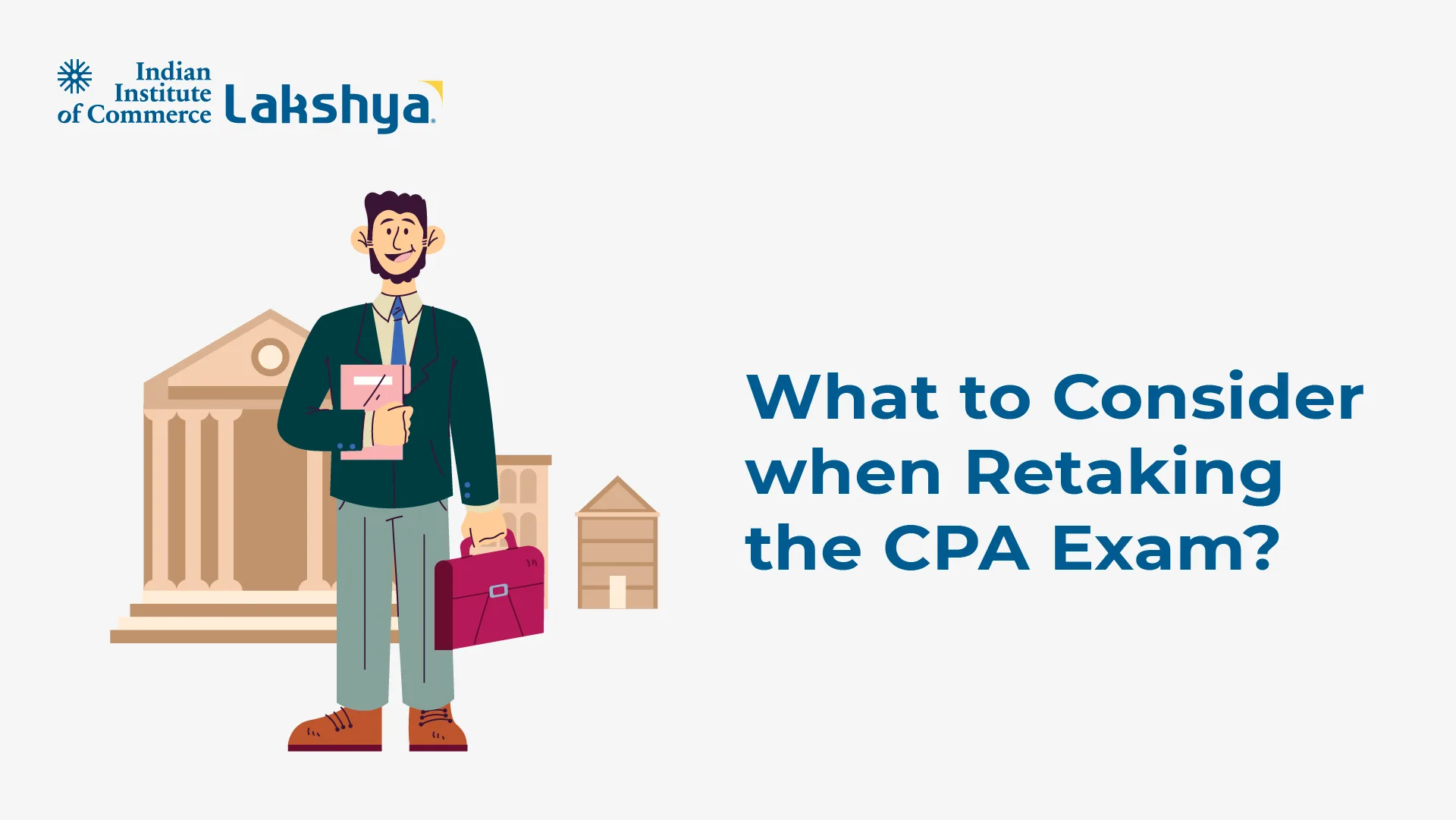
What to Consider when Retaking the CPA Exam?
 By IIC Lakshya
 03 Feb 2026

Not clearing a CPA exam section on the first attempt can be disappointing, but it is also far more common than most candidates realize. The CPA exam is designed to be challenging, and many successful CPAs have faced one or more retakes during their journey. What truly matters is how strategically you approach the retake.
Retaking the CPA exam is not about starting from scratch, it is about analyzing past performance, refining your approach, and improving execution. With the right mindset and plan, a retake can often lead to a stronger result than the first attempt.
Why Didn’t you Clear the CPA Exam?
Before planning your retake, it is crucial to understand what went wrong. Many candidates assume the issue was lack of knowledge, but in reality, the reasons are often more nuanced.
Common reasons include:
- Weak conceptual clarity in specific topics
- Poor time management during the exam
- Difficulty handling simulations
-
Exam anxiety or lack of focus
Identifying the real reason helps you avoid repeating the same mistakes and focus on areas that truly need improvement.
Analyze Your CPA Score Report Carefully
The CPA score report provides valuable insights into your performance across different content areas and skill levels. Reviewing it carefully allows you to pinpoint strengths and weaknesses.
Instead of being discouraged by the result, use the report as a diagnostic tool. It helps you decide where to spend more time and where your existing preparation is already sufficient.
Adjust Your Study Strategy, Not Just Study Hours
Many candidates respond to a failed attempt by simply increasing study hours. While effort is important, strategy matters more.
A retake should involve:
- Improving conceptual understanding rather than memorization
- Practicing more simulations and application-based questions
-
Revising weaker areas with a fresh approach
Small strategic changes often make a big difference in results.
Focus on High-Weight Topics
Not all CPA syllabus areas carry the same weight. During a retake, prioritizing high-weight and frequently tested topics is essential.
This ensures that your effort translates into maximum score improvement. Strengthening core areas also boosts confidence across the exam.
Improve Time Management and Exam Technique
Many retakes fail not because of lack of knowledge, but due to poor exam execution. Evaluating how you managed time in the previous attempt is critical.
Focus on:
- Setting clear time limits for MCQs and simulations
- Avoiding overthinking difficult questions
-
Practicing under timed conditions
Better time control often leads to significant score improvements without drastic changes in content preparation.
Practice Simulations with a Structured Approach
Task-based simulations are often the deciding factor in CPA exam outcomes. Retake candidates should spend extra time practicing simulations with a clear strategy.
Understanding requirements first, organizing answers logically, and avoiding unnecessary details can greatly improve performance and efficiency.
Maintain Confidence and the Right Mindset
A failed attempt can impact confidence, but it should not define your ability. Confidence plays a crucial role in exam performance, especially in long, high-pressure exams like the CPA.
Viewing a retake as a learning opportunity rather than a setback helps maintain motivation and focus.
Plan the Retake Timeline Wisely
Timing is important when scheduling a retake. Retaking too quickly without proper revision can lead to repeat failure, while waiting too long can cause loss of momentum.
Choose a timeline that allows:
- Focused revision of weak areas
- Adequate practice under exam conditions
-
Mental readiness and confidence
A well-timed retake often delivers better outcomes.
Use Your Previous Attempt as an Advantage
One major advantage retake candidates have is familiarity with the exam environment. Knowing the exam interface, question style, and pressure points helps reduce anxiety and improve performance.
This experience, when used correctly, can significantly improve results in the second attempt.
Read More
FAQs on Retaking the CPA Exam
Is it common to fail a CPA exam section?
Yes. The CPA exam is designed to be challenging, and many successful CPAs have retaken one or more sections.
Should I change my study material for a retake?
Not always. Often, improving how you use your existing material is more effective than switching resources.
How soon should I retake the CPA exam?
It depends on your readiness. A focused and well-planned retake is more important than speed.
Can I clear the CPA exam after failing once?
Absolutely. Many candidates perform better in retakes due to better strategy and exam familiarity.
Related Course






































_11zon.webp)
















.webp)
.webp)

.webp)
.webp)
.webp)
.webp)
.webp)
.webp)
.webp)






































































































































.webp)












 salary.jpg)


.webp)

.webp)
.webp)