FINRA Series 57 Exam Explained
 By IIC Lakshya
 06 Jan 2026

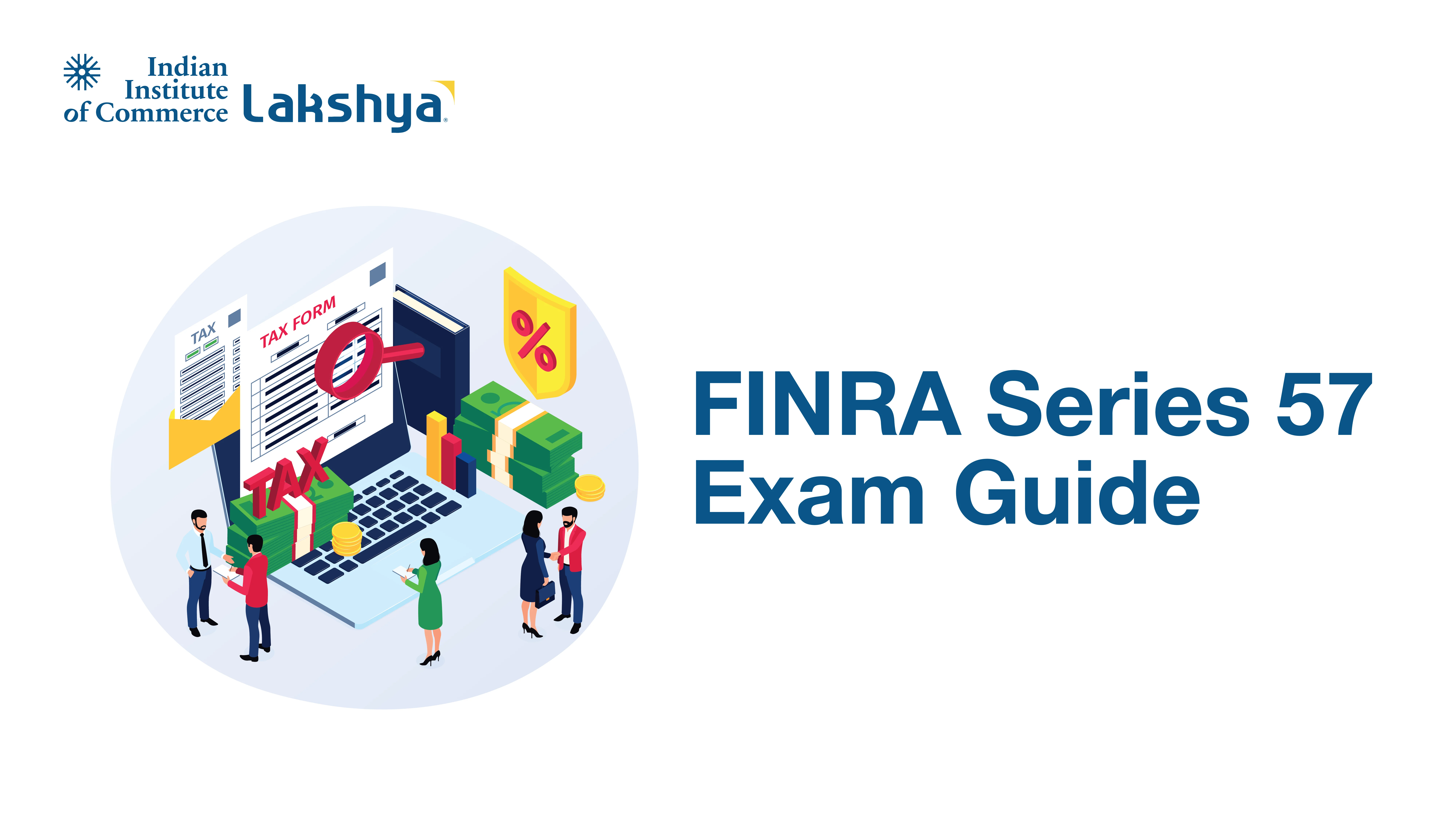
If you are planning a career in trading, you should be qualified and prepared appropriately to apply for securities trading industry careers. The Financial Industry Regulatory Authority (FINRA) Series 57 Exam is an effective licensing exam for candidates aiming to become trade securities professionals. Learn about the exam, its syllabus, exam structure, and career paths.
What is the FINRA Series 57 Exam?
The FINRA Series 57 exam is officially known as the Securities Trader Representative Qualification Examination. So, what is the FINRA Exam? There are different types, marked with numbers. The Series 57 entry-level license exam helps candidates become qualified professionals who learn skills and insights about trading securities on behalf of the broker-dealer.
As a professional, when you are executing trades, working with trading desks, handling market orders, and interacting with alternative trading systems (ATS) or exchanges, you must have the FINRA Series 57 license. The exam qualification will ensure that professionals will have skills like trading rules, market structure, ethical responsibilities, and regulatory requirements.
Topics Covered Under FINRA Series 57 Exam
Professionals working in securities trading have to broker investment deals for customers and understand their investment patterns. Learn about the FINRA Exams Levels and accordingly plan your study schedule. The Series 57 registration ensures the skills and expertise. Below are some of the significant topics that are covered in the FINRA Series 57 exam.
- Order Types and Trade Execution - professionals learn about trade reporting, market, stop-limit orders, best execution requirements, and order routing
- Market Structure - market makers, National Market System (NMS), Exchanges vs Alternative Trading Systems (ATS)
- Regulatory Framework - SEC regulations, Regulation NMS, FINRA rules, Regulation SHO (Short selling rules)
- Clearing and Settlement - role of clearing firms, trade comparison, error trades, trade corrections, and settlement cycles
- Trading Practices - manipulative trading practices, insider trading basics, prohibited trading activities
Exam Structure
Candidates, after having an in-depth understanding of the FINRA exam course and syllabus with the topics covered in detail, must learn about the FINRA Series 57 exam structure. Follow the tabular format to learn how it works.
Additionally, there are questions that are scenario-based; however, there are no long calculations. Professionals learn about how they deal with real-world trading situations and contribute their expertise.
|
Exam Features |
Details |
|
Question Type |
Multiple choice |
|
Number of Questions |
50 |
|
Exam Duration |
105 minutes |
|
Format |
Computer-based |
|
Passing Score |
70% |
How to Crack the FINRA Series 57 Exam
For professionals who are planning to crack the FINRA Series 57 exam, below are some of the significant strategies. These strategies will help professionals master the FINRA Series 57 exam rules. Keep reading the FINRA Series step-by-step study guides, which will lead to effective preparations.
- Study materials and resources must be used by professionals, as they focus on SEC regulations impacting equity trading, FINRA trading rules, and Order handling obligations.
- The core exam theme is how trades are moving from order entry to settlement, so professionals appearing for the exam must understand this
- Use practice questions to identify their weaknesses, improve time management, and focus on priority areas of the course, like trade reporting requirements, Regulation NMS, and best execution
Career Path After FINRA Series 57 Exam
For the best preparation, the FINRA Series exam study books should be effectively studied. With the completion of the topics, professionals should be able to understand the career opportunities waiting for them after they receive the license.
These career opportunities are both front-office and trading-related roles. These jobs are hired in proprietary trading firms, broker-dealers, investment banks, and high-frequency trading firms.
- Execution Trader
- Proprietary Trader
- Electronic Trading Specialist
- Market Maker
- Trading Desk Assistant
- Sales & Trading Associate
Wrapping Up!
In conclusion, the aim for candidates preparing for the FINRA Series 57 Exam is to learn trading regulations and understand the market structure. They will get career opportunities in securities trading along with working in technical positions with high value, rule-focused, and practical.
Read More
- FINRA Series 6 Exam: Eligibility, Syllabus and Career Path
- CFA vs FINRA Series 7: Comparison & Future Career Paths
- How to Become an Investment Banker after CA?
- Investment Banking Courses 2025: Placement & Career Guide
- Top AI Tools in Finance: Boost Efficiency & Growth
- Top Reasons Why Finance Professionals Choose CMA USA Over MBA
Frequently Asked Questions on FINRA Series 57 Exam Guide
Which FINRA exam is the easiest?
The Series 66 exam under the FINRA license qualification is considered one of the easiest tests. It will help candidates to act as the IAR who will fulfill their responsibilities for state registration.
What is the hardest financial exam?
The hardest financial exam considered most difficult to crack is the FINRA Series 7 exam.
What are the 4 types of securities?
The four types of securities that candidates appearing for FINRA exams should be familiar with are equity, hybrid, derivatives, and debt.
Is Series 7 or CFA harder?
The CFA exam is more challenging than the Series 7 because it is a three-level exam that requires advanced levels of knowledge and skill development. The preparation requires rigorous training and planning, while the Series 7 is an entry-level qualification.
Is 2 weeks enough to study for SIE?
If you are a student of Commerce and Finance, you will need 4 to 6 weeks, as most candidates require, to prepare for 40 to 60 hours of study time to qualify for the SIE exam. If you do not belong to this background, you might need more time.
Related Course





















































_11zon.webp)






















.webp)
.webp)

.webp)
.webp)
.webp)
.webp)
.webp)
.webp)
.webp)


















































































































































































































.webp)



























 salary.jpg)





.webp)

.webp)
.webp)