A Complete Guide on How to Become an IFRS Specialist
 By IIC Lakshya
 22 Jan 2026
 ACCA
ACCA
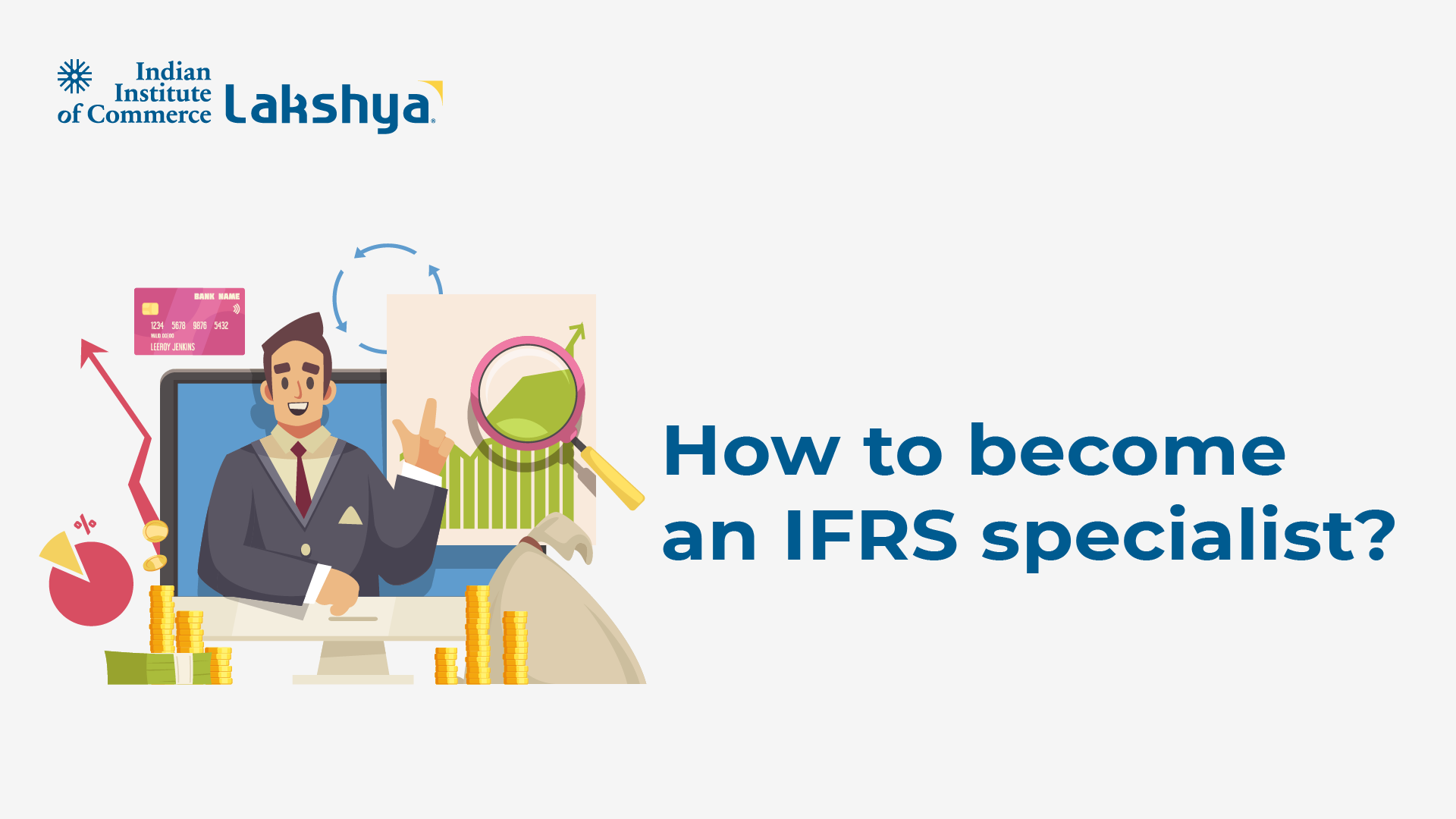
Do you want to become an International Financial Reporting Standards (IFRS) Specialist? As a candidate or a working professional who wants to build foundational knowledge and gain relevant experience. Here is a complete guide on how to become an IFRS specialist.
Steps to Become an IFRS Specialist
Candidates and working professionals develop expertise in the International Financial Reporting Standards (IFRS). Learn about the eligibility for DipIFR certification if you are an aspirant of the IFRS course. As an IFRS specialist, individuals contribute to the overall transparency and comparability among companies and markets.
The IFRS course certification is globally recognized and is in high demand in the current market. Below are the steps that will help you advance your global accounting career.
Step 1: Building Foundational Knowledge
To become an IFRS specialist, the first step is to develop a strong foundational knowledge of the financial reporting and accounting principles. It is better if the candidate has a background in finance, commerce, accounting, or business administration. Pursuing the CMA course will also help in recognizing various IFRS requirements.
However, even if you belong to a different discipline, you can apply for the IFRS certification. It is significant to understand the core topics related to cost accounting, financial statements, auditing, and bookkeeping; hence, it is recommended to have a background in commerce.
Learn how to become IFRS after 12th. It makes it easier for the candidates to grasp the IFRS concepts and practices. Below are some of the requirements:
- All candidates must learn about the IFRS Framework, which contributes to networking
- Candidates must develop expertise in the key standards like IFRS 9, IFRS 15, and IFRS 16
- The role of the International Accounting Standards Board (IASB) in business, finance markets, and governments
Step 2: Gaining Relevant Experience
Once candidates gained knowledge in IFRS, they need to have a practical exposure and understanding to become an IFRS expert. Professionals must know where to apply IFRS in real-world situations to improve financial performance. Individuals working as the CA can also apply for IFRS courses. Below are some of the positions that IFRS specialists work in:
- Auditor
- Accountant
- Finance Executive
- Financial Analyst
Professionals working in these roles must have an in-depth experience with reporting under IFRS, financial statement preparation, or consolidation under IFRS. These aspects help in enhancing practical understanding of how IFRS contributed to audit firms, international clients, and multinational companies with hands-on experience.
Step 3: Choosing an IFRS Certification
The most significant step to become IFRS specialist is to select the appropriate IFRS certification. Several certifications are offered by recognized bodies across the globe, like ACCA, CPA Institutes, ICAI, and other professional accounting organizations.
- Candidates with these certifications get validation in demonstrating commitment and technical knowledge.
- Furthermore, choosing an IFRS course also leads to career advancement and relevance to higher credibility and career prospects.
Step 4: Meeting Eligibility & Application
For every IFRS certification program, there are specific eligibility criteria. They include prior accounting experience or educational background qualifications. Students and graduates can apply for some programs, while other programs require specific work experience as an eligibility criterion. They learn about the benefits of a Diploma in IFRS.
Step 5: Studying & Passing the Exam
Candidates have to create a well-structured study plan that is focused on official study materials, IFRS standards, and practical case studies. The professionals must develop expertise to apply the knowledge and skills in real-life situations.
- It is important for candidates to consistently revise and stay updated with all the recent amendments to IFRS Standards.
- Candidates must practice mock test papers and learning of the overall IFRS course & syllabus details.
Job Prospects of an IFRS Specialist
In recent years, the job prospects of an IFRS specialist have developed significantly. There are several career options after a Diploma in IFRS. There are several organizations and countries that adopt International Financial Reporting Standards (IFRS) with cross-border business expansion and globalization.
Candidates must also read all about the advantages and disadvantages of the IFRS, which will guide them effectively. IFRS ensures transparency, compliancy and accuracy in financial reporting. Below are some of the significant job prospects that candidates and working professionals can apply for:
- Financial reporting manager
- IFRS consultant
- Audit manager
- Senior accountant
- Corporate controller
- Financial analyst
Wrapping Up!
In conclusion, when you want to become an IFRS specialist, you have to build strong foundational knowledge, earn a recognized IFRS certification, gain relevant work experience, and stay updated. Candidates interested in working in accounting, auditing, and global finance would find the IFRS profile a rewarding career choice.
Read More
- 7 Objectives of IFRS: Significance, Features, and Objectives
- Implementing IFRS in India: Key Steps and Challenges
- Role of IFRS in Performance Management and Financial Control
- IFRS vs Ind AS: Key Differences You Should Know
- IFRS 16 vs IAS 17: What Changed in Lease Accounting?
Frequently Asked Questions on How to Become an IFRS Specialist
What are the 4 pillars of IFRS?
The 4 pillars of IFRS are: governance, risk management, metrics & targets, and strategy.
Is IFRS difficult to learn?
The pursuit of the IFRS is a professional challenge, especially with the professional requirements and eligibility. Candidates must establish a specific study schedule, use the right resources, and have an understanding of accounting knowledge.
Can I do IFRS after BCom?
Yes, BCom graduates are eligible to prepare for the IFRS exam and certifications such as the AICPA IFRS Certification or the ACCA DipIFR.
Is an IFRS diploma worth it?
The IFRS diploma is worth it because it adds to the knowledge and skills of the finance and accounting professionals. Furthermore, it encourages and offers higher earning potential, a better career path, and global recognition.
Is IFRS accepted in India?
IFRS are accepted universally in the world as it is issued by the IASB. Several MNCs and their accountants uses IFRS based accounting practices, enhancing transparency, comparability, and accountability in the financial statements of different companies working domestically and abroad.
Related Course
















































_11zon.webp)




















.webp)
.webp)

.webp)
.webp)
.webp)
.webp)
.webp)
.webp)
.webp)


























































































































































































.webp)
























 salary.jpg)



.webp)

.webp)
.webp)