Implementing IFRS in India: Key Steps and Challenges
 By IIC Lakshya
 21 Jan 2026
 ACCA
ACCA
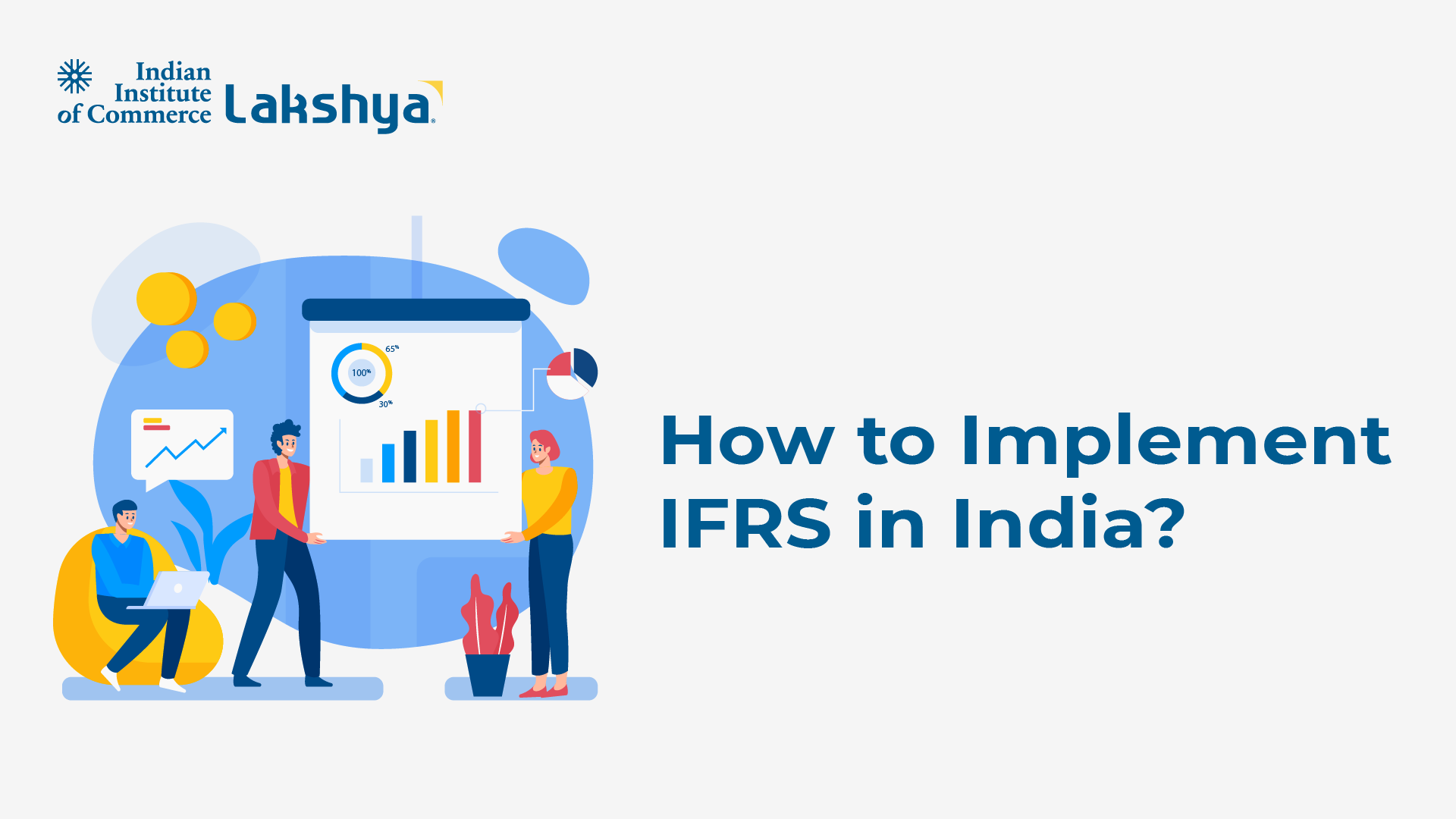
Professionals who want to learn about how to implement International Financial Reporting Standards (IFRS), this article will guide you effectively. The implementation process is discussed step-by-step, as candidates can manage financial reporting efficiently.
Steps for IFRS Implementation in India
When IFRS is implemented in India, it is about adopting the Indian Accounting Standards (Ind AS). The Ind AS is a converged set of standards that is based on IFRS. Considering IFRS is a significant part of the ACCA course, it is imperative for candidates to develop a deep insight into it. The integration of the phased approach involves the following aspects:
- System upgrades like parallel ledgers in SAP
- Policy changes
- Extensive training for finance teams
- Gap analysis
- Thorough project management to align processes
- Controls
- Disclosures with new requirements for large unlisted firms and listed companies
To learn how IFRS converged into Ind AS Standards and framework is implemented. It also brings in fair value-based recognition for companies in financial accounting. Below are some significant steps for the implementation of IFRS
Strategic Assessment & Planning
Candidates compare the current Indian Generally Accepted Accounting Principles (GAAP) with the Ind AS. They will learn about identifying significant differences, which will contribute to developing a detailed plan.
Some candidates want to become a CMA in India, and learning the ways of IFRS also contributes to their professional development. You can also learn about the Diploma in IFRS ACCA exam, reflecting the knowledge into its features.
- It also includes resource allocation and crucial conversion dates.
- The professionals develop a deeper understanding of performance metrics, processes, contracts, taxes, and systems.
System & Process Overhaul
The professionals working in the finance and accounting industry in India must know how to implement the IFRS Standards. The role of IFRS in performance management and financial control is huge. Data Migration is an integral part of that knowledge and skills as it educates candidates to prepare data on the transition date for the opening Statement of Financial Position (SOFP).
- Professionals learn how to create accounting policies and disclosure notes that are aligned with IFRS Standards and policies.
- Configuring accounting software like SAP, which is used for parallel ledgers, for new functionalities.
- Learning about IT system upgrades, professionals learn about creating a ledger for local GAAP and Ind AS.
Change Management & Training
With the integration of IFRS, finance and relevant staff should be trained on the new standards and processes. They must develop an understanding of change management by informing the shareholders, stakeholders, and the management board about changes and impacts. Candidates must also read the uses of IFRS to understand its long-term significance.
- Effective stakeholder communication helps in bringing positive change to the overall operations.
- Professionals must develop strong communication channels, a network, and oversight of the project. This ensures effective governance and compliance.
Execution & Monitoring
When a professional is planning to implement IFRS in India, they must prepare the opening SOFP for the first-time adoption. They learn to ensure that policies are consistently established and maintained across all reporting periods. Individuals pursuing the DipIFR course must learn and develop global expertise in financial monitoring.
- The professionals in the accounting industry should give trial runs to test new systems and processes.
- Candidates in the industry learn about post-implementation review, where effectiveness is reviewed, make adjustments to all ongoing processes in the business, and monitor controls.
Key Differences from Ind AS
In India, Ind AS is followed by a lot of companies. Let us learn about the key differences between IFRS and Ind AS so that companies and professionals can develop a better understanding of the future impacts of the practices. You can also give the IFRS 16 vs IAS 17 a read to develop a better understanding.
- The Ind AS has stricter requirements on consolidated financial statements
- For IFRS compliance, the Ind AS ensures that there is mandatory disclosure
- The revenue recognition is effective; hence, there is fair value-based recognition
- There are specific rules for non-functional currencies under the Ind AS
Wrapping Up!
In conclusion, most companies in India must adopt the Indian version of the IFRS, the Ind AS. All financial institutions, like insurers and banks, must follow the Standards because it is a requirement according to the RBI or IRDAI. Overall, the implementation of IFRS highlights the significance of Standards as it brings transparency, accuracy, and ensures market confidence.
Read More
- AI in IFRS Accounting: Functions, Benefits and Limitations
- What is the Effect of AI in IFRS: Benefits, Risks & Future
- How to Pass the IFRS Certification Exam with 1 Month Left?
- How to Study for a Diploma in IFRS in One Month?
- Complete IFRS Standards List for 2025!
- GAAP vs IFRS: Definitions, Differences & Purposes
Frequently Asked Questions on How to Implement IFRS in India
Do private companies need to use IFRS?
The private companies can use IFRS based on what the government in the country where they operate requires of them.
Who is eligible for IFRS?
Any accountant or professional auditor who works in accounting practices, freelances, or in business is eligible for IFRS.
What are the four principles of IFRS?
The four principles of IFRS are faithful representation, understandability, relevance, and comparability.
What is the IFRS checklist?
The disclosure checklist highlights the minimum requirements of IAS 34 - Interim Financial Reporting and other IFRS Accounting Standards. The intention is to check whether all candidates know about IFRS financial statements.
What are the challenges in the implementation of IFRS?
There are some challenges in the implementation of IFRS, like fair value issues, lack of technical skills and knowledge in Standards, cost, regulation, and complexity of standards.
Related Course






















































_11zon.webp)























.webp)
.webp)

.webp)
.webp)
.webp)
.webp)
.webp)
.webp)
.webp)






























































































































































































































































































.webp)





































 salary.jpg)






.webp)

.webp)
.webp)