CPA After B.com
 By IIC Lakshya
 03 Feb 2026

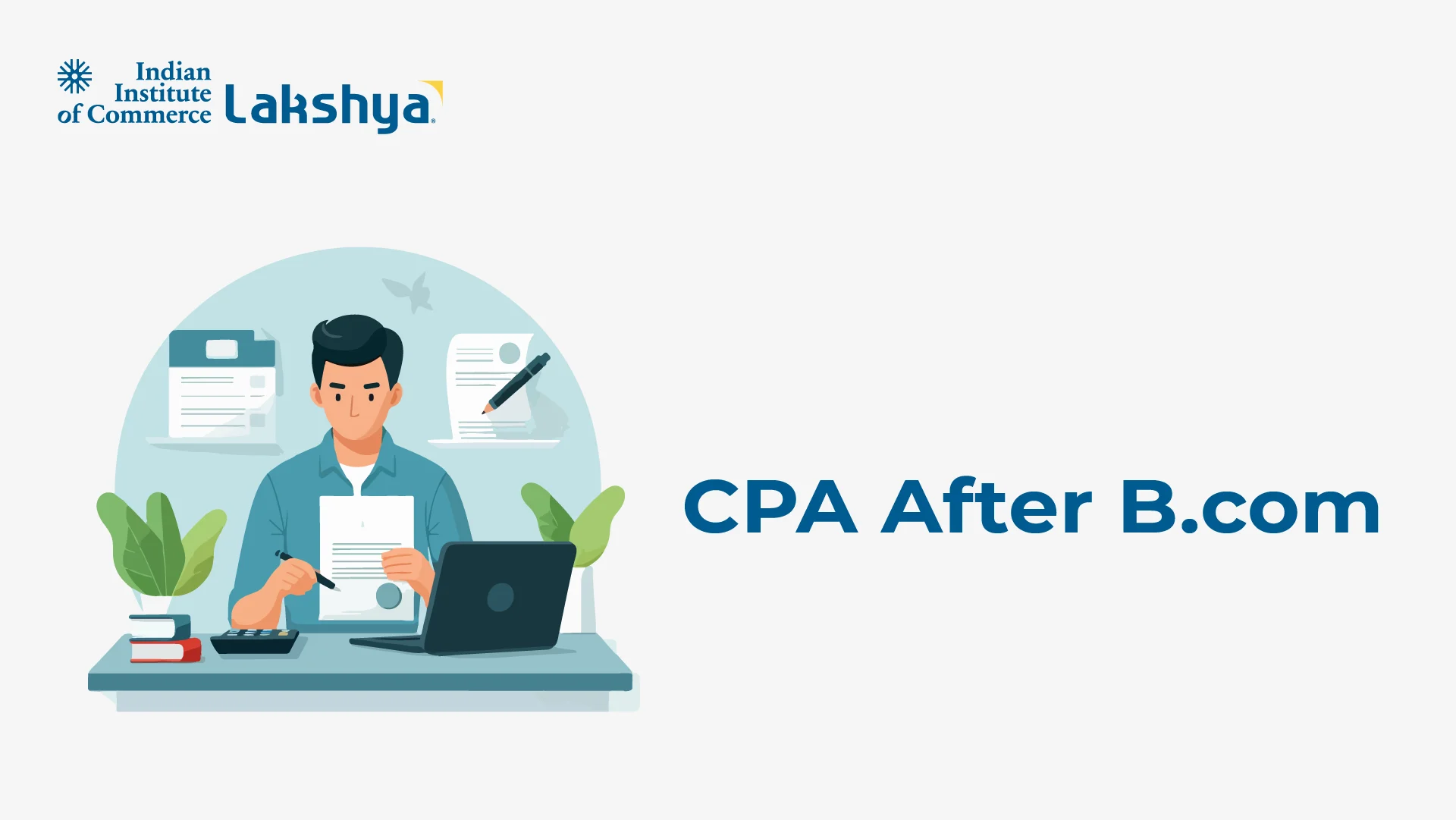
For many commerce students, B.Com is the foundation that opens doors to multiple professional pathways. Among the most popular and globally rewarding options today is pursuing the CPA (Certified Public Accountant) after B.Com. With its international recognition, flexible exam structure, and strong career outcomes, the CPA has become a preferred choice for graduates seeking careers in accounting, finance, audit, taxation, and consulting.
This blog explains everything you need to know about pursuing a CPA after B.Com, including eligibility, exam structure, career scope, and why it is a smart choice for commerce graduates.
Why CPA Is a Popular Choice After B.Com?
A B.Com degree equips students with core knowledge in accounting, economics, business law, and finance — all of which align closely with the CPA syllabus. This natural overlap makes CPA a logical and efficient next step after graduation.
Unlike traditional long-duration professional courses, CPA offers:
- A shorter completion timeline
- Global recognition, especially in MNCs and Big4 firms
- A flexible exam pattern suitable for working professionals
-
Strong demand in audit, accounting, and finance roles
For students who want an internationally relevant qualification without spending several years in articleship or training, CPA after B.Com offers a balanced and practical route.
Key Eligibility for CPA After B.Com
One of the biggest advantages of pursuing a CPA after B.Com is that most commerce graduates already meet a large part of the educational eligibility requirements.
To pursue a CPA, candidates generally need:
- 120 credit hours to appear for the CPA exam
-
150 credit hours to obtain the CPA license
A standard 3-year B.Com degree usually provides a significant portion of these credits. Any shortfall can often be fulfilled through:
- M.Com or MBA
- Additional accounting or business courses
-
Bridge programs accepted by U.S. state boards
Eligibility requirements vary slightly depending on the U.S. state board chosen, making proper planning essential at the beginning stage.
CPA Exam Structure for B.Com Graduates
The CPA exam consists of four papers, designed to test both technical knowledge and real-world application.
The four CPA exam sections are:
- FAR (Financial Accounting and Reporting): Financial statements, GAAP, IFRS
- AUD (Auditing and Attestation): Audit standards, ethics, internal controls
- REG (Regulation) : Taxation, business law, professional responsibilities
-
Discipline Paper: Advanced specialization area
B.Com graduates often find subjects like accounting standards, auditing, and taxation familiar, giving them a strong advantage during preparation.
When Is the Best Time to Start CPA After B.Com?
Students can start CPA:
- Immediately after B.Com
- During final year of graduation
- While pursuing postgraduate studies
-
Alongside full-time employment
Thanks to the continuous testing model, CPA exams can be scheduled throughout the year. This allows B.Com graduates to plan their preparation around personal, academic, or professional commitments.
Starting CPA early after B.Com helps candidates:
- Retain conceptual clarity from graduation subjects
- Complete the qualification faster
-
Enter the job market with a professional credential
Career Opportunities After CPA for B.Com Graduates
Completing a CPA after a B.Com significantly expands career prospects, both in India and internationally.
Popular roles include:
- Audit Associate / Audit Manager
- Financial Analyst
- Tax Consultant
- Corporate Accountant
- Risk and Compliance Analyst
-
Finance Manager
CPA professionals are in demand across:
- Big Four and global accounting firms
- Multinational corporations
- Shared services and global capability centres
-
Consulting and advisory firms
The qualification strengthens credibility and accelerates career growth compared to a graduation-only profile.
CPA License and Work Experience
Passing the CPA exam is a major milestone, but obtaining the CPA license also requires:
- Relevant work experience (usually 1–2 years)
- Experience verification by a licensed CPA
-
Completion of ethics requirements (depending on state board)
Many B.Com graduates begin working while completing CPA exams, allowing them to meet the experience requirement simultaneously.
CPA vs Other Options After B.Com
Compared to other professional courses, CPA stands out because:
- It has no fixed exam sessions
- Can be completed in a shorter timeframe
- Offers global mobility
-
Is suitable for working professionals
For students aiming for international exposure and corporate finance roles, a CPA after B.Com offers a strong return on investment.
Why CPA After B.Com Makes Strategic Sense?
CPA complements the B.Com degree rather than replacing it. While B.Com provides academic grounding, CPA adds professional authority, global standards, and practical application. Together, they form a powerful combination that appeals to employers worldwide.
See Also
FAQs on CPA After B.Com
Can I do CPA immediately after B.Com?
Yes. Most B.Com graduates are eligible to start the CPA, subject to credit evaluation by a U.S. state board.
Is CPA difficult after B.Com?
The syllabus aligns well with B.Com subjects, making CPA manageable with structured preparation and consistent study.
Do I need work experience before starting CPA?
No. Work experience is required for licensing, not for appearing in the CPA exams.
Can CPA be pursued while working?
Yes. CPA is highly suitable for working professionals due to flexible exam scheduling.
Related Course






































_11zon.webp)












.webp)
.webp)

.webp)
.webp)
.webp)
.webp)
.webp)
.webp)
.webp)


































































































































.webp)













 salary.jpg)




.webp)

.webp)
.webp)