Complete IFRS Standards List for 2026!
 By IIC Lakshya
 21 Nov 2025
 ACCA, Others
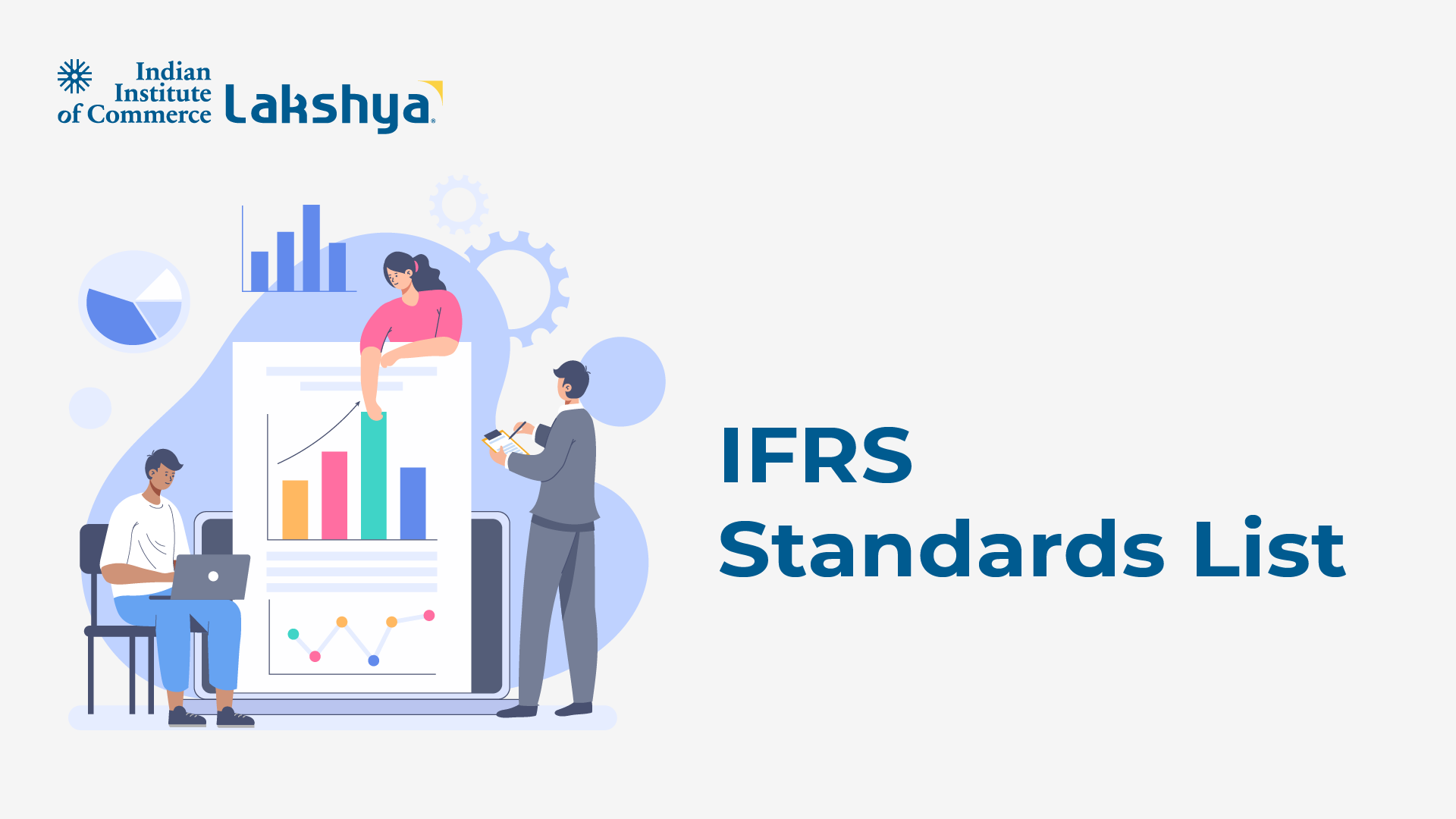
Have you heard about the implementation of various IFRS standards 9 or IFRS 13, but are not sure why they are different? Want to learn about the IFRS Course & syllabus details? Here is an article which will guide you into the field of financial transactions and accounting.
It will share with you why companies must be compliant with this set of rules and regulations. You will also love how preparing and presenting financial statements to the public ensures investors’ confidence, stakeholders’ trust and transparency.
What are IFRS Standards?
The International Accounting Standards Board (IASB) established the set of principles in 2001. The full form of IFRS is International Financial Reporting Standards (IFRS) and it is a set of accounting standards to guide companies towards transparency of financial reporting. Are you wondering how to become IFRS after 12th? Read the detailed guide of all regulations.
IFRS Standards List: All Regulations
Below is a tabular form of all IFRS standards issued by the IASB, which replaced the IAS regulation standards. They were established in 2001, replacing the IAS standards that were in practice between 1973 to 2001. The complete set of financial reporting standards guides organisations towards creating a balance sheet. Once you learn about these standards, you also get to learn about various career options and salary of a Diploma in IFRS professional. The standards are below:
|
IFRS standards |
Title |
What it means |
Impact on Companies |
|
1 |
First-time adoption of International Financial Reporting Standards |
First step, Companies transition to IFRS |
|
|
2 |
Share-based payment |
Equity incentives, evaluate stock options |
|
|
3 |
Business combinations |
Acquisitions and mergers |
|
|
4 |
Insurance contracts (superseded by IFRS 17) |
Temporary insurance guidance (later, IFRS 17 came) |
|
|
5 |
Non-current Assets Held for Sale and Discontinued Operations |
Categorisation of assets that are to be sold Classification of discontinued businesses |
|
|
6 |
Exploration for and Evaluation of Mineral Resources |
Oil/ mining exploration activities |
|
|
7 |
Financial Instruments: Disclosures |
Risk disclosure for financial instruments |
|
|
8 |
Operating Segments |
Segment reports |
|
|
9 |
Financial Instruments |
Classification, impairment (ECL), hedging, measurement |
|
|
10 |
Consolidated Financial Statements |
Group consolidation and control assessment |
|
|
11 |
Joint Arrangements |
Joint operations and joint ventures |
|
|
12 |
Disclosure of Interests in Other Entities |
Joint ventures, subsidiaries, SPEs, associates |
|
|
13 |
Fair Value Measurement |
Consistently, monitoring and measuring of fair value |
|
|
14 |
Regulatory Deferral Accounts |
Rate-regulated activities are done based on a temporary standard |
|
|
15 |
Revenue from Contracts with Customers |
Offers a five-step process of the revenue recognition model |
|
|
16 |
Leases |
Recognition of leases present on the balance sheet |
|
|
17 |
Insurance Contracts |
Measurement of long-term insurance contract (huge transformation) |
|
|
18 |
Presentation and Disclosure in Financial Statements |
Operating, investment and finance management of profit and loss categories |
|
|
19 |
Subsidiaries without Public Accountability: Disclosures |
Subsidiaeries can apply for reduced disclosures if they do not have public accountability |
|
Benefits of IFRS Standards List
With the implementation of the IFRS standards, it is clear that there are several benefits. Investors can confidently compare the financial performance of companies across countries once they go through their financial reporting process.
The regulators and analysts can easily interpret results with the help of IFRS standards implementation. If you have completed a diploma in IFRS course, you will learn about the benefits. Furthermore, there are multinational companies which can integrate group reporting, making it easier for their decision-making process.
Significance of IFRS Standards List
In conclusion, companies become compliant with the IFRS Standards by following the list, leading to transparency and accountability. Investors and stakeholders follow the financial reporting of the companies and are confident to invest. Therefore, the IFRS Standards list helps effectively in creating comprehensive reports and profit and loss statements.
Read More
- What are the Advantages and Disadvantages of IFRS?
- DipIFR Eligibility Criteria 2025: ACCA Diploma in IFRS
- Eligilibility for IFRS Certification: Who Can Apply in 2025
- IFRS Course Fees: 2025 Detailed Overview
- IFRS Salary Guide: India & International Benchmarks!
Frequently Asked Questions on IFRS Standards List
What are the two types of leases?
There are two types of leases, namely operating and capital leases.
What are 5 accounting policies?
The 5 accounting policies are revenue recognition, expense recognition, inventory valuation, depreciation methods and asset valuation.
What are the 4 principles of IFRS?
Reliability, relevance, comparability and clarity are the 4 principles of the IFRS standards.
What is the IFRS checklist?
The IFRS checklist outlines the minimum disclosure and the preparation of the financial statements based on IFRS.
Which is higher, IFRS or IAS?
None of them is higher; instead, IFRS is more updated compared to IAS. It is more widely used worldwide and is flexible in helping companies integrate financial reporting and statements.
Related Course




















































_11zon.webp)























.webp)
.webp)

.webp)
.webp)
.webp)
.webp)
.webp)
.webp)
.webp)




















































































































































































































































































.webp)

































 salary.jpg)






.webp)

.webp)
.webp)