What is ACCA?
 By IIC Lakshya
 01 Jul 2024
 ACCA
ACCA
.webp)
What is ACCA?
What is ACCA Certification?
Expand your horizons in commerce! Check out this video to know more about ACCA after plus two!
What is the ACCA Syllabus and Paper Pattern?
ACCA, as a course, encompasses various aspects of Chartered Accountancy, including Accounting, Financial Reporting, Auditing, Taxation, Business Finance, and Financial Management.
The syllabus is divided into 13 papers of ACCA that candidates must undertake. These 13 exams are divided into 3 levels – Applied Knowledge, Applied Skills, and Strategic Professional. There are varied degrees of exemptions ranging from 4 - 9 subjects for aspirations who have qualifications like B.Com and CA, etc.
Applied Knowledge Level
The Applied Knowledge exams provide students with a broad introduction to the world of finance and develop their essential understanding and skills in accounting. These exams are:
- F1 - Business and Technology (BT)
- F2 - Management Accounting (MA)
- F3 - Financial Accounting (FA)
Applied Skills Level
The Applied Skills exams build upon existing knowledge and understanding and develop strong, broad, and practical finance skills required of future strategic professional accountants in any sector or industry. These exams include:
- F4 - Corporate and Business Law (LW)
- F5 - Performance Management (PM)
- F6 - Taxation (TX)
- F7 - Financial Reporting (FR)
- F8 - Audit and Assurance (AA)
- F9 - Financial Management (FM)
Strategic Professional Level
The Strategic Professional exams prepare students for future leadership positions, developing a strategic vision through a unique blend of technical, ethical, and professional skills. And you can specialize in areas that best suit your career ambitions. Students must complete both Essentials exams (P1 - P3) and choose two of the Options from P4 - P7. P1 - P7 consists of four papers. These exams are:
- P1 and P3 - Strategic Business Leadership (SBL)
- P2 - Strategic Business Reporting (SBR)
- P4 - Advanced Financial Management (AFM)
- P5 - Advanced Performance Management (APM)
- P6 - Advanced Taxation (ATX)
- P7 - Advanced Audit and Assurance (AAA)
What is the ACCA Eligibility Criteria?
ACCA eligibility refers to the minimum academic requirements needed to start the ACCA qualification. The good part is: ACCA is considered flexible. You can pursue ACCA After 12th (10+2) through direct entry, or foundation route (FIA) if you don’t meet the criteria, or After graduation, often with exemptions. If you want to learn more about the exemptions explore ACCA exemption calculator. Furthermore we are discussing about the ACCA course eligibility and requirements:
ACCA Eligibility (Direct Entry After 12th)
ACCA after 10th
If you choose to pursue ACCA immediately after completing 10th grade, there is a designated program called the Foundation in Accountancy that is tailored for you. This course is designed for individuals who do not have a background in accounting and is primarily targeted towards those who have recently completed 10th grade. The three levels are Knowledge, Skill, and Professional. To obtain certification, it is necessary to complete a total of 13 examinations spanning several levels. The available best books for ACCA helps in understanding the syllabus for all the freshers and prepare in a better way. The summarization of ACCA after 10th is included below:
- Students can start with the foundation in accountancy route
- Progresses through knowledge, skill, and professional level
If You Don’t Meet the Criteria Choose FIA Route for ACCA
ACCA Eligibility After Graduation
ACCA Exemption for CA / CMA / CPA Students
Exemptions in various subjects for candidates with different Degrees are available. The table below gives an accurate picture of the Exemptions:
|
DEGREE |
EXEMPTIONS |
SUBJECTS EXEMPTED |
|
BBA |
3 Exemptions |
(BT, MA, FA) |
|
B.Com |
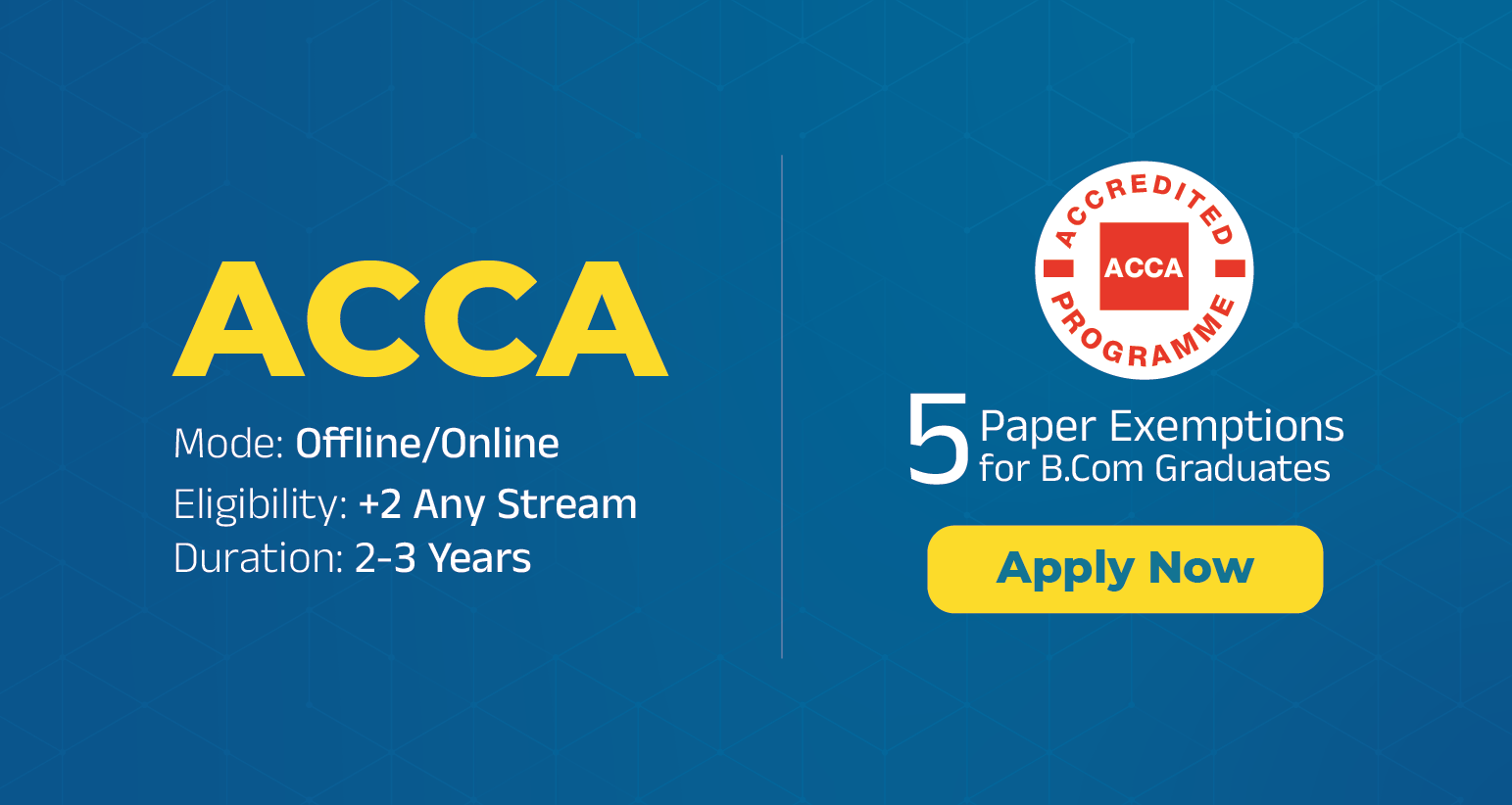
5 Exemptions |
(BT, MA, FA, LAW, TX) |
|
CA Intermediate without Graduation |
5 Exemptions |
(BT, MA, FA, TX, AA) |
|
CA Intermediate + Graduation |
6 Exemptions |
(BT, MA, FA, LAW, TX, AA) |
|
Qualified CA |
9 Exemptions |
(BT, MA, FA, LW, PM, TX, FR, AA, FM) |
ACCA Course Fees in India
Various Exemptions from certain exams for candidates with diverse backgrounds are available. Here is a step-by-step breakdown of Registration, annual subscription, and
Exemption fee details for admission:
|
Course |
Initial Registration |
Exemption Fee |
Annual subscription |
|
Plus two |
9,000 INR |
NIL |
14,200 INR |
|
B.Com (4 papers) |
4,000 INR |
6,900 INR |
7,100 INR on First Year |
|
B.Com (5 papers) |
4,000 INR |
19,600 INR |
7,100 INR on First Year |
|
B.Com (conditional exemption) |
2,100 INR |
NIL |
NIL for First-Year |
|
B.Com (6 papers) |
4,000 INR |
32,000 INR |
7,100 INR on First Year |
|
Other Degrees |
9,000 INR |
NIL |
14,200 INR |
|
CA Inter |
4,000 INR |
1,600 INR per exemption except for LW, PM, FR, and FM |
50% Discount on First Year Subscription |
|
CA Final |
4,000 INR |
1,600 INR per eligible exemption |
50% Discount on First Year Subscription |
ACCA Examination Fees
| Level | Papers | Exam Fee |
| F1 to F3 | 3 papers | ₹11,000 each |
| F4 | 1 paper | ₹14,750 |
| F5 to F9 | 5 papers | ₹14,250 |
| Professional (except SBL) | 4 papers max | ₹17,940 |
| Strategic Business Leadership (SBL) | 1 paper | ₹25,100 |
Fees vary according to the INR to Pound rates. Written above are the approximate figures.
ACCA Career Opportunities & Salary
Securing a career path that is promising and has wide avenues of growth is essential for professionals seeking stability. Professionals equipped with the prestigious Association of Chartered Certified Accountants (ACCA) qualification, a world of opportunities awaits. From finance to management roles, ACCA professionals are highly sought after by a multitude of industries globally. The average ACCA salary starts from ₹12 lakhs in India and outside India, it starts at USD 60,000.
Some of the career designations after ACCA include:
- Financial Accountant
- Management Accountant
- Tax Accountant
- External Auditor
- Internal Auditor
- Financial Analyst
- Financial Controller
- Business Consultant
- Treasury Manager
- Risk Manager
- Financial Advisor
- Chief Financial Officer (CFO)
- Forensic Accountant
- Investment Analyst
- Financial Planning and Analysis Manager
Still not sure about understanding the role of ACCA in the job market and the various prospects offered, then watch this informational video:
Read More:
- Best Finance Courses in India
- ACCA vs CA
- What is Financial Modeling?
- How to Become an Investment Banker after CA?
If you want to learn more and more about the latest trends, read our Commerce Blogs and stay tuned!
Why IIC Lakshya for ACCA?
How to become an ACCA Member in 2026?
- Complete the Ethics Module (EPSM): Finish the mandatory 20-hour online Ethics and Professional Skills Module, which builds ethics, communication, and leadership skills.
- Complete Work Experience (PER): Record 36 months (3 years) of supervised finance/accounting experience and complete required performance objectives, verified by a supervisor.
- Apply for Membership: Once everything is updated in your myACCA account, apply through your dashboard and pay the one-time admission fee. To stay a member, you’ll also pay the annual subscription and complete yearly CPD requirements.
ACCA Signing Authority for the Different Countries
- United Kingdom (UK): ACCA professionals have full signing authority and can also run their own practice.
- Canada: ACCAs may be eligible to sign audit reports after fulfilling local licensing requirements.
- Australia & New Zealand: Both countries recognise ACCA and provide audit practice pathways through additional eligibility routes.
- Singapore & UAE: ACCA is widely recognised across private and public sectors, including roles with signing-related responsibilities.
- South Africa & Germany: ACCA members are accepted, often requiring local compliance or registration to access practice rights.
Frequently Asked Questions (FAQs)
What is ACCA meaning?
The Association of Chartered Certified Accountants (ACCA) is a globally recognized certification in accounting, finance, and business management. It equips professionals with skills needed for roles like financial management, audit, taxation, and business advisory services.
What is the full form of ACCA?
How many levels are there in the ACCA Course?
The ACCA Course consists of three levels: Knowledge, Skills, and Professional. Each level covers essential topics such as financial reporting, taxation, audit, and advanced financial management.
How long does it take to complete the ACCA course?
The ACCA course duration can vary from 1 to 7 years, depending on the individual's prior qualifications and the pace at which they complete the exams. The course is structured into three levels: Knowledge, Skills, and Professional. The majority of students complete the course between 18 months and 3 years.
What job opportunities are available after completing the ACCA qualification?
ACCA qualification opens doors to a variety of roles in the fields of accounting and finance. Job roles include Accountant, Auditor, Finance Manager, Business Analyst, Taxation Expert, and even positions like Chief Financial Officer (CFO). The ACCA Careers portal lists over 25,000 live vacancies globally, indicating a strong demand for ACCA professionals.
What exactly does an ACCA do?
How much does ACCA cost?
How many subjects are there in ACCA?
How to become ACCA qualified?
Can I pass ACCA on my first attempt?
What is the average ACCA salary?
What is the ACCA eligibility criteria?
What is the ACCA course duration?
What are the ACCA course fees in India?
How should I start the ACCA course after graduation?
How hard are the ACCA level 2 papers?
What should be my preparation strategy for ACCA?
How is the job market for ACCA affiliates?
What job opportunities are available after completing ACCA?
Is ACCA higher than CA?
Is ACCA very difficult?
Can I finish ACCA in 2 years?
What is the age limit for ACCA certification?
Related Course









































_11zon.webp)















.webp)
.webp)

.webp)
.webp)
.webp)
.webp)
.webp)
.webp)
.webp)































































































































.webp)












 salary.jpg)


.webp)

.webp)