How to Study for Diploma in IFRS in one month?
 By IIC Lakshya
 21 Nov 2025


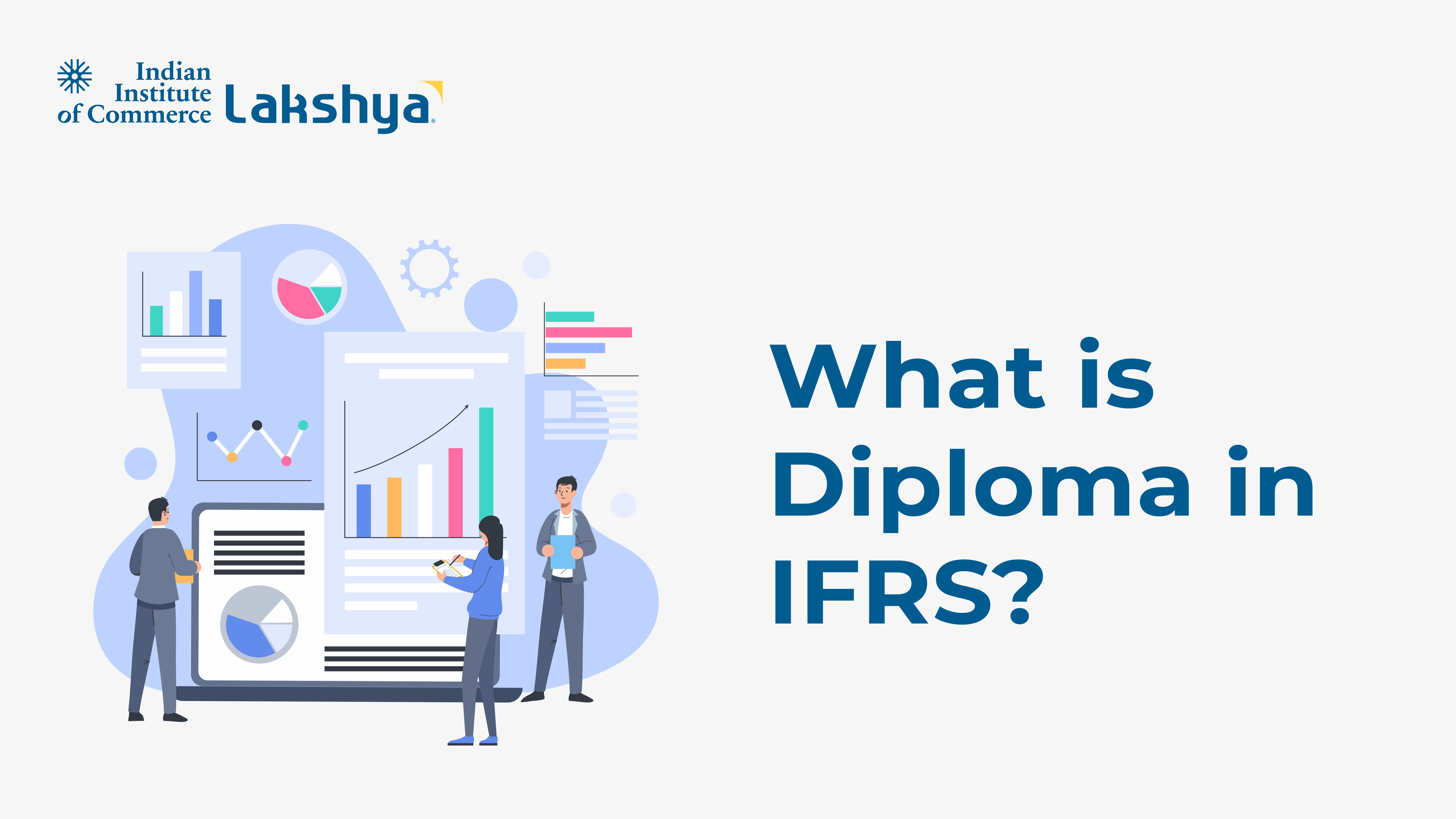
Diploma in IFRS is one of the most recognized professional qualifications of an international accountant and financial expert through ACCA. Assuming that you have limited time chemistry to attain and have only four weeks to complete your diploma in IFRS, this guide will help you have it all in the strategies, tips to keep in mind, as well as the application of the core keywords in the IFRS admissions and IFRS registrations.
Key Week-wise Breakdown for Studying DipIFR in a month
Week 1: Preparation and Introduction
Start Strong and get your resources in Order. The first step in the process of studying IFRS is to acquire the best quality study materials; syllabus outlines, ACCA study texts, summary notes, links to IFRS training videos, and at least 3 years of solved exam papers. You may be fresh out of IFRS registration or been IFRS admissions awhile; it is important that you make a more realistic and consistent study plan of the next thirty days.
Get Familiar with the Syllabus and Exam format
The diploma in the IFRS demands that you master the IASB Conceptual Framework, the use of major standards, the production of consolidated financial reports as well as critical disclosures. Mark those parts that are the most frequently assessed:
- IFRS 9 (Financial Instruments)
- IFRS 10 (Group Accounts)
- IFRS 15 (Revenue)
- IFRS 16 (Leases)
- IAS 1 (Presentation of Financial Statements).
- IAS 36 (Impairments)
Divide Day 1 and Day 2 completely to go through the syllabus, comprehend the marking schemes. Such a strategic initiation will save time in subsequent weeks.
Week 2: Intensive and Core Coverage.
One Indicates Spending Time on Standards of High Yield.
Your study on IFRS course has to cover one main theme each day:
- Day 3: IFRS 9 Classification, Measurement and Impairment.
- Day 4: IFRS 10 Consolidation and Group Accounts.
- Day 5: IFRS 15 Principle of Revenue Recognition.
- Day 6: IFRS 16 Lease Accounting
Write brief notes of summary and draw flash cards of definitions, recognition criteria and simple worked examples.
Resolve Application - Based Problems.
Complete a minimum of 15 daily questions on MCQs and case studies using your ACCA and your diploma reports in IFRS practice kits. Note down mistakes or concepts that are not understood and go through them at the end of every session. Look online in the forums or discussion groups of the IFRS course in order to get peer support in case of any stalemates.
Week 3: Strengthen and Firm Up Learning.
Try Full- length Full and Full Length Mock Exams. Practice real exams, i.e. take one practice test after every two days. Look through official answer keys and marking schemes to check your performance. Pay special attention to those problematic parts especially to the complicated cases of consolidation or impairment that were challenging.
Revise your mistakes:
- Go through the explanations.
- Write a brief overview on each error.
- Reconsider the relevant accounting standard and redo it again.
- Team Research and Professional Consultation.
Providing that it is possible, attend a short-term IFRS course workshop or group study meeting. Crash courses before the diploma in IFRS exams are available in many institutes and may be beneficial in your clarification of concepts and may increase your confidence. There is nothing wrong with contacting mentors with questions on advanced issues or new standards.
Week 4: The Final Revision and Exam Preparation.
Active Revision, Summaries, and Final Revisions. Efficient revision should be a priority in this week. Get ready one-pagers of all key IFRS standards and PCAOB requirements, which are going to be your ultimate reviewing (toolkit). Take flashcards when off and practice defining, giving examples and exceptions aloud in order to memorize them. Practice For time management and accuracy Before the exam, do one more comprehensive IFRS mock exam.
Online Exam Technical Preparation.
- Verify all the technological requirements:
- Stable internet connection
- Correct login credentials
- Authenticated photo IDs are needed.
- Silent area to unbroken concentration.
In case the IFRS admission you are taking is a face-to-face examination, go to the location at least once before should you get confused in time.
Key Strategies for One-Month Diploma in IFRS Exam Preparation
- Consistency Matters: Study all day, 3-4 hours during weekdays and 5-6 hours during weekends.
- Active Recall: Do not just read but take notes and summarize and test yourself over and over and over again.
- Teach It: Use brief explanations with a friend or a peer (or pretend to do the same); this method reveals unclear areas of your knowledge.
- Question Papers: Practice using actual exam questions, where, again, ACCA tends to reuse a lot of areas or testing formats.
- Resource usage: In case you struggle with some topics, go to IFRS course video lectures to obtain step-by-step solutions to the problem and visual explanations.
- Check IFRS Forums: Ask questions and raise doubts, share snippets and any information on changes in an IFRS course that may come up late.
Read More
FAQs on Diploma in IFRS One-Month Preparation
Can one pass the diplomas in IFRS in one month only?
Yes, which is only possible with the necessary effort, studying, and revising daily with the official IFRS course material.
Where can I enroll in the IFRS diploma examination very fast?
Full IFRS registration through ACCA portal or site of training provider, submission of necessary documents and payment of fee well in time and before deadlines.
What is the minimum pass grade in diploma in IFRS ACCA?
You must have a minimum of 50% then work on higher scores by learning to use calculations and write.
What is the next thing after the diploma in IFRS?
The qualified candidates are officially certified, which provides them with access to international accounting, auditing, tax, and compliance.
Related Course














































_11zon.webp)




















.webp)
.webp)

.webp)
.webp)
.webp)
.webp)
.webp)
.webp)
.webp)











































































































































































.webp)


















 salary.jpg)


.webp)

.webp)
.webp)