CPA vs MBA
 By IIC Lakshya
 03 Feb 2026

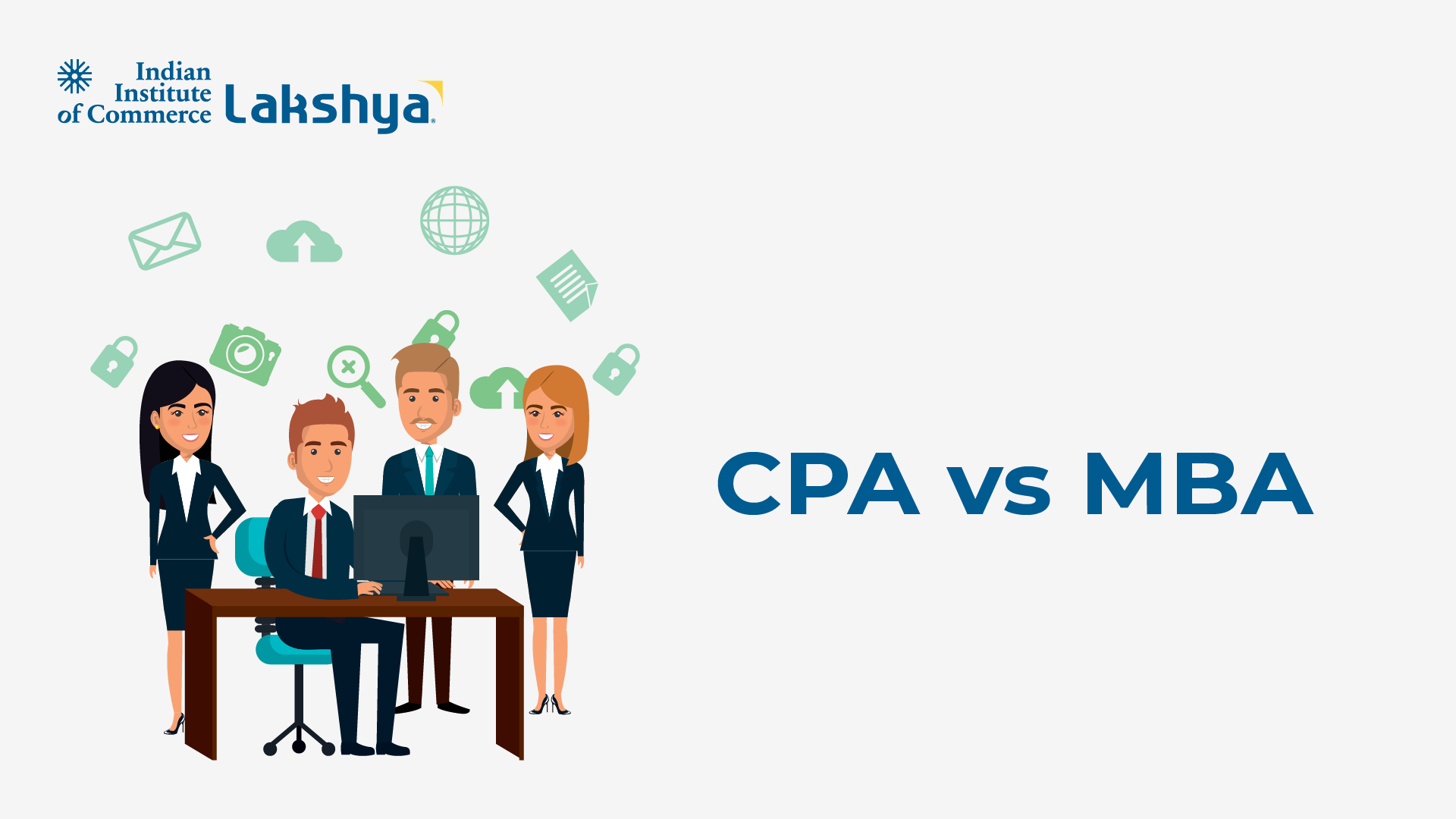
When planning a career in finance, accounting, or business leadership, many students face a common dilemma: Should I pursue CPA or MBA? Both are powerful credentials, but they serve very different purposes. One is a professional license with technical depth, while the other is a broad management degree.
This blog breaks down CPA vs MBA in terms of focus, career outcomes, duration, cost, and suitability, so you can choose the path that truly fits your career goals.
Understanding the Core Purpose: CPA vs MBA
The CPA (Certified Public Accountant) is a professional certification focused on accounting, auditing, taxation, and financial reporting. It is designed to create subject-matter experts who can handle complex financial regulations, compliance, and assurance roles.
An MBA (Master of Business Administration), on the other hand, is a general management degree. It covers marketing, operations, finance, strategy, HR, and leadership, aiming to develop managerial and decision-making skills rather than technical specialization.
In simple terms:
- CPA = Deep expertise in accounting and finance
-
MBA = Broad business and leadership exposure
Eligibility and Entry Requirements
CPA eligibility depends on educational credits and varies by US state board. Most candidates need 120–150 credit hours, which many Indian students fulfill through B.Com, M.Com, or professional qualifications.
MBA eligibility typically requires:
- A bachelor’s degree
- Entrance exams (CAT, GMAT, GRE, etc.)
-
Work experience (for top-tier programs)
MBA admissions are competitive and depend heavily on academic profile, test scores, and interviews.
Course Structure and Duration
The CPA exam consists of four sections:
- AUD (Auditing and Attestation)
- FAR (Financial Accounting and Reporting)
- REG (Regulation)
-
BAR / ISC / TCP (Discipline section)
Candidates can complete CPA within 12–18 months with focused preparation.
An MBA usually takes 2 years (full-time) or 1–3 years (part-time/executive). The curriculum includes classroom learning, group projects, internships, and case studies.
Career Outcomes and Roles
Career opportunities differ significantly.
CPA career paths include:
- Auditor
- Tax consultant
- Financial reporting specialist
- Risk and compliance professional
-
Controller
CPAs are highly valued in Big 4 firms, MNCs, accounting firms, and regulatory environments.
MBA career paths vary by specialization:
- Management consultant
- Business analyst
- Product manager
- Marketing or operations manager
-
Strategy and leadership roles
MBA roles are broader and often depend on the reputation of the institute.
Cost and Return on Investment (ROI)
CPA is generally cost-effective compared to an MBA. Exam and licensing costs are significantly lower, while the qualification delivers strong technical credibility and global recognition.
MBA costs vary widely. A top-tier MBA can be expensive but may offer high returns through campus placements and leadership-track roles. Lower-tier MBAs may not always deliver the same ROI.
Global Recognition and Mobility
CPA is internationally respected, especially in US accounting, audit, and compliance roles, with growing recognition in global finance teams.
MBA recognition depends heavily on:
- Institution reputation
- Alumni network
-
Industry exposure
A globally ranked MBA offers strong mobility, while a generic MBA may have limited international value.
Difficulty Level and Learning Style
CPA is academically intensive and exam-focused, requiring discipline and technical mastery.
MBA is more experiential, involving:
- Case studies
- Presentations
- Teamwork
-
Leadership development
Students who enjoy structured learning and clear outcomes prefer CPA, while those who thrive in discussions and networking may prefer MBA.
Example: CPA vs MBA in Real Life
A B.Com graduate aiming to work in audit, taxation, or financial reporting may find CPA to be the fastest and most relevant route. Meanwhile, a professional looking to transition into management, consulting, or leadership roles across functions may benefit more from an MBA.
Frequently Asked Questions (FAQs)
Can I do an MBA after CPA?
Yes. Many professionals pursue an MBA after CPA to move into leadership or strategic roles.
Is CPA better than MBA for finance roles?
For technical finance, accounting, and compliance roles, CPA is often more relevant. For managerial and cross-functional roles, MBA is better.
Which has better job security- CPA or MBA?
CPA offers strong job stability due to regulatory demand, while MBA outcomes depend on specialization and institute quality.
Related Course






















































_11zon.webp)























.webp)
.webp)

.webp)
.webp)
.webp)
.webp)
.webp)
.webp)
.webp)












































































































































































































































































.webp)




























 salary.jpg)






.webp)

.webp)
.webp)