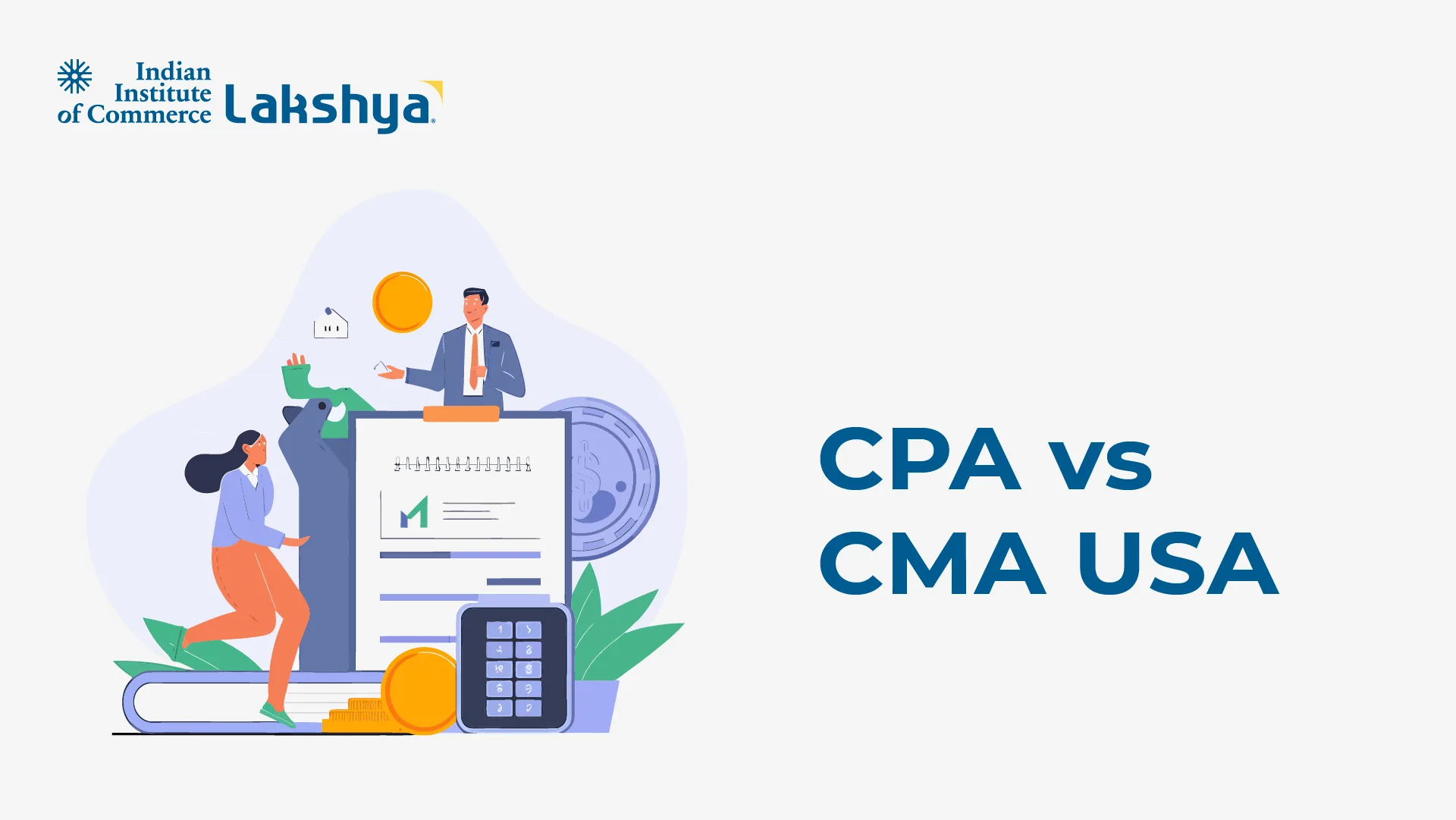
CPA vs CMA USA
 By IIC Lakshya
 03 Feb 2026

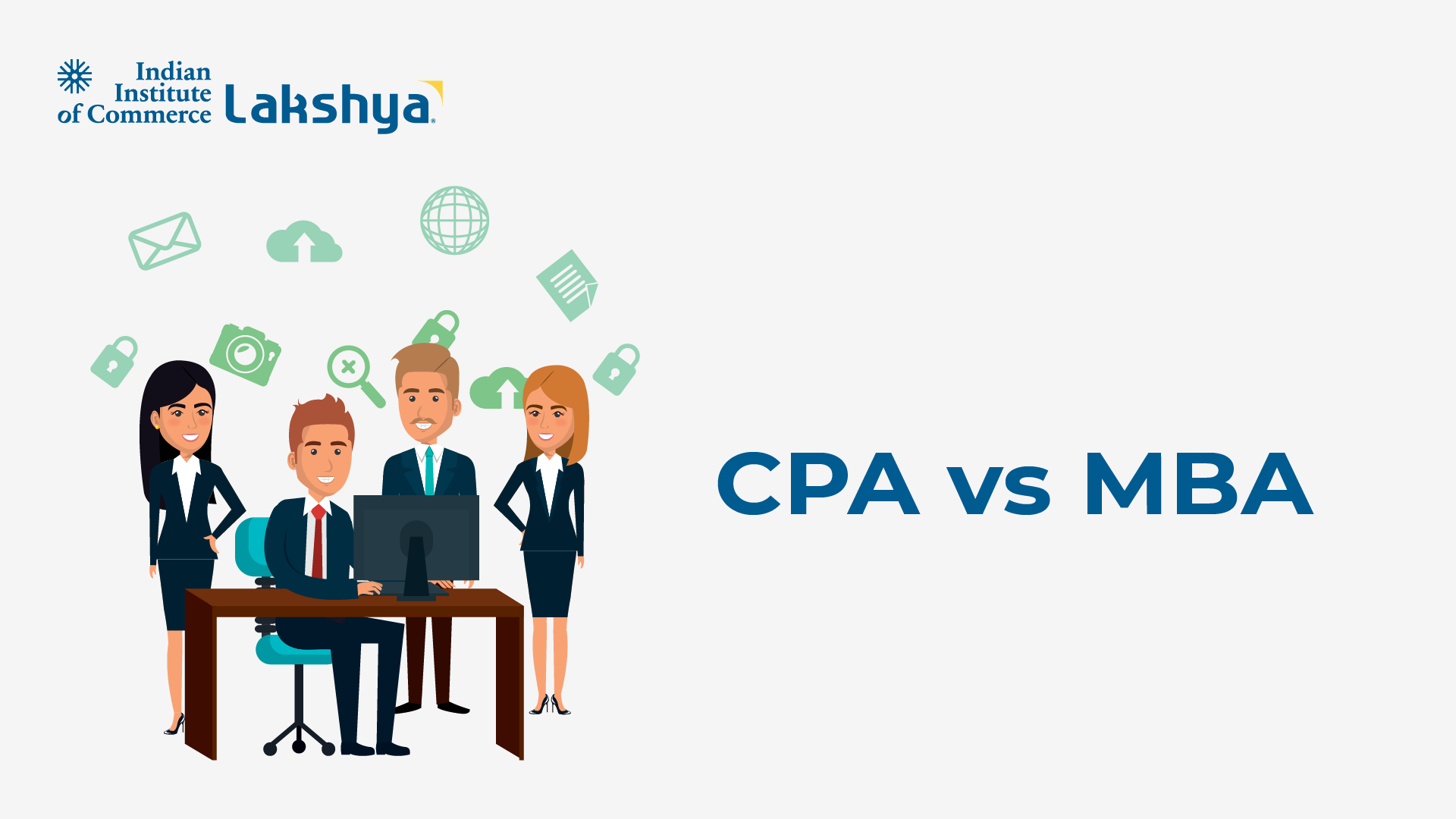
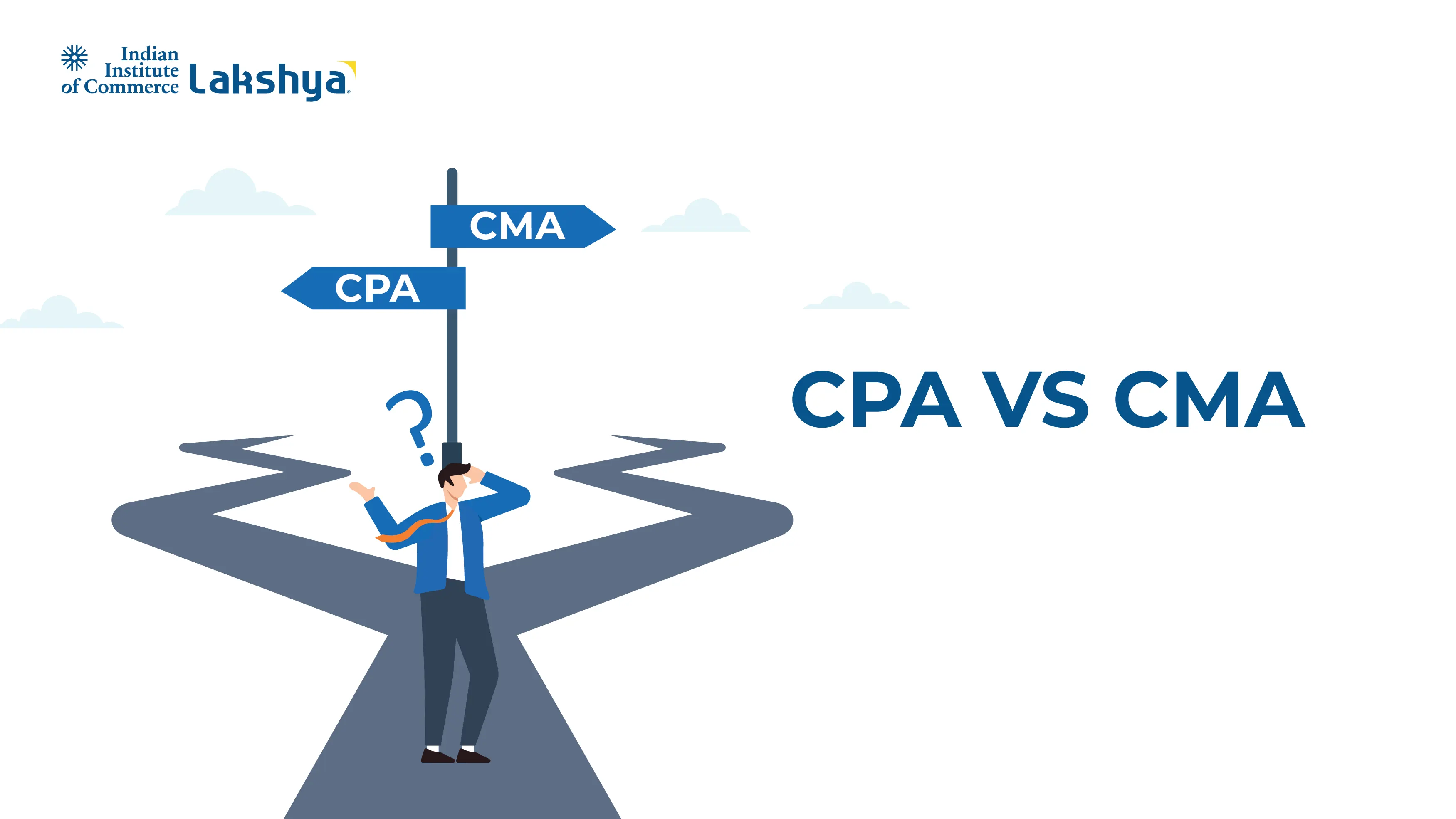
Choosing between CPA (Certified Public Accountant) and CMA USA (Certified Management Accountant) is one of the most common dilemmas for commerce and finance students today. Both are globally recognized qualifications, both open doors to high-growth careers, and both are widely valued by multinational companies. However, their focus, structure, career outcomes, and ideal candidate profile are very different.
This blog offers a complete, practical comparison of CPA vs CMA USA to help you decide which qualification aligns better with your career goals.
What is US CPA?
The full-form of CPA is Certified Public Ac countant, which is an accounting practitioner who has completed the necessary education, examination, and experience criteria for licensing by a state board of accountancy.
To become a CPA, you must pass an exam demonstrating that you understand the technical abilities required to perform services in financial accounting, accounting, reporting, auditing, attestation, rules and regulations, business settings, and business ideas, which are taught throughout the CPA USA course
Businesses and nonprofit organizations value CPAs' broad knowledge of tax law, auditing processes, management techniques, and other critical facets of rigid financial operations. US Certified Public Accountants are gaining appeal as a global accounting profession.
What is CMA USA?
The full-form of CMA USA is Certified Management Accountant, which is a professional management accounting certification offered by the Institute of Management Accountants (IMA) in the United States. It's a globally recognized credential. CMA demonstrates proficiency and dedication in the field of financial management and management accounting.
One of the biggest differences between CPA and CMA USA lies in their exam structure.
The CPA exam consists of four mandatory papers:
- AUD – Auditing and Attestation
- FAR – Financial Accounting and Reporting
- REG – Regulation
- BEC - Business Environment and Concepts
All four papers must be cleared, with no exemptions, and within a defined rolling window.
The CMA USA exam, in contrast, has only two exam parts:
- Part 1: Financial Planning, Performance, and Analytics
-
Part 2: Strategic Financial Management
There are no exemptions in CMA USA either, but the shorter structure makes it more compact and time-efficient for many candidates.
CPA vs CMA USA: Duration and Completion Time
CPA typically takes 18 to 36 months to complete, depending on how quickly a candidate clears all four exam sections and completes the required work experience. CMA USA can often be completed in 12 to 18 months, especially by candidates with commerce or finance backgrounds. For students looking to enter the job market faster with a global credential, CMA USA usually offers a shorter completion timeline, while CPA offers a broader statutory scope.
Key Eligibility Requirements
CPA eligibility is based on credit hours:
- 120 credits to appear for the exam
-
150 credits to obtain the license
These credits must include specific accounting and business subjects, and eligibility depends on the U.S. state board chosen.
CMA USA eligibility is comparatively straightforward:
- A bachelor’s degree in any discipline from a recognized university
-
OR a recognized professional qualification
This makes CMA USA more accessible to candidates from diverse academic backgrounds.
Work Experience Requirement
Both CPA and CMA USA require relevant work experience for certification.
CPA generally requires 1–2 years of experience in accounting, audit, taxation, or related fields, often verified by a licensed CPA.
CMA USA requires 2 years of professional experience in management accounting or financial management roles, which can be completed before or after passing the exams.
Career Focus and Job Roles
CPA is best suited for roles such as:
- Auditor
- Tax Consultant
- Public Accountant
- Financial Reporting Specialist
-
Compliance and Assurance Professional
CMA USA is ideal for roles like:
- Management Accountant
- Financial Analyst
- FP&A Professional
- Cost Accountant
-
Finance Manager
In simple terms, CPA is compliance and reporting-focused, while CMA USA is performance and strategy-focused.
Industry Demand and Global Recognition
CPA enjoys strong demand in:
- Audit and accounting firms
- Big4 and large professional services firms
-
Regulatory and compliance-heavy roles
CMA USA is highly valued in:
- Corporates and MNCs
- Manufacturing, IT, and service industries
-
Business analytics and strategy roles
Both qualifications are globally recognized, but CMA USA is often more popular in corporate finance environments, while CPA dominates public accounting.
CPA exams are considered content-heavy and regulation-intensive, requiring strong understanding of U.S. accounting standards and laws.
CMA USA exams are application-oriented, testing how well candidates can apply concepts to real business scenarios.
Candidates who enjoy:
- Rules, standards, and detailed compliance - CPA
-
Analysis, decision-making, and strategy - CMA USA
Which Is Better: CPA or CMA USA?
There is no universal “better” choice — only a better fit.
Choose CPA if you:
- Want authority in accounting and audit
- Are interested in taxation and compliance
-
Plan to work in public accounting or regulated roles
Choose CMA USA if you:
- Want to work in corporate finance
- Enjoy analysis and strategic decision-making
- Want faster qualification completion
Read More
FAQs on CPA vs CMA USA
Can I do both CPA and CMA USA?
Yes. Many professionals pursue both to gain expertise in compliance as well as strategic finance.
Which is easier, CPA or CMA USA?
CMA USA has fewer papers, but CPA offers flexible testing. Difficulty depends on individual strengths.
Which has better scope in India?
Both have strong demand, especially in MNCs and global capability centres.
Which course should I choose after B.Com?
If you prefer accounting and audit, choose CPA. If you prefer corporate finance and analytics, choose CMA USA.
Related Course
























































_11zon.webp)























.webp)
.webp)

.webp)
.webp)
.webp)
.webp)
.webp)
.webp)
.webp)















































































































































































































































































































.webp)



































 salary.jpg)






.webp)

.webp)
.webp)