CFA vs ACCA: Salary, Scope & Career Comparison 2026
 By IIC Lakshya
 03 Feb 2026
 ACCA
ACCA
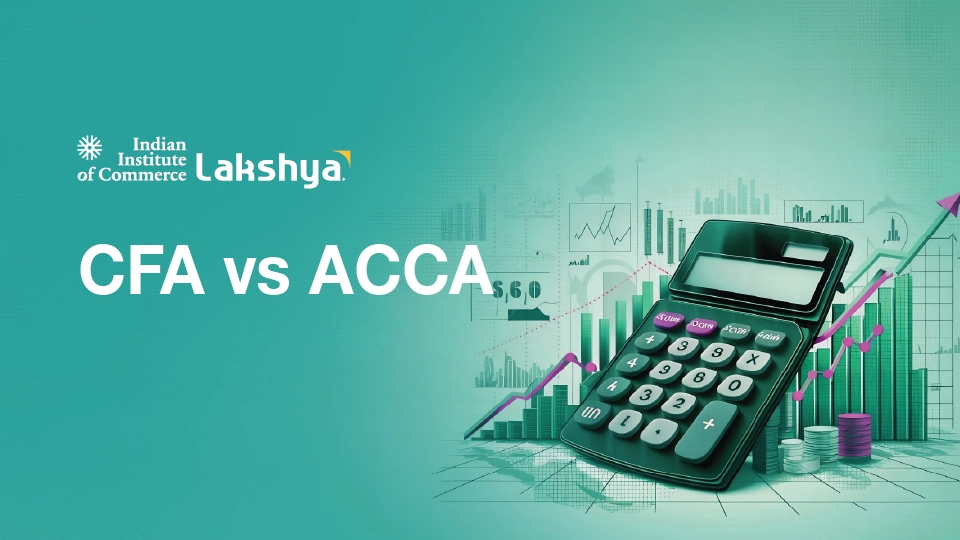
If you are planning a career in finance, you’ve probably faced this question:
“Should I choose CFA or ACCA?”
Two globally recognized qualifications, CFA and ACCA, are quite popular among Commerce students. We cannot ask you to choose any one of them, as it depends on your career goals and future decisions, and the outcomes and focus of the qualifications differ. Here’s a detailed comparison!
What is CFA?
The Chartered Financial Analyst (CFA) is a globally recognized and respected professional course in finance and investment sectors. The topics covered in this course are:
- Financial markets
- Investment management
- Portfolio analysis
- Equity research
If you are interested in stock markets, investing, and advanced finance, the CFA is a strong option. Read the best books for the CFA preparation 2026, as they will guide you through the profession.
What is ACCA?
The Association of Chartered Certified Accountants (ACCA) is a qualification that is globally recognized and in demand among working professionals. Read about the top countries hiring ACCA/ CPA for Big 4 Jobs in 2026 to which will inspire you to learn about the future. The course focuses on the following topics:
- Accounting
- Auditing
- Taxation
- Financial reporting
If you want a career similar to CA but with global opportunities, ACCA is a great choice.
Key Comparison: CFA vs ACCA
Below are the key factors based on which the CFA and ACCA are based. The two qualifications are compared to develop a better understanding of why they are different and how it impacts your career choice. Read the article on why the CFA is a great choice after engineering as it will guide you effectively towards job opportunities.
Focus Topics
Here are the key topics that are included in the courses. Once you go through them, you develop a deeper insight into the qualifications and how they are different.
|
CFA |
ACCA |
|
|
Difficulty Level
We will compare the difficulty level of the two qualifications and how it matters for students to prepare for the exam effectively. Additionally, it also helps in developing significant skills. Read about what are the ACCA recognized countries and rights as it guides them into the career.
|
CFA |
ACCA |
|
|
Time Commitment
It is another significant factor as students must prepare effectively for different courses by setting aside time for them. Below is the basic difference between the two courses:
|
CFA |
ACCA |
|
Duration varies between 2.5 and 4 years |
|
Target Roles
If you want to pursue and aim for a specific designation while working in the finance and accounting sector, here are some of the significant target roles specifically for the identified certification. Check how they differ, which will guide you into the skill sets you need to acquire to develop your career. Read about the ACCA hiring trends as it guides you through the educational development process.
|
CFA |
ACCA |
|
|
What is Your Pick?
When asked what your pick is, it depends on your interest. Choose ACCA if you like accounting and taxation work. Additionally, if you want global opportunities similar to CA, ACCA is the perfect choice for you.
Furthermore, if you are someone who prefers a structured and flexible course, ACCA is the best bet! You can read about the ACCA remote exams to understand the impact of the exam and its integration into your career.
However, you must choose CFA if you are interested in stock markets and investments. If you want high-paying finance roles, you must complete your CFA certification. Additionally, you enjoy analytical and market-based work.
Salary Potential: ACCA vs CFA
Let’s talk about money, because it matters.
|
Certification and Designation |
Freshers (approximately) |
Experienced (approximately) |
|
ACCA Salary |
INR 5–10 LPA |
INR 12–25 LPA |
|
CFA Salary |
INR 6–12 LPA |
INR 20–40 LPA |
CFA roles often offer higher salaries, but they also come with higher pressure. ACCA offers more stability and consistent growth.
Wrapping Up!
So, CFA vs ACCA, which is better? There is no “one-size-fits-all” answer.
- If you want stability and apply for a global accounting career, choose ACCA.
- If you prefer a high-risk and high-reward finance career, you can choose the CFA.
For Class 12 students, here’s a simple tip. Start by understanding your interest. Do not choose based only on salary. Because in the long run, your interest decides your success — not just the course.
Read More
- CFA vs CPA Comparison: Choose the Right Certification
- CFA vs FINRA Series 7: Comparison & Future Career Paths
- Careers in Investment: Chartered Financial Advisor (CFA)
- CFA Course Calculator Policy 2026: Approved Calculators
- Top 6 Finance Jobs and Salary After CFA Level 1!
Frequently Asked Questions on CFA vs ACCA
Do Big 4 firms hire ACCA students?
Yes, the Big 4 firms do hire ACCA students regularly and widely.
Which certification, CFA vs ACCA, has more job opportunities?
Out of the two certifications, ACCA has more job opportunities.
Is CFA useful in India?
Definitely, CFA is quite useful in India if you are applying for job applications and opportunities in the finance and accounting sector.
Do investment banks prefer CFA?
Yes, the CFA valuation is significantly high when it comes to pursuing the IB roles.
How long does CFA take?
To complete the CFA certification, it might take anywhere between 2 and 3 years.
Related Course
























































_11zon.webp)























.webp)
.webp)

.webp)
.webp)
.webp)
.webp)
.webp)
.webp)
.webp)











































































































































































































































































































.webp)



































 salary.jpg)






.webp)

.webp)
.webp)