The Uses of IFRS Explained: Purpose and Significance
 By IIC Lakshya
 19 Jan 2026
 ACCA
ACCA
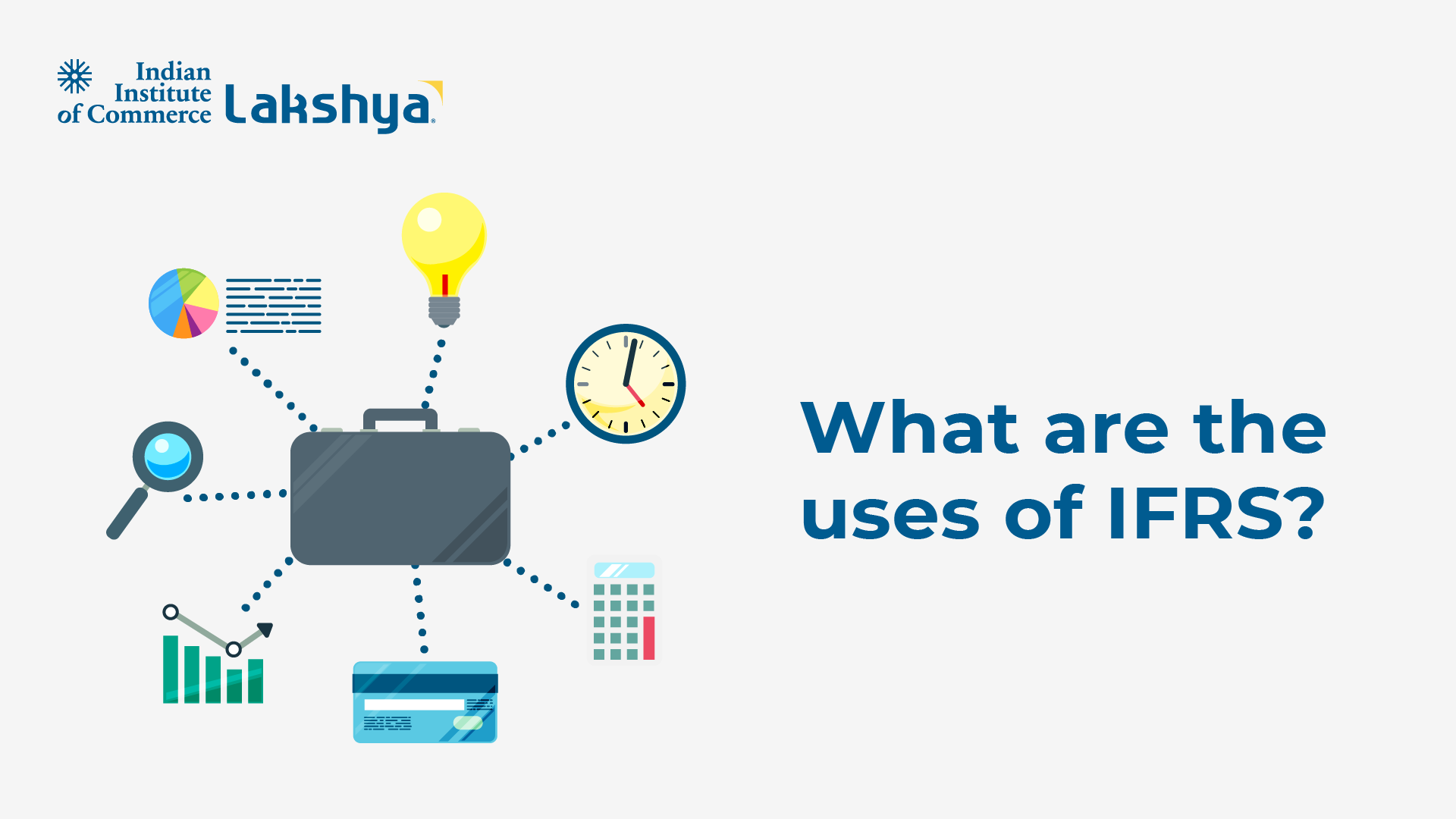
If you are preparing for International Financial Reporting Standards (IFRS) courses, this is an important article for you. Let us explore the purpose of using the global accounting standards, the use of IFRS accounting standards, and the impacts of adopting these standards. Learn how IFRS facilitates accounting procedures and consistency.
What is IFRS?
The International Accounting Standards Board designed and established IFRS in 2003. The IFRS has been adopted by 168 countries, their jurisdictions, and business practices worldwide. It is the IFRS that facilitates the integration of financial markets on a global scale and international cooperation. Learn more about IFRS Course & syllabus to understand and prepare better.
- Financial reporting becomes consistent with the integration of IFRS; liabilities and assets are measured at fair value.
- It improves the reliability and clarity of financial information.
- Professionals can work on the global platform, must be updated on IFRS standards, and offer insights into ethical accounting practices.
What is the Purpose of Using Global Accounting Standards?
It is through following Global Accounting Standards that the modern economy can function effectively. You can also read how to become IFRS after 12th which will explain how it is important for a future career path. Below are significant purposes of using the global accounting standards and how they benefit it in the long term.
- Fluent cross-border transactions and a free flow of international capital are established with the Global Accounting Standards
- Investors seek investment possibilities and global diversification; hence, they use Global Accounting Standards when performing worldwide operations and subsidiaries in different companies
- Firms and companies engage in transactions and can raise funds while implementing Global Accounting Standards
- Cross-border transaction is challenging; however, IFRS ensures that they are made possible across countries following the accounting standards
- Companies can also prepare financial statements and invoices with the integration of the IFRS principles
- It is the IFRS that ensures that all countries, organizations, and professionals follow the set of standards, IFRS accounting principles, and resolve any ambiguities
Who can Use IFRS Accounting Standards?
There are one hundred sixty-eight countries, governments, and jurisdictions that use IFRS accounting standards. Every country has different uses of IFRS accounting standards requirements. In some countries, all companies, big and small, have to follow these practices, while in some countries, only big MNCs or banks have to follow the standards.
Impact of IFRS Adoption
There are significant impacts of IFRS adoption by countries, businesses, and professionals on investment decisions and financial reporting. Below are some of the parameters that businesses have to follow in financial reporting and investment statements.
Comparability
Companies and countries use IFRS Standards to compare the financial statements of businesses. Adopting the IFRS by different countries will lead to bringing balance among the varying standards of accounting. At times, it becomes difficult when companies use these financial reports to enhance and improve performance.
Transparency
The key goal of IFRS is transparency, where companies offer financial data to investors and stakeholders with clarity, consistency, accuracy, and in a concise manner. With this transparency, businesses, investors, and stakeholders make informed decisions by implementing the financial data.
They further develop a deeper realization of what is IFRS and how it influences the financial services. Trust and growth in the financial markets are encouraged effectively with the IFRS implementation.
Quality
Implementing IFRS helps in the improvement of the business, operational procedures, and financial accuracy. The calibre of financial data is more accurate when implementing IFRS, leading to better management of rules, enhancement of relevance, compliance, and decision-making.
Use of IFRS Accounting Standards Worldwide
Here are some of the most significant uses of IFRS Accounting Standards around the world. These uses are the actions of the professionals who develop insights from financial data, reports, and accounting statements. The reports help in the decision-making of investors and companies, leading to growth, sustainability, and accuracy.
Guide and Principles
The guidelines that are laid down by the IFRS are used by the companies to prepare, analyse, and report financial statements. If the companies are unable to follow the IFRS standards, they are penalized, ensuring trust across companies and the market. Knowing the IFRS guidelines will add to your eligibility for IFRS certification.
Financial Tool
IFRS Standards are a financial tool that integrates trust, expansion, and sustainability of the global economy. The International Financial Reporting Standards will serve with accuracy, data openness, and efficiency to stakeholders, investors, and companies.
Economic Improvement
In most cases, investors are more inclined towards investing in organizations that follow the IFRS principles. The financial statements, reports, and data are used to build trust, compare and contrast with other companies. Authenticity is integrated with accurate economic representation through IFRS practices.
Decision Making
Investors follow the same IFRS Standards because they are more accessible, leading to effective decision-making. Financial statements are created by companies as they follow a universal method using IFRS, leading to more comprehension and understanding.
Benefits of IFRS Adoption for Companies
Here are some of the benefits that companies and countries experience after they adopt the IFRS Standards. These factors reflect why IFRS has become significant for countries and companies, leading to growth in the market. Career options and salary after Diploma in IFRS are much higher both on the domestic and international levels.
Enhanced Risk Management
Risk management is effectively managed by companies as they implement financial instruments, resources, and principles offered by the IFRS. As the investors get more information, they understand the financial performance of a company and accordingly grow by resolving risks.
Reduced Cost of Capital
Adopting IFRS Standards will lead to reduced costs for companies. There is a higher probability of the investors investing in companies that are adopting IFRS. This leads to lower borrowing costs and higher equality valuations.
Improved Access to Capital
The capital access of a company is improved by implementing IFRS. The investors are choosing companies that follow global accounting standards. The integration of IFRS leads to significant investment opportunities. To learn more, you should also read the advantages and disadvantages of IFRS.
Wrapping Up!
In conclusion, the IFRS is transforming the world of finance quickly. Companies use the IFRS principles and standards, which lead to global acceptance. There are several uses of the IFRS that are described in this article. Companies that become transparent, compared with other companies, attract foreign and domestic investors.
Read More
- What is Diploma in IFRS Course?
- DipIFR Eligibility Criteria 2025: ACCA Diploma in IFRS
- IFRS Course Fees: 2025 Detailed Overview
- IFRS Salary Guide: India & International Benchmarks
- Benefits of a Diploma in IFRS
Frequently Asked Questions on What are the Uses of IFRS?
What are the four principles of IFRS?
The four principles of IFRS that establish the wide range of standards are as follows:
- Faithful representation
- Relevance
- Comparability
- Understandability
What are the 5 main objectives of accounting?
Below are the five main objectives of accounting are as follows:
- Ensuring profit or loss by calculating financial performance
- Providing relevant data or information to investors, management, and creditors for decision-making
- Monitoring and recording all financial activities, events, and bookkeeping to prevent financial fraud and errors
- Facilitating management planning and controlling business operations, allocating resources, creating budgets, and forecasting future needs
- Determining the financial position by evaluating assets, equity, and liabilities through the balance sheet
What are the four pillars of IFRS?
There are 4 pillars of IFRS: risk management, governance, metrics & targets, and strategy.
How many rules are in IFRS?
The IFRS Foundation established seventeen IFRS principles, which companies use high-level guidelines for all financial reports.
What are the 4 types of financial statements?
There are 4 types of financial statements, namely the balance sheet, the income statement, the statement of changes in equity, and the cash flow statement.
Related Course





















































_11zon.webp)























.webp)
.webp)

.webp)
.webp)
.webp)
.webp)
.webp)
.webp)
.webp)









































































































































































































































































































.webp)





































 salary.jpg)






.webp)

.webp)
.webp)