FINRA Series 86/87 Exam Explained
 By IIC Lakshya
 07 Jan 2026
 Others
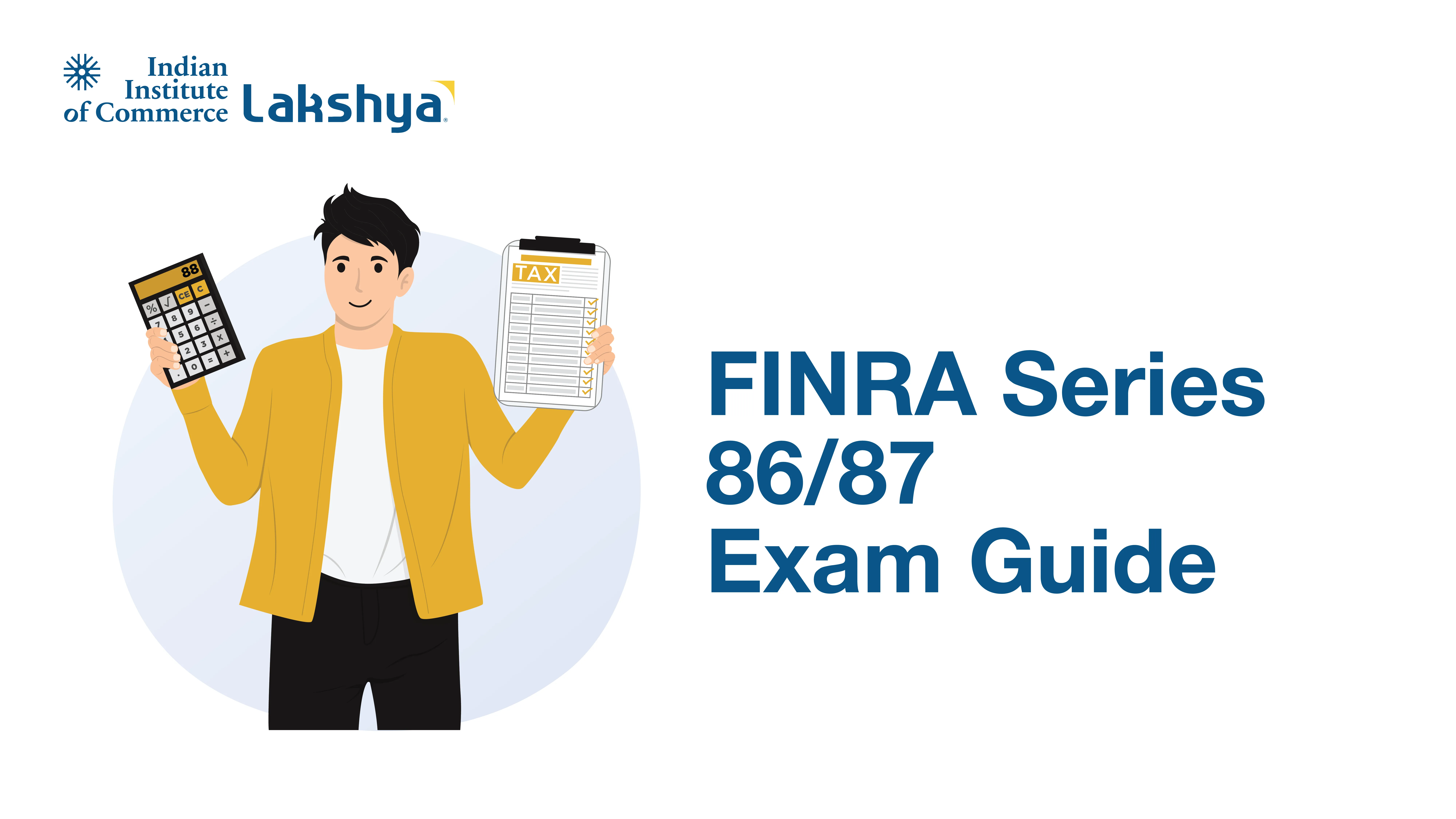
Candidates preparing for both the FINRA Series 86 and 87 exams must learn about all the topics covered in the syllabus. In this article, candidates can learn about the Series 86/87 exam structure, the topics covered, and how to crack the exam. Additionally, here is also a bit of guidance towards the career path.
What is the FINRA Series 86/ 87 Exam?
The FINRA Series 86/87 exam has another official name, the Research Analyst Qualification Examination. Professionals who are preparing for FINRA Exams levels and a study plan enhance their knowledge and skills to prepare and publish equity research reports. The professionals also recommend clients related to investments by performing in-depth research in the securities industry.
Exam Structure
For candidates to appear for the FINRA Series 86/87 exam, candidates should take the exams separately. Even the structures are different, so follow the differences in the exam structures. Candidates will require sponsorship from a FINRA-member firm before they register for the exam. This will educate the candidates towards the FINRA Series Exam step-by-step study guide and preparations.
|
Exam Features |
Series 86 |
Series 87 |
|
Number of Questions |
100 multiple-choice questions |
50 multiple-choice questions |
|
Exam duration |
4 hours |
1 hour 30 minutes |
|
Passing score |
73% |
73% |
Topics Covered Under FINRA Series 86 (Analysis)
The syllabus covered under the FINRA Series 86 is diverse and mainly focuses on financial modeling, valuation, and equity analysis skills. These skills help professionals work towards preparing research reports. Learning about the FINRA exam course, syllabus, and training tips will improve their chances of cracking the exam.
Financial Statement Analysis - candidates learn about the balance sheet, the income statement, ratios, and cash flow analysis. Furthermore, they also develop skills to perform financial performance evaluation, financial disclosure, and accounting principles.
Financial Forecasting - students learn cash flow forecasting, sensitivity analysis, and key assumptions in this section. They also learn about earnings and revenue projections.
Valuation Methodologies - candidates develop an understanding of Discounted Cash Flow (DCF) analysis, relative valuation (PEG ratios, EBITDA/ EV), asset-based valuation, and Dividend Discount Models (DDM).
Industry and Company Analysis - students learn how to prepare competitive analysis, industry life cycles, economic, and sector-specific factors. Additionally, they also learn about business models and market positioning.
Equity Securities & Investment Risks - if students want to learn about corporate actions like dividends, mergers, and buybacks, this section is for you. It will prepare candidates to identify risk factors that impact equity investments, along with developing an understanding of common and preferred stock characteristics.
Economic and Market Analysis - candidates learn about market trends and cycles, inflation impact, interest rates, and macroeconomic indicators.
Topics Covered Under FINRA Series 87 (Regulations & Ethics)
The specialized content areas in this paper are ethical standards, compliance obligations, and regulatory requirements. The meaning, types, and eligibility of the FINRA exam reflect how it educates the candidates. The qualification is significant for research analysts working in the securities industry. Below are some of the topics covered under the FINRA Series 87 course and exam.
Research Report Standards - candidates develop knowledge into analyst compensation rules, required disclosures, independence, and objectivity requirements.
Regulatory Framework - in this section, students learn about FINRA and the SEC, Research Analyst Qualification standards, and Securities Exchange Act Regulations.
Communication with the Public - candidates will develop knowledge in research report distribution rules, sales, and marketing communications. Furthermore, they also learn about media interactions and public appearances related to professional responsibilities.
Conflicts of Interest - it is another area where candidates develop a better understanding of personal trading restrictions and investment banking relationships. Furthermore, they get to learn more about firm ownership disclosures.
Ethical Conduct and Professional Responsibilities - the topics that are covered in this section are supervisory procedures, code of ethics, compliance obligations, and recordkeeping.
Insider Trading & Material Non-Public Information - candidates develop an understanding of the information barriers, use and misuse of insider information related to securities, trading, and investment, and the definition of MNPI.
How to Crack the FINRA Series 86/ 87 Exam
When planning to pursue the FINRA Series 86/87 exam, you must develop a set of strategies. These strategies will enhance your chances of cracking the exam at the earliest opportunity. Candidates with this qualification can pursue long-term career roles and job positions in asset management and investment banking. Furthermore, candidates can also explore the FINRA Series exam study books specialized in these sections.
Understanding regulations thoroughly - candidates must be compliant with rules and ethical standards
Building strong financial analysis skills - learning about accounting concepts, financial ratios, and valuation techniques and models
Practicing real-world scenarios - candidates implement theoretical knowledge gained and solve the case-based and scenario-based questions
Creating a structured study plan - structured study plan will help candidates learn about time management because the paper is mostly quantitative
Using exam-specific, appropriate resources - there are specific resources available which the candidates must use instead of general finance books
Career Path After FINRA Series 86/ 87 Exam
Candidates who want to become research analysts or professionals working in the investment banking and equity research industry require FINRA Series 86/87 exam credentials. They develop skills like financial analysis and valuation, regulatory requirements, which help govern research reports. Below are well-known career paths that professionals cater to with their research-focused skills.
- Investment Research Associate
- Equity Research Analyst
- Portfolio Strategy Analyst
- Buy-Side or Sell-Side Analyst
- Capital Markets Research Professional
Wrapping Up!
In conclusion, professionals working with financial analysis and equity research consider the FINRA Series 86/87 exam as a significant credential. They develop strong foundational skills in valuation, exam preparation, and in-depth knowledge of regulatory standards. High-income and growth career opportunities are unlocked with this certification.
Read More
- CFA vs FINRA Series 7: Comparison & Future Career Paths
- FINRA Series 6 Exam: Eligibility, Syllabus and Career Path
- Global Finance Trends & their Career Impact
- Emerging Finance Careers in 2025: Every Professional Should Know
- Top 10 Skills Finance Professionals Must Build Beyond Degrees
- How Global Certifications Help You Land Remote Finance Jobs?
Frequently Asked Questions on FINRA Series 86/ 87 Exam Guide
What are the 4 types of securities?
There are 4 types of securities, namely derivatives, debt, hybrid, and equity. The categories cover bonds, convertible bonds, stocks, and other securities.
What is the difference between Series 86 and 87?
Both the 86 and 87 exams measure the knowledge of the candidate to analyse equity securities in the securities investment industry. The 86 Series consists of 10 additional pretest items, while the 87 Series consists of 5 additional pretest items.
What is the hardest FINRA exam to pass?
The hardest FINRA exam to pass is the Series 7, which has a lower pass rate of 72%. It is important for candidates to establish a study plan effectively to pass the exams.
Will AI replace financial analysts?
With Artificial Intelligence (AI) dominating the financial market, one might wonder if it will replace the roles of financial analysts. It will not replace them, but it does have the power to transform the roles and responsibilities. Activities like automating the data crunching and reporting, shifting analysis and reporting are integrated with AI.
What are the top 3 skills for a financial analyst?
The three top skills for a financial analyst are the ability to interpret complex data, attention to detail, and strong analytical skills.
Related Course























































_11zon.webp)























.webp)
.webp)

.webp)
.webp)
.webp)
.webp)
.webp)
.webp)
.webp)










































































































































































































































































.webp)


































 salary.jpg)





.webp)

.webp)
.webp)