Role of IFRS in Performance Management and Financial Control
 By IIC Lakshya
 19 Jan 2026
 ACCA
ACCA
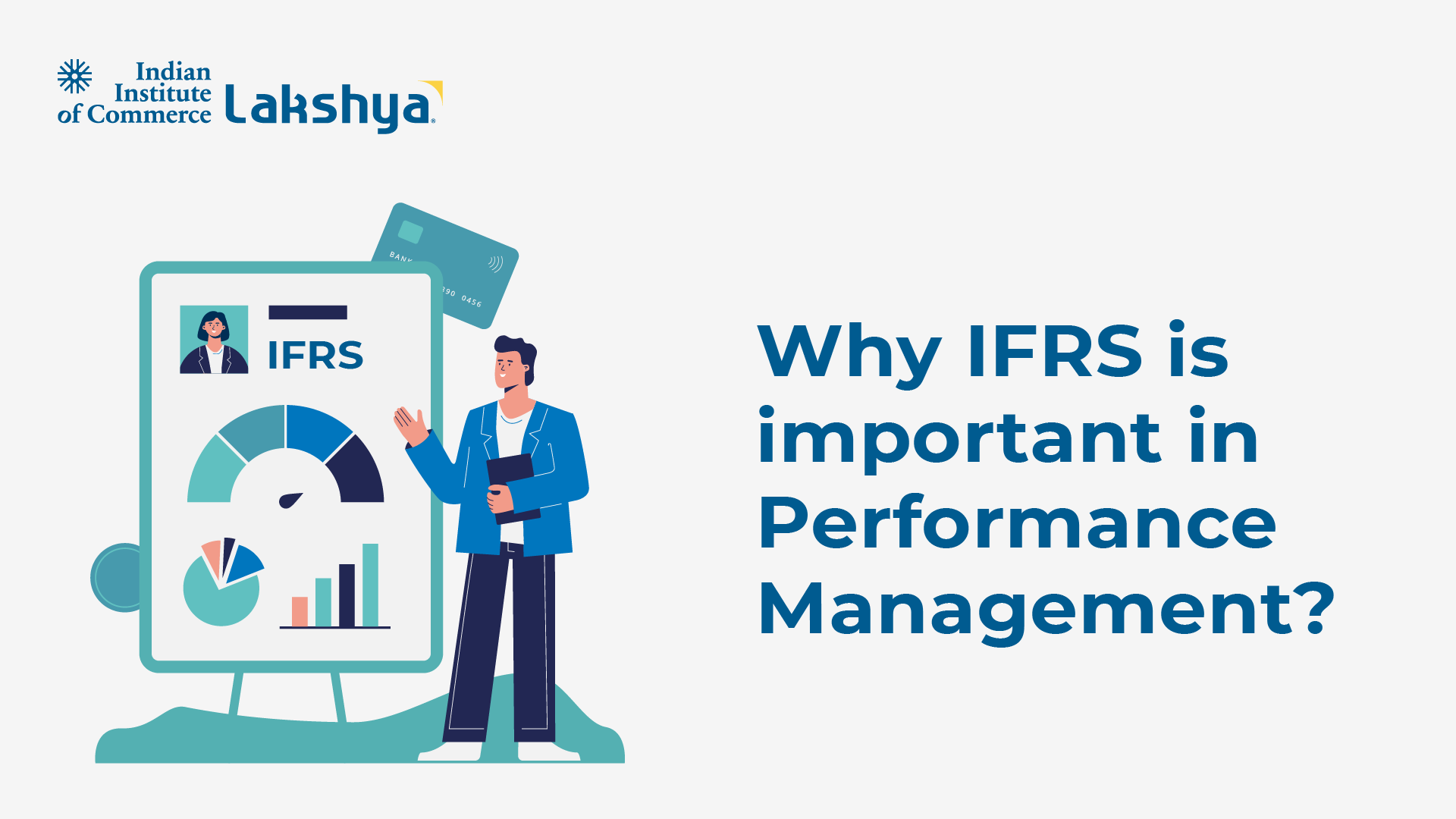
The International Financial Reporting Standards (IFRS) are a requirement for the business world. For consistent and accurate reporting, IFRS Standards help companies in the finance and accounting industry to become more transparent, reliable, and compliant with global practices. Explore the significance of IFRS in performance management, advantages, and risks.
IFRS: Meaning
IFRS is a set of accounting standards that are internationally accepted by governments, financial institutions, and businesses. Companies implement the IFRS Standards to prepare and present their financial statements and monitor data.
Read across the complete IFRS Standards list for 2025 to develop a better understanding of them. The IFRS Standards ensure the following aspects across countries and businesses in financial statements:
- Reliability
- Consistency
- Transparency
- Comparability
Explain Performance Management
Performance management is a strategic approach that enhances organizational effectiveness by analysis, management, and development of employee performance. It is through performance management that the actual progress of an organization, teams, and individuals is set, monitored, and given feedback on performance.
- The process includes tracking performance in the long-term by monitoring results.
- Performance of employees is reviewed periodically to identify areas for improvement and implement changes.
- These aspects contribute to giving opportunities for both the organization and individuals for professional growth.
Why is IFRS significant for Performance Management?
There are some common traps where organizations might suffer in the finance and accounting industry. Learn more about the IFRS course & syllabus details. This is why companies must be compliant with the IFRS because they will contribute to the overall performance management, improve the quality of the business practices, and strategies.
Cost Accounting is Not Enough
An integral part of performance management is cost accounting because it is used to optimize business practices. However, it is not enough to collect qualitative data to support current business operations. This is why following IFRS Standards will ensure that the business practices are updated.
Management Accounting Needs More Support
For decision-making purposes in a business, management accounting is integral because it helps organizations control the risks they face. However, it is the implementation of IFRS that helps in incorporating circular thinking, as IFRS-qualified professionals offer valuable knowledge and skills.
Budgeting is Not Enough
To plan for business operations and optimize business performance, budgeting is crucial. Yet, it is the implementation of IFRS insights that helps in implementing the appropriate techniques from the beginning so that all corrective measures are in place. Additionally, you can also read about how to become IFRS after 12th.
Performance Measurement
To enhance the performance of the workforce and companies, evaluating the financial aspects of a business. At times, the measurement of performance is overlooked in large organizations; therefore, a top-level management accountant implements IFRS to collect, analyse, and report information, which enhances performance.
Advantages of Implementing IFRS for Performance Measurement
There are several advantages of implementing IFRS for performance measurement. If you want to learn what IFRS is, you have to learn and understand the IFRS concepts and basic principles leading to the management of complex financial transactions. Read how the IFRS principles and standards contribute to the performance measurement and management.
- Accurate Reporting - IFRS helps companies to ensure that all their financial statements are accurate by monitoring their financial statistics
- Risk Management - IFRS is quite effective for performance management by identifying risks and developing strategies to mitigate them
- Better Decisions - the IFRS is used for companies to promote decision-making for performance management
- Risk Identification - identifying risks and management of financial risks are aptly managed with the implementation of IFRS regulations, thus managing crucial information
- Performance Comparison - Implementing the IFRS standardized set of accounting principles will help organizations compare their performance to other companies in the same industry
- Complex Instruments - the complex financial instruments are accounted for through the IFRS guidance
- Strategic Insights - companies can make informed decisions about mergers, acquisitions, investments, through strategic initiatives
Implementing IFRS for performance measurement
So, how is IFRS used in performance measurement? Companies implement IFRS standards, regulations, and data into performance measurement. It will help in the evaluation of efficiency, managerial, and profitability performance. Learn more about career options and salary after a diploma in IFRS. The following are some of the ways IFRS is used in performance management:
- Financial KPIs - with the implementation of IFRS financial statements, revenue growth, profit, EBITDA, equity-based ratios, and return on assets (ROA) are developed
- Benchmarking - the performance among competitors, subsidiaries, and countries is compared with the integration of the IFRS
- Investor Communication - the IFRS-compliant metrics are used to assess the performance, leading to maintaining credibility with capital markets
- Management Incentives - the IFRS-based earnings are linked to performance targets and bonuses
Risks of Using IFRS for Performance Management
Both advantages and disadvantages of IFRS influence the performance management in companies. There are some risks of using IFRS for a performance management system, which is necessary for professionals to learn. Develop insights from these risk evaluations so that these risks are mitigated. Below are some risks that must be considered:
Excessive Earnings Volatility
In most cases, the IFRS depends on fair value measurement, leading to severe fluctuations in reported profits. The performance outcomes will reflect the economic conditions instead of managerial effort.
Decreased Relevance for Operational Control
The IFRS is historical as it lacks operational detail, thus ineffectively influencing the performance management. In productivity, processing improvements, and monitoring efficiency, IFRS then becomes useless.
Inconsistent Performance Comparisons Over Time
IFRS Standards go through updates, which can bring inconsistency into the performance management of companies. This will negatively influence the long-term evaluation and trend analysis, making it difficult to interpret outcomes.
Complexity and Lack of Understanding
Technically, IFRS is complex, hence a lot of financial managers might be lacking in understanding, leading to them struggling to interpret the outcomes. These gaps and misunderstandings will lead to poor decision-making and performance assessments.
Incentives for Earnings Management
The IFRS-based results are connected with evaluation and compensation in companies. In accounting-driven behavior, managers can effectively engage with the IFRS implementation. The real outcomes can be improved, but by manipulating the reported performance with IFRS.
Misalignment with Managerial Objectives
IFRS does not influence decision-making internally, instead external reporting. Short-term accounting outcomes help managers to prioritize performance outcomes and long-term value creation.
Wrapping Up!
In conclusion, the IFRS plays a significant role in performance management as it helps companies to offer transparent and standardized data and information. Following the IFRS guidelines will help with the regulatory practices in the business and ensure compliance, leading to long-term success.
Read More
- How to Pass IFRS Certification Exam with 1 Month Left?
- How to Study for Diploma in IFRS in one month?
- GAAP vs IFRS: Definitions, Differences & Purposes
- Eligibility for IFRS Certification: Who Can Apply in 2025
- DipIFR Eligibility Criteria 2025: ACCA Diploma in IFRS
- IAS vs IFRS Comparison: What Companies Need to Know
Frequently Asked Questions on Why IFRS is Important in Performance Management
What are the 4 measures of performance success?
There are 4 levels on which the performance success will be measured: efficiency measures, input measures, output measures, and outcome measures.
What are the 4 important financial statements?
The four important financial statements that are significant are the cash flow statement, balance sheet, statement of shareholders’ equity, and income statement.
What are the key indicators of financial performance?
There are five key indicators of financial performance: valuation, profitability, efficiency, KPIs, and liquidity.
What are the 5 elements of IFRS?
The 5 key elements of IFRS are as follows:
- Financial Instruments (IFRS 9)
- Presentation of Financial Statements (IAS 1)
- Revenue from Contracts with Customers (IFRS 15)
- Statement of Cash Flows (IAS 7)
- Leases (IFRS 16)
What are the 5 main objectives of accounting?
The five main objectives of accounting are as follows:
- Ensure profit or loss
- Provide information to users
- Maintenance of systematic records
- Offer assistance in management, planning, and decision-making
- Determination of financial position
Related Course
























































_11zon.webp)























.webp)
.webp)

.webp)
.webp)
.webp)
.webp)
.webp)
.webp)
.webp)













































































































































































































































































































































.webp)












































 salary.jpg)






.webp)

.webp)
.webp)